Reforge has joined Miro ↗
In this new era of hybrid work and dispersed teams, soft skills such as effective communication, empathy, and adaptability have become essential for maintaining visibility, influence, and fostering career growth. Unlike the physical workplace of the pre-COVID era, where non-verbal cues and spontaneous in-person interactions facilitated understanding, the hybrid world demands a higher proficiency in non-technical and interpersonal skills to close the virtual gap effectively.
In this post, we'll cover the Top 5 Skills to Stand Out as a Senior PM in a Hybrid World. You’ll learn:
Why soft skills are indispensable in the hybrid workplace
How you can cultivate and apply them effectively to level up
Why does standing out in a hybrid word matter?
Because working outside an office is the new normal.
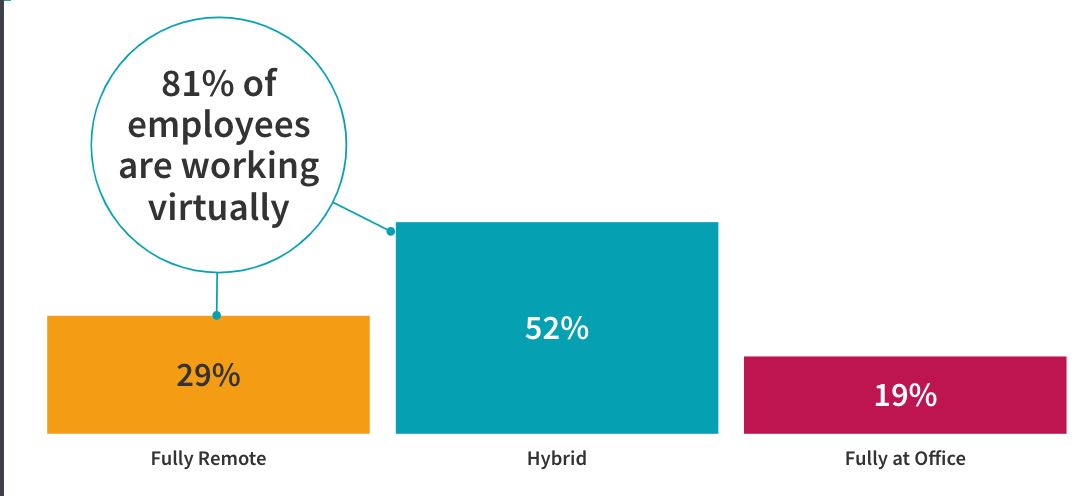
These stats from a recent Gallup writeup showcase 81% of employees are working virtually.
Why do soft skills matter to a Senior PM?
Being a Senior Product Manager is a team sport. Earlier in your career you were focusing on what it means to simply be a product manager - learning how to write user stories, manage a backlog, create a product requirements document (PRD), etc.
With that expertise under your belt, as a Senior PM, you are now seeking to drive product initiatives - which means you need the support and contributions of multiple types of stakeholders - from cross functional team members (Data, Design, Engineering, and additional functions) to other PMs and leadership too. Soft skills are what you rely on to engage multiple stakeholders, align their diverse perspectives and successfully gain their support and trust.
Senior Product Manager is a critical career point as well. It's often when a PM decides to go the individual contributor (IC) or people manager path. One could also hold off on that decision and remain a Sr PM for their entire career.
With this artifact, you will gain insight into skills which help you stand out and consequently have more say into where you would like to go next in your career.
Note: The skills and activities can be applied as an individual to learn more about yourself, to a group to increase performance, and at the team or organizational level.
VALUE Framework
Throughout my career, I've found product managers who focus on providing value to the organization, to their customers, to their colleagues and to themselves stand out. By creating value, they are having a positive impact and enabling the business to move forward. It's for these reasons, I have designed a VALUE framework.
Vision
Attunement
Leadership
Uniqueness
Enjoyment
Vision
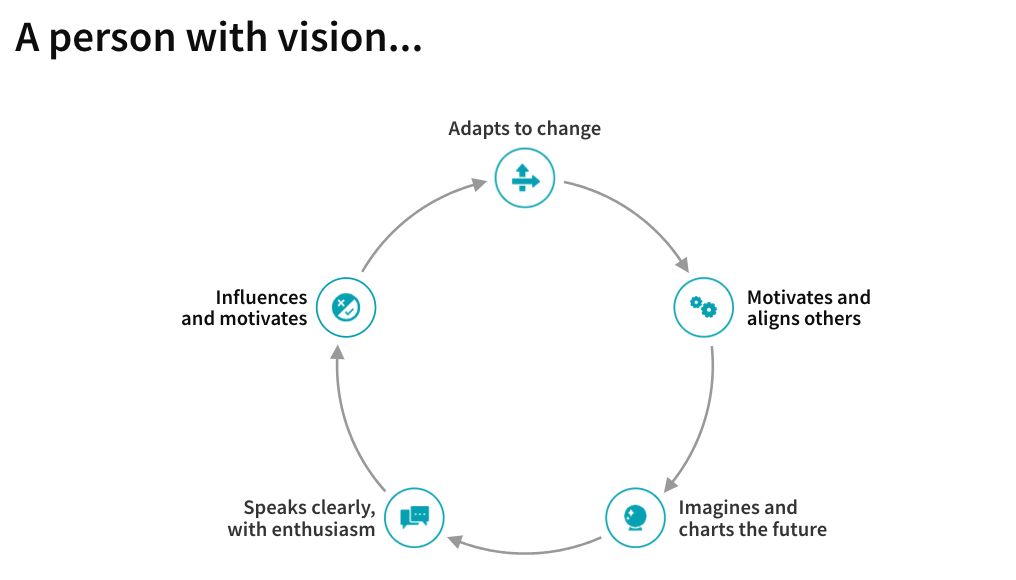
Vision anchors people across time zones and locations. The Vision reflects not just the product but where you see the future unfolding. As a Sr PM, your job is to create and share a Vision that motivates and inspires people to strive to achieve goals and create value.
A Vision aligns people - from data, design, engineering, and beyond. A Vision provides the context - the why, the what and for whom. A vision anchors your team on the path forward. By drafting a Vision you are showing you understand the market, the people, and the value the company can provide - not just today but in the future too.
Note: Even though they’re closely linked, the product vision is different from the product. The product vision is the motivation for developing the product; the product is a means to achieve the overarching goal.
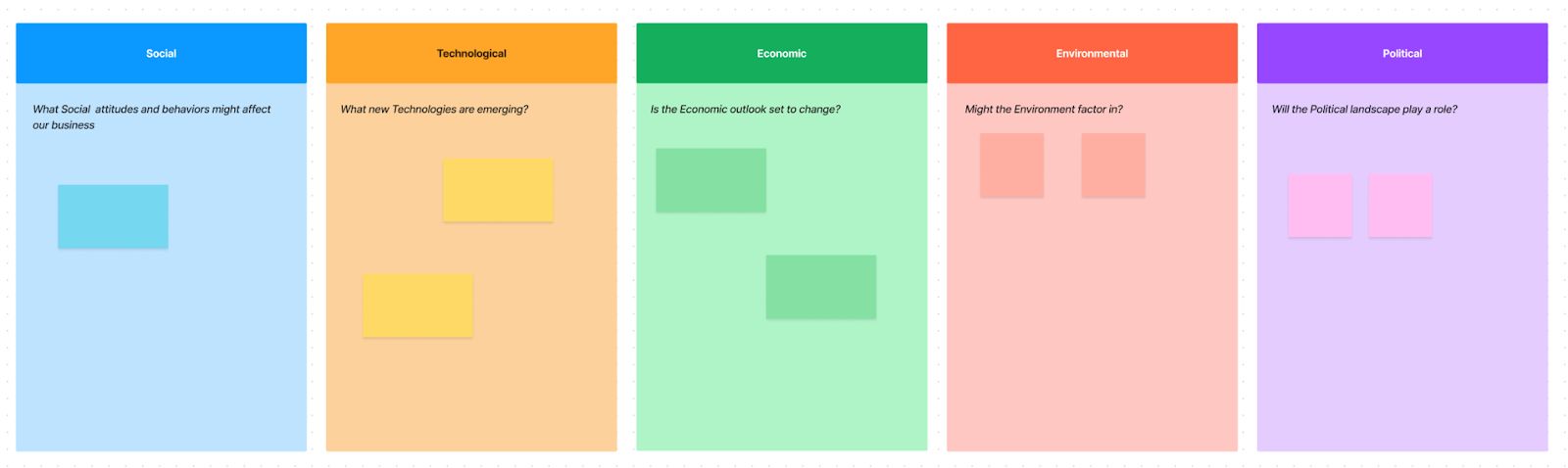
How do you bring others on the journey - or maybe just yourself? First to break yourself and your team or colleagues out of "today", I recommend an exercise called Ants & Aliens. It calls for thinking 30 years into the future and considering the Social, Technological, Economic, Environment, and Political (STEEP) factors that will inform your customers, company, and products.
Ants and Aliens are used to illustrate how different frames of reference can affect our view into the future. Ants are focused on immediate, small-scale details, analogous to an ant's slow, ground-level movement. On the other hand, Aliens represent a longer-term perspective, similar to viewing the Earth's movement through space. When creating a vision, it is important to consider different viewpoints especially when it comes to assessing technological progress and product strategy.
I’ve done this exercise on my own to change up my thinking. I’ve also done this exercise with other product managers and cross functional partners to get us out nearterm thinking. A FigJam is a good tool to use.
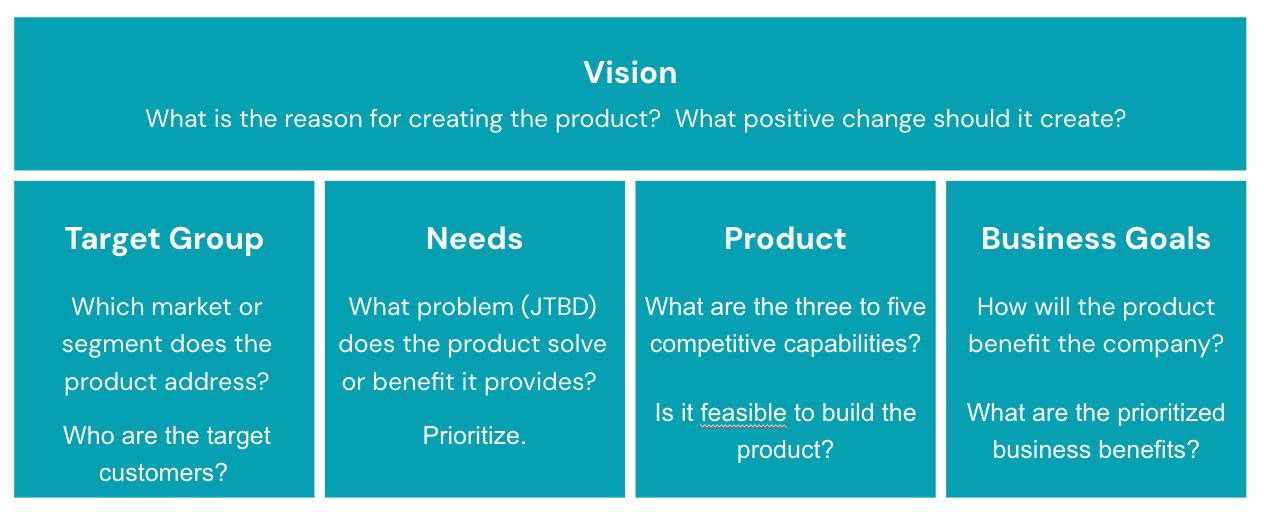
After thinking big and freeing yourself and/or your team from the constraints of today, you are in an excellent spot to define the product vision. A product vision typically focuses on the near future. It could be 2 to 5 years out or sooner, depending on your company’s approach. A product vision is important because it provides a clear direction that informs and helps align the team's efforts towards achieving and delivering. I’m a fan of the Product Vision template by Roman Pichler, there are excellent Reforge artifacts too.
I use the product vision template as a starting point to bring my cross-functional team together and create alignment. Through the exercise context is being established which the team will continually refer back to and refine as discovery is done, the approach is defined, work progresses, and ultimately the product is iteratively released.
Attunement
Definitely not a word one uses everyday, yet it encapsulates a number of valuable facets a Senior PM should have on hand. To build competitive advantage (yes, we're back to providing VALUE), organizations and employees must cultivate qualities that separate them from the pack. Among them authenticity, empathy, self awareness, an internal sense of purpose, and, perhaps above all, resilience in the face of relentless change. Attunement captures all of these characteristics.
Attunement is vital for a Senior Product Manager primarily for understanding and responding to customer needs, ensuring team alignment with the product vision, and staying aware of market trends. It's essential in managing diverse stakeholder interests and fostering empathetic leadership within the team. Having attunement means you have the soft skills to adapt to changing environments and encourage innovative thinking. It also plays a crucial role in going beyond mere data to a more nuanced understanding of various human factors which inform a product, team's, and person's success.
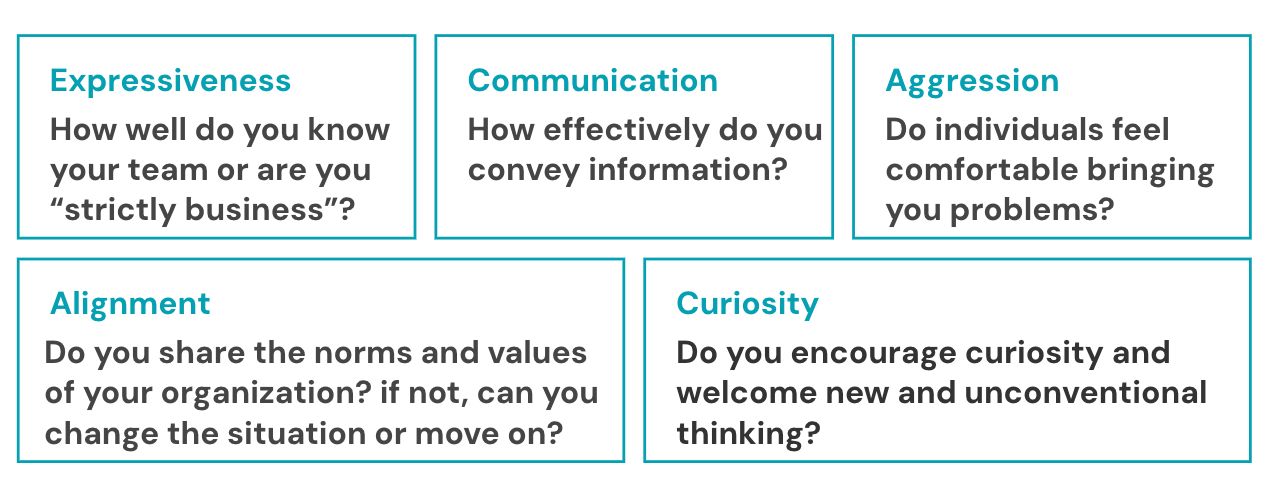
You may be wondering, doesn't that mean I can just be myself? Yes, and no. To stand out and provide greater value, there might be slight adjustments to make in one or more areas to bring along a diverse range of stakeholders. To put it another way, we're evaluated for who we are PLUS other factors that are reflected in the company and team culture. Embracing a growth mindset, start by asking for feedback. For example, I use the following criteria and ask my cross-functional stakeholders and leaders to give me a rating between 1 and 5 with a focus on opportunities for improvement.
Once you have a better sense of self, take your team through an exercise of creating a ReadMe (also known as a “user manual”). The ReadMe puts needs, behaviors, and personalities out in the open. Creating a ReadMe is a great opportunity for self-reflection and is a powerful exercise to get to know yourself and your teammates. I recommend being open and honest. This way they'll know situations where you can provide help and vice versa. I've found creating a ReadMe to be a brilliant exercise with remote or hybrid teams as a ReadMe makes what is usually implicit and unknown, explicit and known.
I create a Google slides template with a page for each area depicted in the image below. Then I ask each person to copy the template and fill in their preferences to create their own ReadMe.
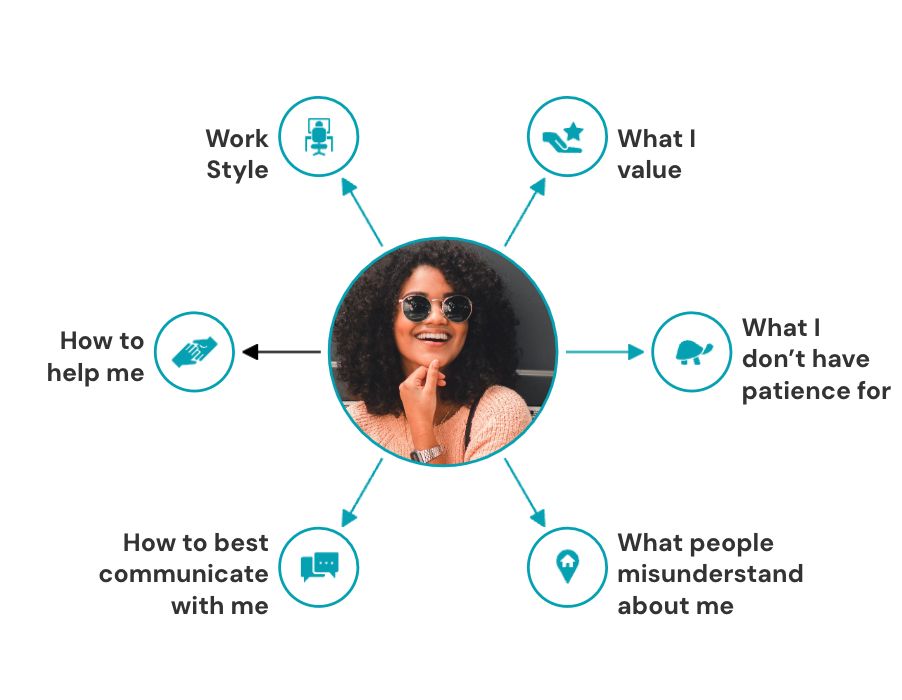
The Future Forum template is a great resource for finding descriptive phrases.
When you run this exercise with your team, if you are a video culture, here is an example of a ReadMe (what the author calls “Blueprint”) done through videos.
Note: After having each member of your team create a ReadMe and discussing the documents together, the insight forms the foundation for your product Team Charter. An example of a team charter canvas can be found here and in Reforge artifacts too..
Leadership
The art of leading without formal authority stands as a cornerstone of effective product management. A Product Manager must help motivate and lead their cross-functional colleagues despite not having a direct reporting line over them. To put it another way, leading as a Sr PM is not about persuasion in the conventional sense but about the art of engaging and guiding collaborative work without relying on positional authority. Such a nuanced dance of influence and motivation calls for some understanding of human psychology and a toolkit of soft skills.
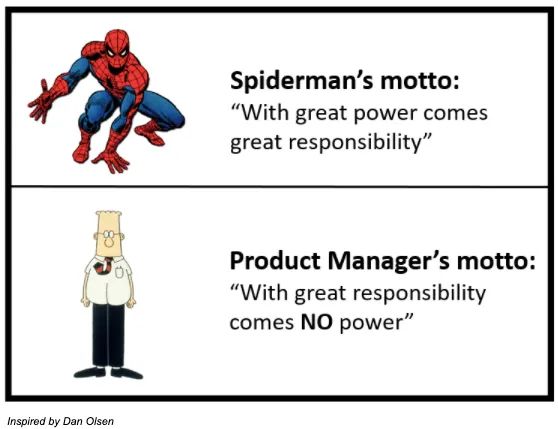
What makes product leadership even harder, especially at the Sr PM levels, is leadership is about the people - not things. What makes people tick, and how we can empower the team we work with for success and increase the value they bring to the business and to themselves.
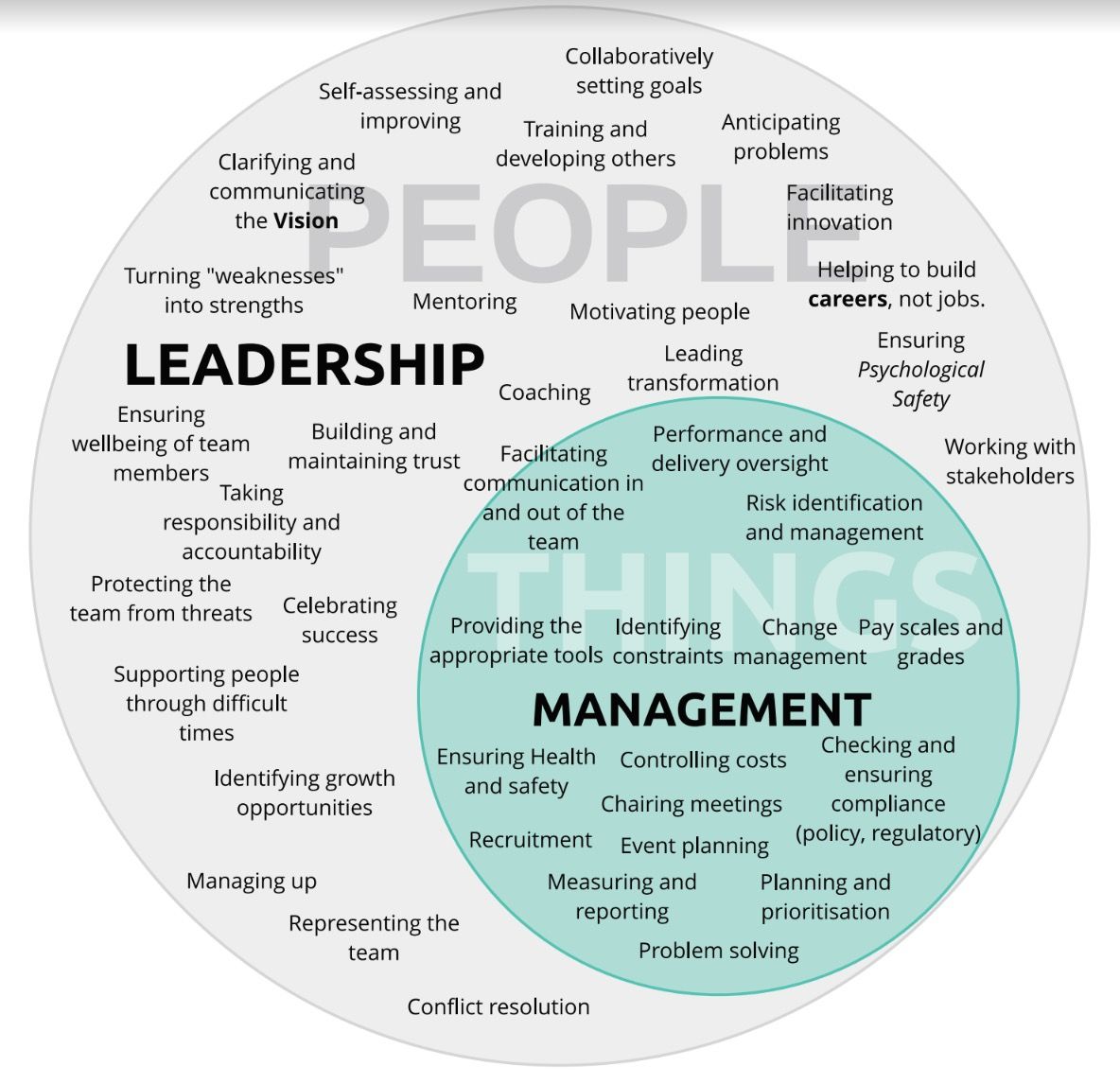
As a Senior PM, leading or influencing effectively regardless of location is crucial because it allows you to build trust with your team, make informed decisions, and ensure that everyone has a voice in the process. This is particularly important in a remote or distributed team environment where face-to-face interactions are limited.
By mastering the art of influence without authority, you can help your team members do their best work, even when you don't have direct control over them. Moreover, effective leadership helps prevent communication breakdowns that can lead to feelings of exclusion or misunderstandings about decisions and actions. By ensuring that cross-functional partners are fully informed and involved, you can anticipate and mitigate problems.
In summary, knowing how to lead effectively across different locations is about more than just managing "things"; it's about fostering a culture of trust, communication, and shared purpose that transcends physical boundaries - it's about Leadership. (A link to the above image is here.)
The five characteristics that have distinguished individuals across my career are listed below. They apply to Senior PMs and all the way up the leadership chain. And, yes, there is a bit of overlap with our favorite new word, Attunement.
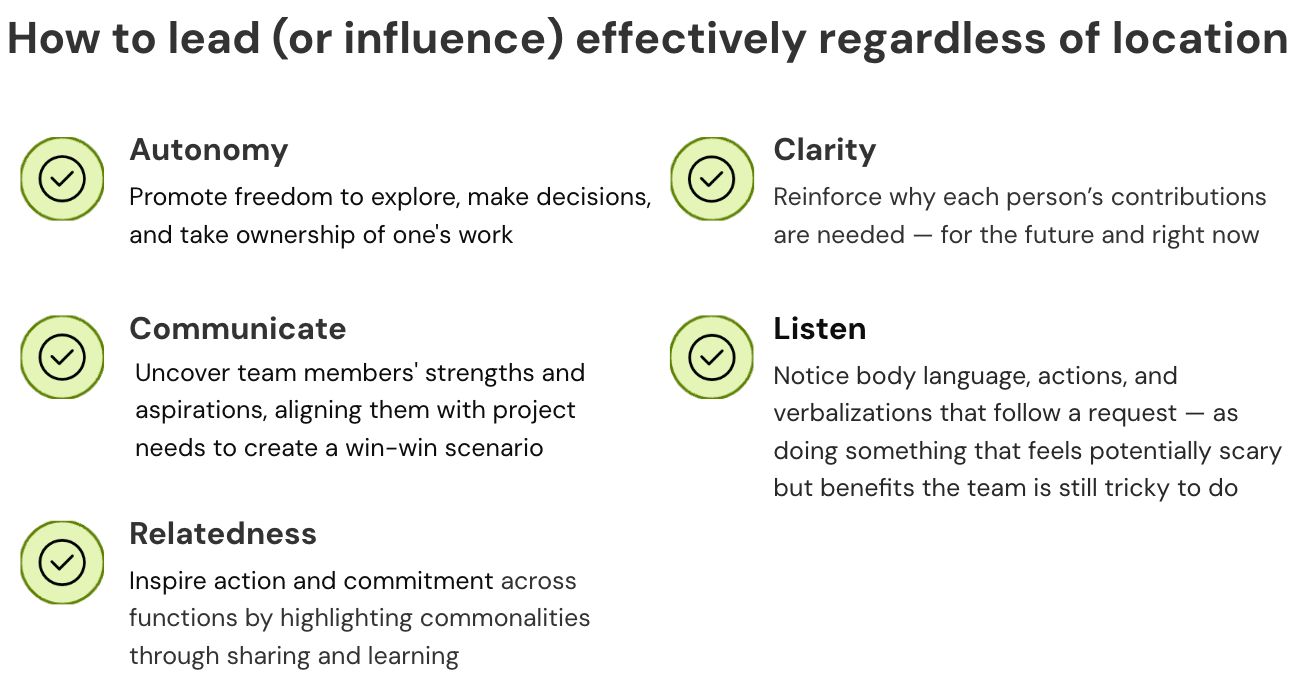
To see how your team is feeling about your Leadership, I recommend running a retrospective. A retrospective is a meeting dedicated to discussing what went well and what can be improved. Often used at the end of a sprint or once a product is released, retrospectives also can be used to identify what may be holding up a team's progress and decreasing the value they provide because a retrospective encourages the following:
Learning from past experiences
Learning from others
Transferring knowledge
To evaluate how your team feels, you can conduct a retrospective to discuss what’s worked well and what you want to try doing differently. This can become a “first draft” for your team (and organization), which you can then build and iterate on over time to increase your team's value and help you stand out.
There are multiple ways to approach a retrospective. This article has a variety of retrospective templates to choose from. I also like this article on retrospectives as well.
Uniqueness
Diverse insights are necessary for increasing product value because they bring a wide range of perspectives and experiences to the table. When different voices and views are integrated, rather than siloed, it creates a more holistic understanding of user needs and market demands. Diverse insights contribute to better products by ensuring multiple perspectives are considered, leading to products that are not only technically sound but also resonate well with users and stand out in the competitive market.
To create an environment where unique perspectives can be heard, I recommend practicing and incorporating psychological safety. Psychological safety calls for creating an environment where it is ok to speak up and responses are appreciated and forward-looking (what should we do next). It is not “soft” or “easy., Nor does psychological safety mean “being nice”. Instead it calls for honesty, challenging and clarity. Amy Edmonson is one of the founding voices behind psychological safety and provides us with this definition.
Psychological safety is important for Sr PMs because as the world around us continues to evolve, so do customers' interactions and expectations of products. Even though a foundational Job to be Done (JBTD) is likely to remain, how it is addressed over time will change. To continue to meet and exceed customer expectations, us and our teams must feel comfortable evolving our thinking and approaches. The opposite being, individuals stagnant and feel unheard, and decrease their effort while suffering in silence - neither of which, as someone who is seeking to stand out and provide Leadership wants to experience or encourage.
Practicing psychological safety now is extremely important, because when there is a lot of change and uncertainty, it’s natural for people to avoid taking risks in order to protect themselves. By creating a safe space for your stakeholders, a Sr PM enables their team to speak up, experiment, learn, and apply the learnings - to feel and be empowered, and consequently provide more value. Establishing a safe space ensures changes can be made and opportunities explored. Psychological safety is not about relinquishing control but about fostering a culture where every unique voice is heard and valued, where the team collectively navigates the roadmap, contributing to a shared Vision.
To measure the level of psychological safety in your team or even for yourself in your environment, there are a few approaches - lightweight, middleweight, and heavyweight!.
Lightweight is to simply listen out for signals - such as how often you hear people admitting mistakes, challenging others positively, or suggesting ideas. You can apply this one to yourself and see how you feel.
Middleweight is to use the performance quadrant (see below) or a variation on the retrospective (here) to facilitate a discussion. I’ve used this approach with scrum teams.
Heavyweight is a full survey. Both of these articles (article 1, article 2) offer frameworks leveraging Amy Edmondson’s research. Organizations experiencing cultural issues are more likely to go with this approach.
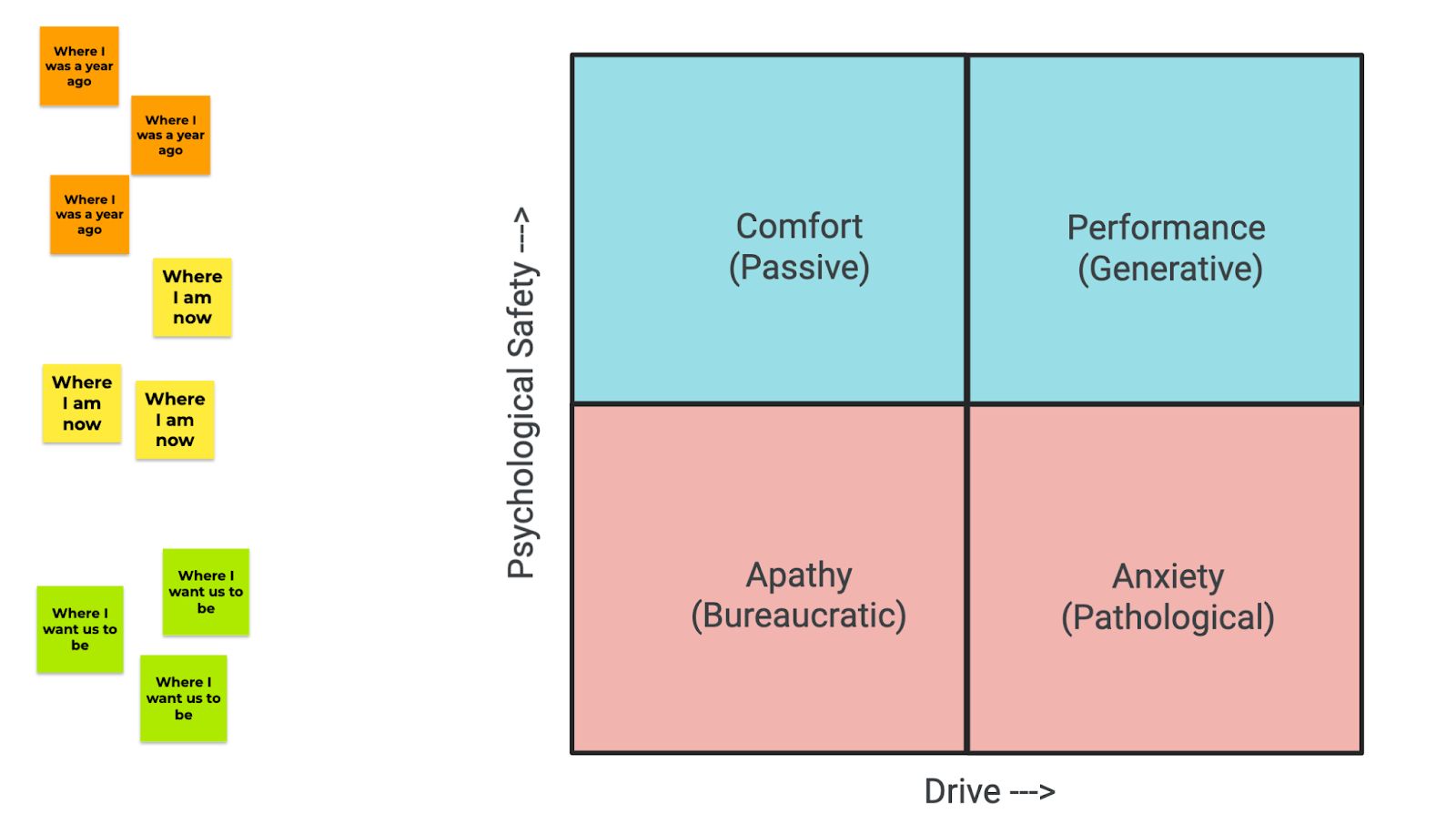
From Psychological Safety, we have the following definitions.
Apathy
A team with neither psychological safety nor a drive to perform will be unhappy and reluctant to work. Such an environment tends to be perceived as bureaucratic.
Comfort Zone
A team with high psychological safety but without a drive to succeed will feel safe and passive towards change. They will not reach their potential for performance.
Anxiety
If a team has low psychological safety but is highly driven, the result can often be high levels of anxiety. They may feel they must perform but they are doing so for pathological, not safe, reasons.
High Performance
The optimum team resides in this zone. They feel a great deal of psychological safety and demonstrate a strong drive to deliver results. This is also known as the “learning zone”, because team members are empowered to innovate, experiment and learn from mistakes. This team will deliver on their goals.
Enjoyment
I am a fan of a podcast called CultureLab. It is run by Aga Bajer. On an episode a guest recommended thinking about your employees as “subscribers”. People “buy” into a product Vision, company objective, and team culture when they join. Then, every day, they continue to subscribe - until the day they email in their resignation or become demotivated (what has been termed “quiet quitting”). Through positive Leadership character you help to encourage your team to continue “subscribing”. How do you keep people "subscribing"? By creating a culture where people can thrive by incorporating Fun, Belonging and Meaning, into work. Think about "fun working" rather than having fun at work.
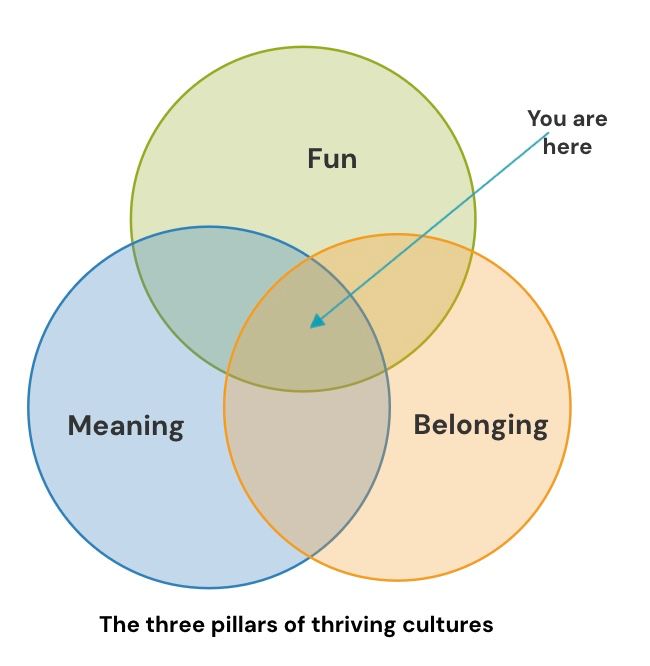
What often comes to mind when I’m talking with product people about these topics is a quote I heard in a movie (and later learned is attributed to a Greek philosopher): “If you want to improve, be content to be thought foolish and stupid.” I use the phrase "Purposeful play" to align with the work environment. Purposeful play refers to structured, engaging activities designed to foster creativity and team building, enhancing innovation, and collaboration. When we accept—or even welcome—the possibility of having fun at work, we liberate ourselves to learn. To be curious. To investigate. In essence, we unlock our capacity for greatness to Stand Out and to bring more Value.
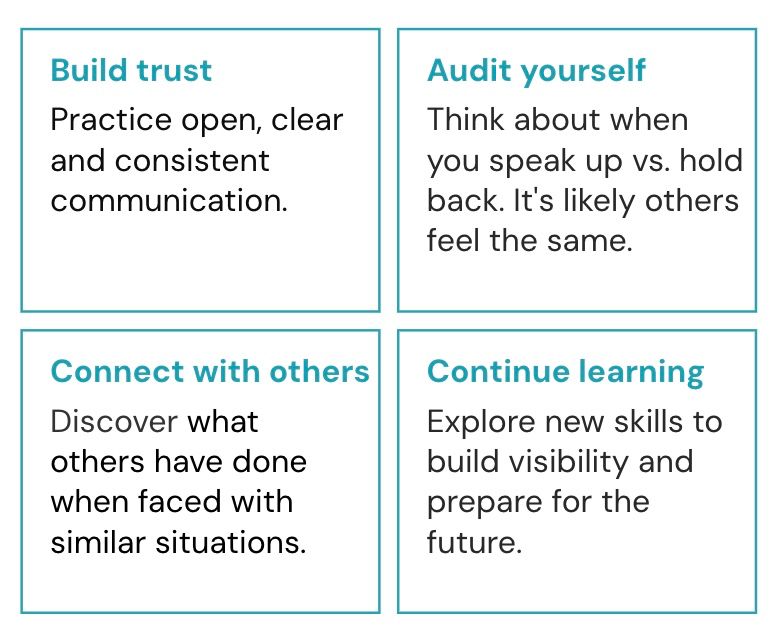
Belonging at work refers to the feeling of being part of a team, where one's contributions are Valued and Uniqueness is respected. Belonging is crucial as it enhances teamwork and employee engagement. To increase the sense of belonging within your team, here are four steps I recommend practicing. The goal being to “feature a chorus of voices, rather than only one soloist.”
While belonging reflects the environment, Meaning is about "you" - what drives your personal motivation and job satisfaction. Remember the ReadMe. By getting to know your stakeholders and team members, you help to increase their sense of meaning.
By bringing meaning to your team's work, you increase your Value to the company through fostering deeper engagement, motivation, and commitment among your team. This heightened sense of purpose often leads to higher productivity, innovation, and job satisfaction, which are key drivers of Value and ultimately organizational success.
Three activities I recommend are:
Campfire Conversations: Bring people together virtually, ask meaningful questions, and give everyone a chance to share their play style and create connections.
Onboarding + Celebrations: Acknowledge new joiners to the team and other 'moments that matter' to cultivate a shared sense of value and impact.
Hour of Learning: Bring people together for a session to learn more about each other and grow the team’s collective knowledge. If you have a product community at your organization, introduce an Hour of Learning . If you have an hour of learning already, introduce some fun into the mix.
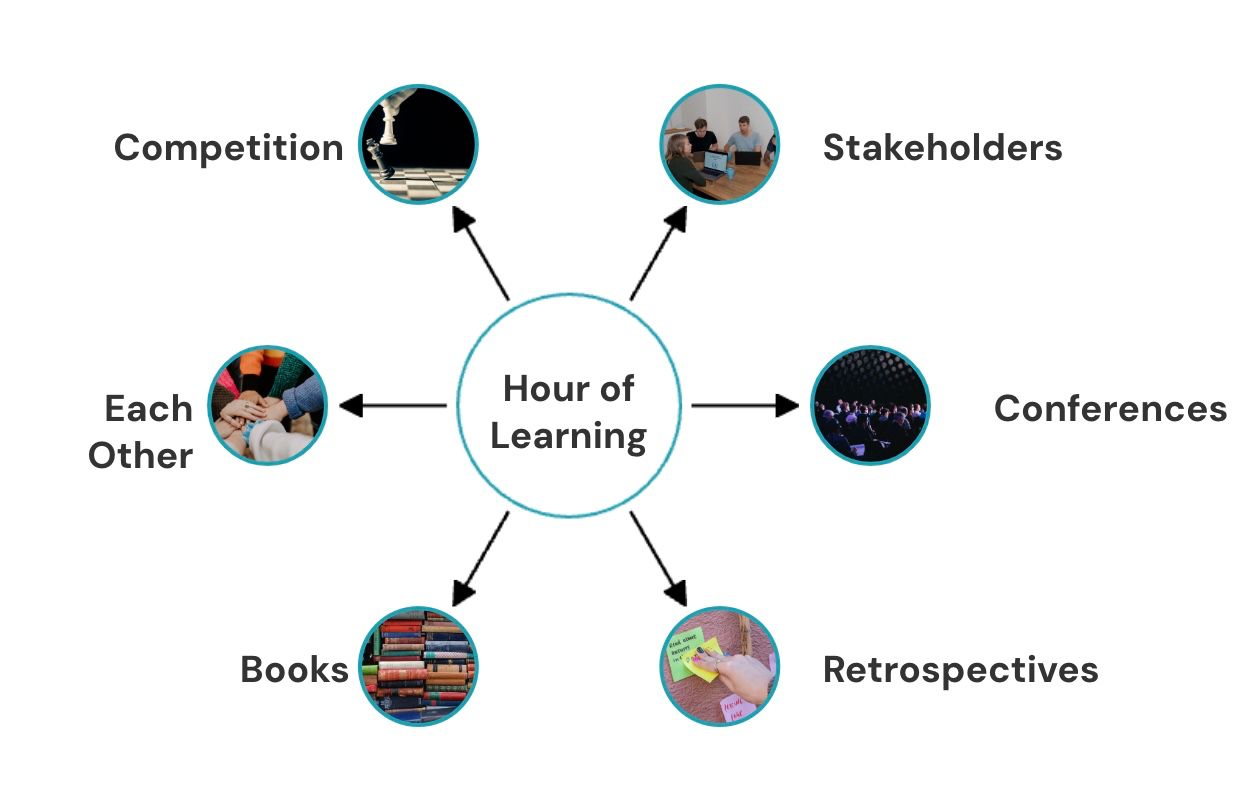
Here are more specifics about running an Hour of Learning:
Definition:
Effective way to establish a learning culture by ensuring your product team continues to learn by setting aside an hour to focus specifically on learning new things.
Frequency:
The recommendation is to hold the hour of learning on a Friday as a way to wrap up the week. An hour of learning can happen once a week or the frequency your team prefers. Less than once a month and learning will not be infused into your product team’s culture.
Topics:
It could be something a product team member has learnt recently you would like them to share (e.g. top themes from a recent conference, etc.) or something you feel the team should know (e.g. best practices for user research, difference between leading and lagging metrics, etc).
Prerequisites:
Limit any knowledge required beforehand. Ideally no pre-work is required to ensure the hour of learning does not create an additional burden on the product team (except for the presenter who must prepare).
Approach:
The hour of learning structure can be diverse – people presenting from slides, live demos, and/or interactive group work. Sync with the presenter to think about the knowledge being shared and the most effective way for a group of people to learn it.
Sharing:
By making assets (recordings, slides, etc) available afterwards, people who missed the session can refer to them later or anyone in the product team can revisit the content when / if needed.
Key Takeaway
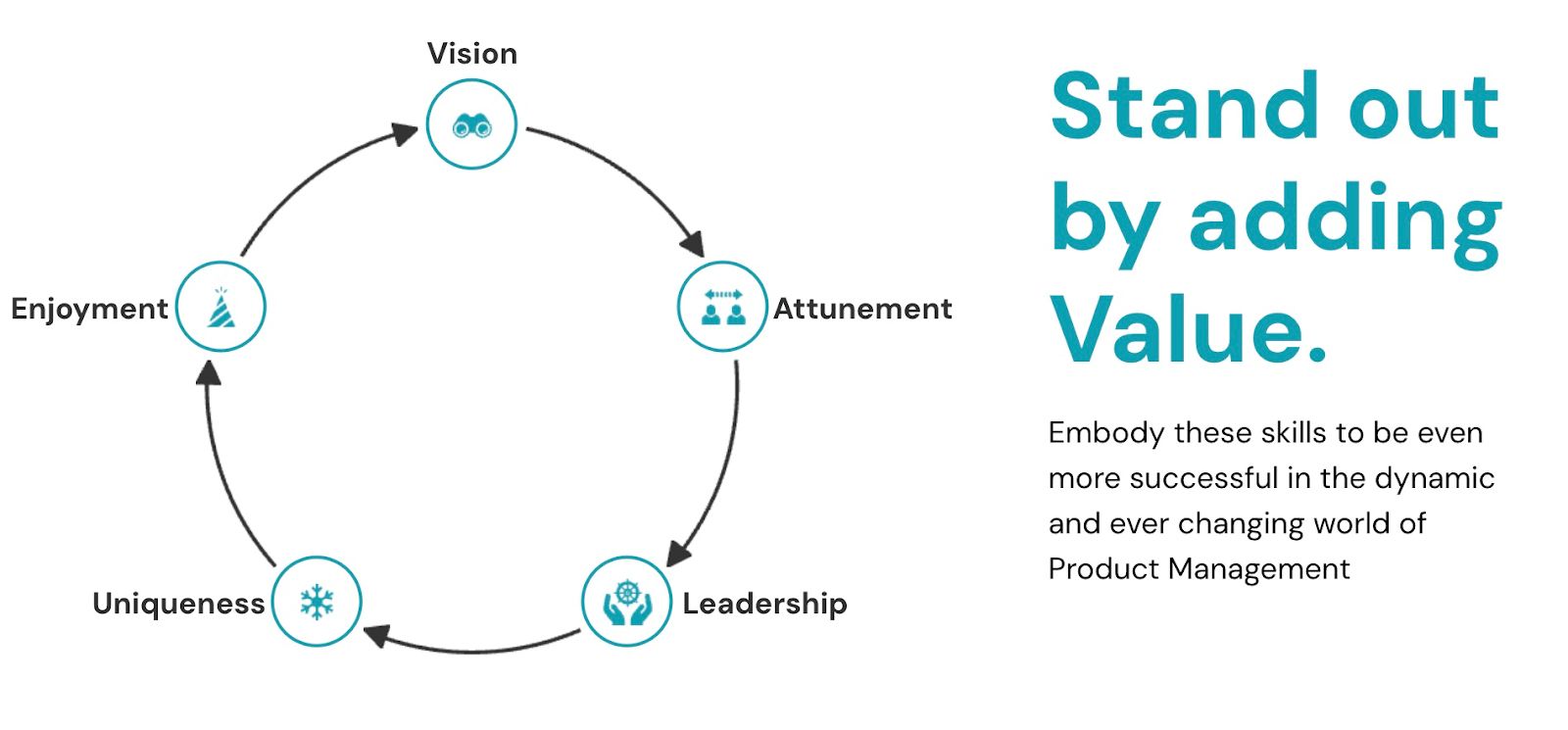
To wrap up, I've changed the way the “Top 5 Skills to Stand Out as a Senior PM in a Hybrid World” are represented. As you may have noticed, there is overlap between the five skills. That's a good thing. By building up your muscle in one skill, you are providing a foundation in another. All together, the Top 5 Skills will help you to be a better Senior PM, stand out by adding more value to your company, team, and yourself - thereby helping you to be in a better spot to define your next career step.
For more resources on product leadership, become a Reforge member to gain unlimited access to 35+ on-demand courses and hundreds of expert-vetted Guides or explore our upcoming live courses.
Sign up today


In this new era of hybrid work and dispersed teams, soft skills such as effective communication, empathy, and adaptability have become essential for maintaining visibility, influence, and fostering career growth. Unlike the physical workplace of the pre-COVID era, where non-verbal cues and spontaneous in-person interactions facilitated understanding, the hybrid world demands a higher proficiency in non-technical and interpersonal skills to close the virtual gap effectively.
In this post, we'll cover the Top 5 Skills to Stand Out as a Senior PM in a Hybrid World. You’ll learn:
Why soft skills are indispensable in the hybrid workplace
How you can cultivate and apply them effectively to level up
Why does standing out in a hybrid word matter?
Because working outside an office is the new normal.
These stats from a recent Gallup writeup showcase 81% of employees are working virtually.
Why do soft skills matter to a Senior PM?
Being a Senior Product Manager is a team sport. Earlier in your career you were focusing on what it means to simply be a product manager - learning how to write user stories, manage a backlog, create a product requirements document (PRD), etc.
With that expertise under your belt, as a Senior PM, you are now seeking to drive product initiatives - which means you need the support and contributions of multiple types of stakeholders - from cross functional team members (Data, Design, Engineering, and additional functions) to other PMs and leadership too. Soft skills are what you rely on to engage multiple stakeholders, align their diverse perspectives and successfully gain their support and trust.
Senior Product Manager is a critical career point as well. It's often when a PM decides to go the individual contributor (IC) or people manager path. One could also hold off on that decision and remain a Sr PM for their entire career.
With this artifact, you will gain insight into skills which help you stand out and consequently have more say into where you would like to go next in your career.
Note: The skills and activities can be applied as an individual to learn more about yourself, to a group to increase performance, and at the team or organizational level.
VALUE Framework
Throughout my career, I've found product managers who focus on providing value to the organization, to their customers, to their colleagues and to themselves stand out. By creating value, they are having a positive impact and enabling the business to move forward. It's for these reasons, I have designed a VALUE framework.
Vision
Attunement
Leadership
Uniqueness
Enjoyment
Vision
Vision anchors people across time zones and locations. The Vision reflects not just the product but where you see the future unfolding. As a Sr PM, your job is to create and share a Vision that motivates and inspires people to strive to achieve goals and create value.
A Vision aligns people - from data, design, engineering, and beyond. A Vision provides the context - the why, the what and for whom. A vision anchors your team on the path forward. By drafting a Vision you are showing you understand the market, the people, and the value the company can provide - not just today but in the future too.
Note: Even though they’re closely linked, the product vision is different from the product. The product vision is the motivation for developing the product; the product is a means to achieve the overarching goal.
How do you bring others on the journey - or maybe just yourself? First to break yourself and your team or colleagues out of "today", I recommend an exercise called Ants & Aliens. It calls for thinking 30 years into the future and considering the Social, Technological, Economic, Environment, and Political (STEEP) factors that will inform your customers, company, and products.
Ants and Aliens are used to illustrate how different frames of reference can affect our view into the future. Ants are focused on immediate, small-scale details, analogous to an ant's slow, ground-level movement. On the other hand, Aliens represent a longer-term perspective, similar to viewing the Earth's movement through space. When creating a vision, it is important to consider different viewpoints especially when it comes to assessing technological progress and product strategy.
I’ve done this exercise on my own to change up my thinking. I’ve also done this exercise with other product managers and cross functional partners to get us out nearterm thinking. A FigJam is a good tool to use.
After thinking big and freeing yourself and/or your team from the constraints of today, you are in an excellent spot to define the product vision. A product vision typically focuses on the near future. It could be 2 to 5 years out or sooner, depending on your company’s approach. A product vision is important because it provides a clear direction that informs and helps align the team's efforts towards achieving and delivering. I’m a fan of the Product Vision template by Roman Pichler, there are excellent Reforge artifacts too.
I use the product vision template as a starting point to bring my cross-functional team together and create alignment. Through the exercise context is being established which the team will continually refer back to and refine as discovery is done, the approach is defined, work progresses, and ultimately the product is iteratively released.
Attunement
Definitely not a word one uses everyday, yet it encapsulates a number of valuable facets a Senior PM should have on hand. To build competitive advantage (yes, we're back to providing VALUE), organizations and employees must cultivate qualities that separate them from the pack. Among them authenticity, empathy, self awareness, an internal sense of purpose, and, perhaps above all, resilience in the face of relentless change. Attunement captures all of these characteristics.
Attunement is vital for a Senior Product Manager primarily for understanding and responding to customer needs, ensuring team alignment with the product vision, and staying aware of market trends. It's essential in managing diverse stakeholder interests and fostering empathetic leadership within the team. Having attunement means you have the soft skills to adapt to changing environments and encourage innovative thinking. It also plays a crucial role in going beyond mere data to a more nuanced understanding of various human factors which inform a product, team's, and person's success.
You may be wondering, doesn't that mean I can just be myself? Yes, and no. To stand out and provide greater value, there might be slight adjustments to make in one or more areas to bring along a diverse range of stakeholders. To put it another way, we're evaluated for who we are PLUS other factors that are reflected in the company and team culture. Embracing a growth mindset, start by asking for feedback. For example, I use the following criteria and ask my cross-functional stakeholders and leaders to give me a rating between 1 and 5 with a focus on opportunities for improvement.
Once you have a better sense of self, take your team through an exercise of creating a ReadMe (also known as a “user manual”). The ReadMe puts needs, behaviors, and personalities out in the open. Creating a ReadMe is a great opportunity for self-reflection and is a powerful exercise to get to know yourself and your teammates. I recommend being open and honest. This way they'll know situations where you can provide help and vice versa. I've found creating a ReadMe to be a brilliant exercise with remote or hybrid teams as a ReadMe makes what is usually implicit and unknown, explicit and known.
I create a Google slides template with a page for each area depicted in the image below. Then I ask each person to copy the template and fill in their preferences to create their own ReadMe.
The Future Forum template is a great resource for finding descriptive phrases.
When you run this exercise with your team, if you are a video culture, here is an example of a ReadMe (what the author calls “Blueprint”) done through videos.
Note: After having each member of your team create a ReadMe and discussing the documents together, the insight forms the foundation for your product Team Charter. An example of a team charter canvas can be found here and in Reforge artifacts too..
Leadership
The art of leading without formal authority stands as a cornerstone of effective product management. A Product Manager must help motivate and lead their cross-functional colleagues despite not having a direct reporting line over them. To put it another way, leading as a Sr PM is not about persuasion in the conventional sense but about the art of engaging and guiding collaborative work without relying on positional authority. Such a nuanced dance of influence and motivation calls for some understanding of human psychology and a toolkit of soft skills.
What makes product leadership even harder, especially at the Sr PM levels, is leadership is about the people - not things. What makes people tick, and how we can empower the team we work with for success and increase the value they bring to the business and to themselves.
As a Senior PM, leading or influencing effectively regardless of location is crucial because it allows you to build trust with your team, make informed decisions, and ensure that everyone has a voice in the process. This is particularly important in a remote or distributed team environment where face-to-face interactions are limited.
By mastering the art of influence without authority, you can help your team members do their best work, even when you don't have direct control over them. Moreover, effective leadership helps prevent communication breakdowns that can lead to feelings of exclusion or misunderstandings about decisions and actions. By ensuring that cross-functional partners are fully informed and involved, you can anticipate and mitigate problems.
In summary, knowing how to lead effectively across different locations is about more than just managing "things"; it's about fostering a culture of trust, communication, and shared purpose that transcends physical boundaries - it's about Leadership. (A link to the above image is here.)
The five characteristics that have distinguished individuals across my career are listed below. They apply to Senior PMs and all the way up the leadership chain. And, yes, there is a bit of overlap with our favorite new word, Attunement.
To see how your team is feeling about your Leadership, I recommend running a retrospective. A retrospective is a meeting dedicated to discussing what went well and what can be improved. Often used at the end of a sprint or once a product is released, retrospectives also can be used to identify what may be holding up a team's progress and decreasing the value they provide because a retrospective encourages the following:
Learning from past experiences
Learning from others
Transferring knowledge
To evaluate how your team feels, you can conduct a retrospective to discuss what’s worked well and what you want to try doing differently. This can become a “first draft” for your team (and organization), which you can then build and iterate on over time to increase your team's value and help you stand out.
There are multiple ways to approach a retrospective. This article has a variety of retrospective templates to choose from. I also like this article on retrospectives as well.
Uniqueness
Diverse insights are necessary for increasing product value because they bring a wide range of perspectives and experiences to the table. When different voices and views are integrated, rather than siloed, it creates a more holistic understanding of user needs and market demands. Diverse insights contribute to better products by ensuring multiple perspectives are considered, leading to products that are not only technically sound but also resonate well with users and stand out in the competitive market.
To create an environment where unique perspectives can be heard, I recommend practicing and incorporating psychological safety. Psychological safety calls for creating an environment where it is ok to speak up and responses are appreciated and forward-looking (what should we do next). It is not “soft” or “easy., Nor does psychological safety mean “being nice”. Instead it calls for honesty, challenging and clarity. Amy Edmonson is one of the founding voices behind psychological safety and provides us with this definition.
Psychological safety is important for Sr PMs because as the world around us continues to evolve, so do customers' interactions and expectations of products. Even though a foundational Job to be Done (JBTD) is likely to remain, how it is addressed over time will change. To continue to meet and exceed customer expectations, us and our teams must feel comfortable evolving our thinking and approaches. The opposite being, individuals stagnant and feel unheard, and decrease their effort while suffering in silence - neither of which, as someone who is seeking to stand out and provide Leadership wants to experience or encourage.
Practicing psychological safety now is extremely important, because when there is a lot of change and uncertainty, it’s natural for people to avoid taking risks in order to protect themselves. By creating a safe space for your stakeholders, a Sr PM enables their team to speak up, experiment, learn, and apply the learnings - to feel and be empowered, and consequently provide more value. Establishing a safe space ensures changes can be made and opportunities explored. Psychological safety is not about relinquishing control but about fostering a culture where every unique voice is heard and valued, where the team collectively navigates the roadmap, contributing to a shared Vision.
To measure the level of psychological safety in your team or even for yourself in your environment, there are a few approaches - lightweight, middleweight, and heavyweight!.
Lightweight is to simply listen out for signals - such as how often you hear people admitting mistakes, challenging others positively, or suggesting ideas. You can apply this one to yourself and see how you feel.
Middleweight is to use the performance quadrant (see below) or a variation on the retrospective (here) to facilitate a discussion. I’ve used this approach with scrum teams.
Heavyweight is a full survey. Both of these articles (article 1, article 2) offer frameworks leveraging Amy Edmondson’s research. Organizations experiencing cultural issues are more likely to go with this approach.
From Psychological Safety, we have the following definitions.
Apathy
A team with neither psychological safety nor a drive to perform will be unhappy and reluctant to work. Such an environment tends to be perceived as bureaucratic.
Comfort Zone
A team with high psychological safety but without a drive to succeed will feel safe and passive towards change. They will not reach their potential for performance.
Anxiety
If a team has low psychological safety but is highly driven, the result can often be high levels of anxiety. They may feel they must perform but they are doing so for pathological, not safe, reasons.
High Performance
The optimum team resides in this zone. They feel a great deal of psychological safety and demonstrate a strong drive to deliver results. This is also known as the “learning zone”, because team members are empowered to innovate, experiment and learn from mistakes. This team will deliver on their goals.
Enjoyment
I am a fan of a podcast called CultureLab. It is run by Aga Bajer. On an episode a guest recommended thinking about your employees as “subscribers”. People “buy” into a product Vision, company objective, and team culture when they join. Then, every day, they continue to subscribe - until the day they email in their resignation or become demotivated (what has been termed “quiet quitting”). Through positive Leadership character you help to encourage your team to continue “subscribing”. How do you keep people "subscribing"? By creating a culture where people can thrive by incorporating Fun, Belonging and Meaning, into work. Think about "fun working" rather than having fun at work.
What often comes to mind when I’m talking with product people about these topics is a quote I heard in a movie (and later learned is attributed to a Greek philosopher): “If you want to improve, be content to be thought foolish and stupid.” I use the phrase "Purposeful play" to align with the work environment. Purposeful play refers to structured, engaging activities designed to foster creativity and team building, enhancing innovation, and collaboration. When we accept—or even welcome—the possibility of having fun at work, we liberate ourselves to learn. To be curious. To investigate. In essence, we unlock our capacity for greatness to Stand Out and to bring more Value.
Belonging at work refers to the feeling of being part of a team, where one's contributions are Valued and Uniqueness is respected. Belonging is crucial as it enhances teamwork and employee engagement. To increase the sense of belonging within your team, here are four steps I recommend practicing. The goal being to “feature a chorus of voices, rather than only one soloist.”
While belonging reflects the environment, Meaning is about "you" - what drives your personal motivation and job satisfaction. Remember the ReadMe. By getting to know your stakeholders and team members, you help to increase their sense of meaning.
By bringing meaning to your team's work, you increase your Value to the company through fostering deeper engagement, motivation, and commitment among your team. This heightened sense of purpose often leads to higher productivity, innovation, and job satisfaction, which are key drivers of Value and ultimately organizational success.
Three activities I recommend are:
Campfire Conversations: Bring people together virtually, ask meaningful questions, and give everyone a chance to share their play style and create connections.
Onboarding + Celebrations: Acknowledge new joiners to the team and other 'moments that matter' to cultivate a shared sense of value and impact.
Hour of Learning: Bring people together for a session to learn more about each other and grow the team’s collective knowledge. If you have a product community at your organization, introduce an Hour of Learning . If you have an hour of learning already, introduce some fun into the mix.
Here are more specifics about running an Hour of Learning:
Definition:
Effective way to establish a learning culture by ensuring your product team continues to learn by setting aside an hour to focus specifically on learning new things.
Frequency:
The recommendation is to hold the hour of learning on a Friday as a way to wrap up the week. An hour of learning can happen once a week or the frequency your team prefers. Less than once a month and learning will not be infused into your product team’s culture.
Topics:
It could be something a product team member has learnt recently you would like them to share (e.g. top themes from a recent conference, etc.) or something you feel the team should know (e.g. best practices for user research, difference between leading and lagging metrics, etc).
Prerequisites:
Limit any knowledge required beforehand. Ideally no pre-work is required to ensure the hour of learning does not create an additional burden on the product team (except for the presenter who must prepare).
Approach:
The hour of learning structure can be diverse – people presenting from slides, live demos, and/or interactive group work. Sync with the presenter to think about the knowledge being shared and the most effective way for a group of people to learn it.
Sharing:
By making assets (recordings, slides, etc) available afterwards, people who missed the session can refer to them later or anyone in the product team can revisit the content when / if needed.
Key Takeaway
To wrap up, I've changed the way the “Top 5 Skills to Stand Out as a Senior PM in a Hybrid World” are represented. As you may have noticed, there is overlap between the five skills. That's a good thing. By building up your muscle in one skill, you are providing a foundation in another. All together, the Top 5 Skills will help you to be a better Senior PM, stand out by adding more value to your company, team, and yourself - thereby helping you to be in a better spot to define your next career step.
For more resources on product leadership, become a Reforge member to gain unlimited access to 35+ on-demand courses and hundreds of expert-vetted Guides or explore our upcoming live courses.
Sign up today