Reforge has joined Miro ↗
The Best Marketing Plan Templates for You
Every marketer knows the feeling of starting from scratch and staring at a blank page: too many variables, too many possibilities, and never enough time. Sound familiar?
With deadlines looming and pressure building, marketers often find themselves in a bind — that’s where Reforge comes in with game-changing templates that clarify, simplify, and set the stage for success. Establishing a marketing strategy has never been easier, from setting a marketing budget to a content marketing calendar and much more.
Now, it’s time to learn how the best operators in tech think about Marketing Plans. In this article, we’ll explore examples of Marketing Plans so you never have to start from scratch in pursuit of your business goals.
Key Components of a Marketing Plan
Every great marketing plan shares a few key components. These are the non-negotiables, the nuts and bolts that make sense to marketers and communicate goals to other departments in plain English.
That way, your marketing initiatives fit seamlessly with the broader business plan of your company and match the roadmap of your business goals in the eyes of key stakeholders.
Here are the seven must-have components of any marketing plan, ensuring that all team members are on board with the action plan:
Executive Summary
Think big picture and summarize the entirety of your marketing plan, connecting them with the business and marketing objectives that matter most to executives. An effective marketing plan might look complex on paper, but the best marketers make it simple in the eyes of key stakeholders.
An effective summary will make marketing goals easy to communicate, including marketing channels, marketing budget, pain points, and a plan of action. Once all team members are on board and know their roles, you can follow through and make your plan a reality.
Unique Selling Proposition
Every great brand knows what makes its products and services stand out, and this USP should be recognized in all marketing materials. A concise USP helps marketers differentiate in a crowded marketplace, addressing customer needs and serving as a compass for messaging across marketing channels.
If you ever get lost in constructing a marketing plan, your USP will always point you back in the right direction — make sure it’s built on a strong foundation.
SWOT Analysis
Strengths, Weaknesses, Opportunities, Threats — SWOT analysis covers these bases and gives you the lay of the land when building a marketing strategy from square one. That’s why no marketing plan should be without a basic SWOT analysis, no matter your industry or product category.
While strengths and weaknesses reflect internal factors within your business, opportunities and threats represent external factors like competitors and market trends beyond your control. Smart marketers use SWOT to their benefit, allowing them to take advantage of market gaps and outthink the competition.
Buyer Personas
Leave nothing to chance as you describe your ideal customer, from demographics to interests, behaviors, and preferences. This description will inform all of your marketing plans, including which channels you use to broadcast messages and the types of offers you present.
The more specific, the better when it comes to crafting buyer personas, so dive deep and consider the customers’ needs on an individual level. Using these personas in your marketing playbook can reveal blind spots in your action plan and help you keep your eyes on the prize: connecting real-world people to your products and services.
Target Audience
While your target audience may be slightly broader than precise buyer personas, this is an important exercise nonetheless and should be included in any marketing plan. Here, you can explore demographics, interests, and pricing strategies that ensure a product-market fit — essential to any marketing plan of action.
Think of this as your broad target market, one that is measurable and consistent with your customer base. If you can learn from your current customers to target new customers, all the better. This is how you tap into the power of customer retention while steadily increasing market share with every new marketing initiative.
Competitive Analysis
A bullet-proof marketing plan can’t be created in a vacuum — you need to acknowledge and evaluate competitors in your proximity to make the best possible decisions. Take a measured, objective approach to competitor analysis, and don’t be blinded by bias.
The best marketers see this as a learning opportunity and a chance to outcompete market rivals with better messaging, creative solutions, and key differentiators. Competitor analysis might seem tedious and take more time as you assemble your strategy, but it will all pay off when you face the competition head-on.
KPIs
Metrics are everywhere in the world of marketing, and at some point, they all start blurring together. That’s where key performance indicators make a difference, shining a light on the most important metrics and tying them to the business goals that matter most for your company.
Identify KPIs from the outset, ensuring that your goals are not there to merely fill in the blanks on a chart. If you can demonstrate how KPIs relate to sales and growth, that will prove invaluable when it comes time to share results with stakeholders and take your marketing strategy to the next level.
How Do You Structure a Marketing Plan?
A marketing plan is greater than the sum of its parts, but only with the proper structure and approach. Let’s walk through some practical steps you can follow to get your marketing plan together piece by piece, showing you how the top marketing strategists make it happen.
Establish Marketing Goals and Objectives
Start from square one by determining the most important marketing goals and objectives for your target timeframe. These goals should be both ambitious and achievable, based on real-world data for each channel and the available budget you can work with.
Each channel has its own marketing goals, and this fits into a broader game plan that encompasses the omnichannel business objectives. Take time to research and plan with your team — everyone must be on board so that nothing is left to chance.
Identify KPIs and Measurement Methods
Is your marketing plan focused on top-of-funnel reach and brand awareness? How about mid-funnel engagement and website clicks? Where do leads and conversions come into play? These are the questions you need to ask when identifying KPIs and measuring the results to come.
Setting KPIs is just part one of this plan — they’re only as good as their accurate measurements. Be sure you can actually follow through by measuring these results and conveying them to stakeholders in clear terms so you can prove your worth as a marketer and help your team get the credit they deserve.
Clarify Your Unique Selling Proposition
It never hurts to take a step back and evaluate your brand’s USP, even if you’ve already tested multiple campaigns and know the product well. Remember, your audience doesn’t have the same level of familiarity as you do with your brand, so don’t let user bias get the best of you.
With that said, every bit of messaging should be infused with your company’s USP, with no room for assumptions or ambiguity. This is also an exercise in multi-channel cohesion, making sure every marketing channel is empowered with relevant, precise messaging to impact audiences at every level.
Analyze Competitors and Target Markets
Take all the time you need to analyze what the competition is doing and where you can gain a competitive edge. This means looking at their marketing materials, web presence, social media marketing strategies, and customer engagement tactics. It’s also a chance to evaluate your target market and reaffirm which buyer personas are most relevant to your upcoming campaigns.
Don’t forget that competitors are always adjusting their tactics, and this cat & mouse game never ends in the world of marketing. That’s why competitive analysis is required for every new campaign you launch and why you should take nothing for granted when assembling a marketing plan at any scale.
Set a Budget for All Marketing Activities
It’s the boring part of marketing, but budgeting is critical to the success of any plan. Know exactly how much you have to spend, where the money is allocated across channels, and project the return on investment from every dollar.
Once your budget is set, you can create an executive summary to share with stakeholders and get the green light for your campaign.
Create an Implementation Schedule
This is the execution portion of your marketing plan, including specific times and dates for when key marketing assets are delivered. Every channel deserves its own schedule — whether you manually execute campaigns or automate them is up to you.
What matters most is that your marketing budget is put to good use, and you deliver on your promises, ensuring you get the results you deserve.
10 Marketing Plan Templates Built and Used by Leading Companies
1. Product Marketing Plan for Reforge Feature Releases
Reforge Marketing Lead Chris Eberhardt saw that some of Reforge’s new features had low adoption upon release. This led him to search for new ways that marketing and product could collaborate, which resulted in the creation of a product marketing plan for feature releases.
With the goal of having two separate teams work more closely, Chris built a reference table for tiered releases. This allowed both teams to have a single point of reference for discussing and strategizing around tiered releases. Every release was given a tier with its own requirements, so nothing was left to interpretation for stakeholders.
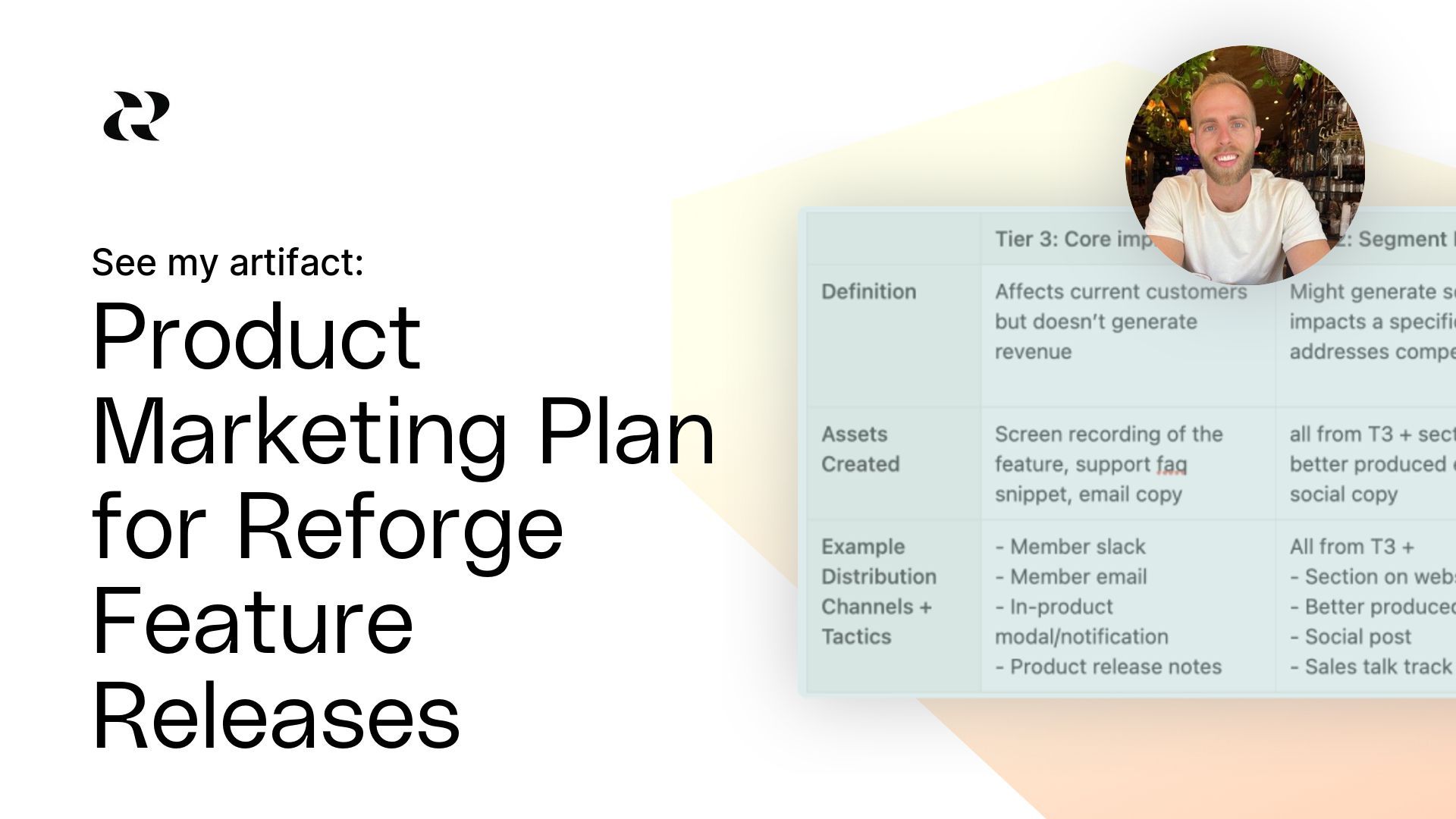
While this project didn’t have clear success metrics to begin with, the goal of improved adoption was outlined and fortified the connection between marketing and product teams.
2. SaaS marketing plan at O-CMO
Iulia Ihnatenko, Marketing Manager & Strategist at O-CMO, saw a chance to adopt an existing framework for a SaaS marketing plan for B2B service. The framework was originally for Fullfunnel.io, but it was reconfigured into terms that fit the SaaS landscape and the unique goals of O-CMO.
Iulia’s goal was to define a target audience, and allocate resources so that every marketing dollar achieved a specific outcome. This fixed an ongoing issue of lacking clarity, which was resulting in wasted effort and spend.
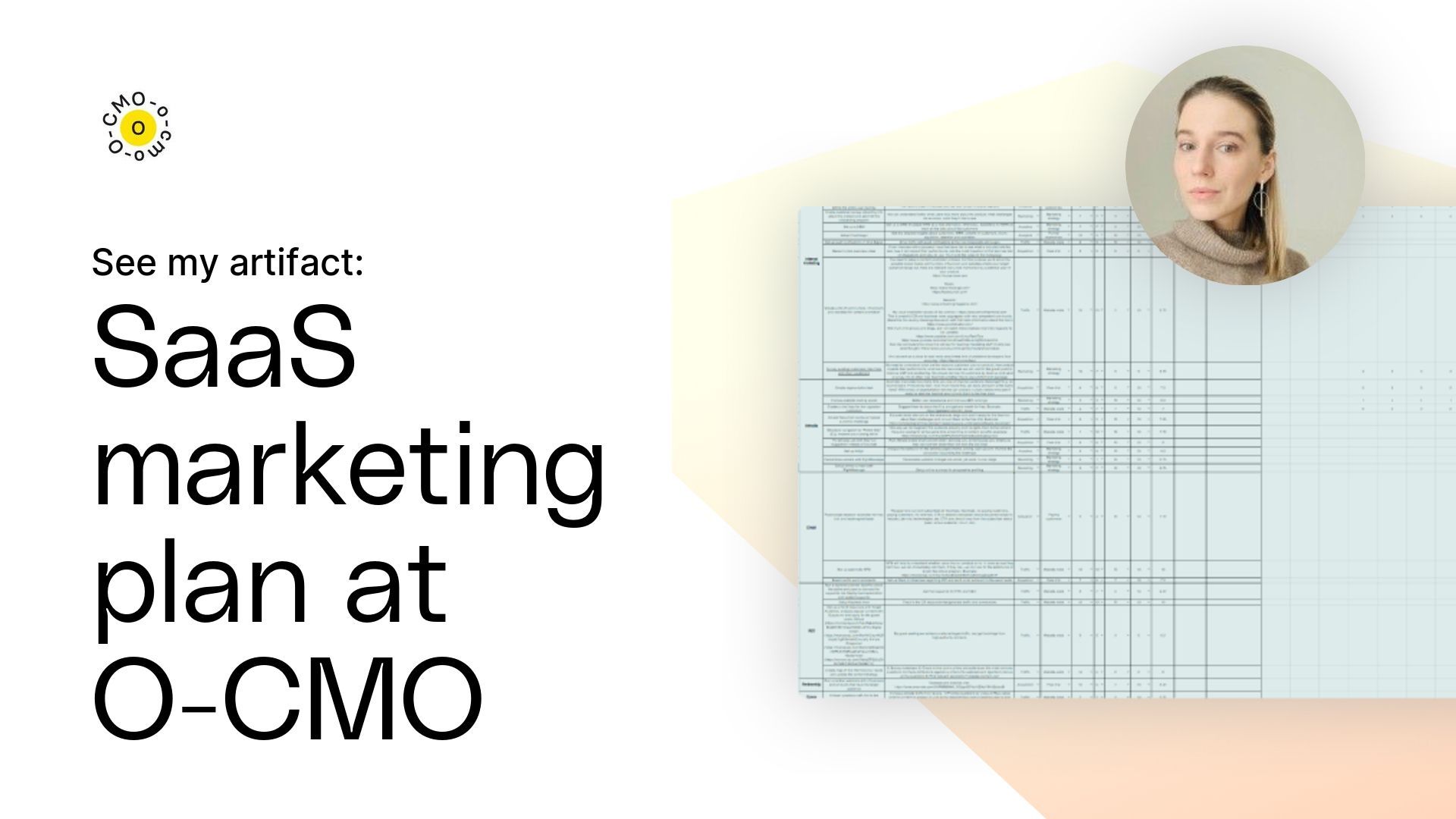
Ultimately, this framework led the team to understand the importance of quality over quantity, which resulted in more effective campaigns and more qualified leads for sales teams.
3. Best Practices for Driving Projects to Completion at Ramp
As the Head of Marketing Technology at Ramp, Austin Hay felt that his team lacked clear guidance on productivity and best practices for teams throughout the company. What started as a simple guide became a reliable resource for the teams to understand project goals, deadlines, owners, and processes around project execution.
Before the creation of this guide, teams at Ramp didn’t have a common language and set of expectations around project management and how performance was tracked.
Hay created a simple outline that soon became something much bigger, paving the way for improved performance across the board, benefiting productivity at a company-wide level.

4. Content Creation Operation Checklist at The Conversation
When Khalil A. Cassimally saw an opportunity to roll out a new audiences-informed content function at The Conversation, he needed to visualize the entire project in a clear way that all stakeholders could understand.
As head of Audience Insights, Khalil had the resources to make it happen, and he created a visual that defined phases, processes, and assigned responsibilities to team members at every stage. The project started with just one audience to get things rolling, but eventually, this roadmap served a key role in many projects.
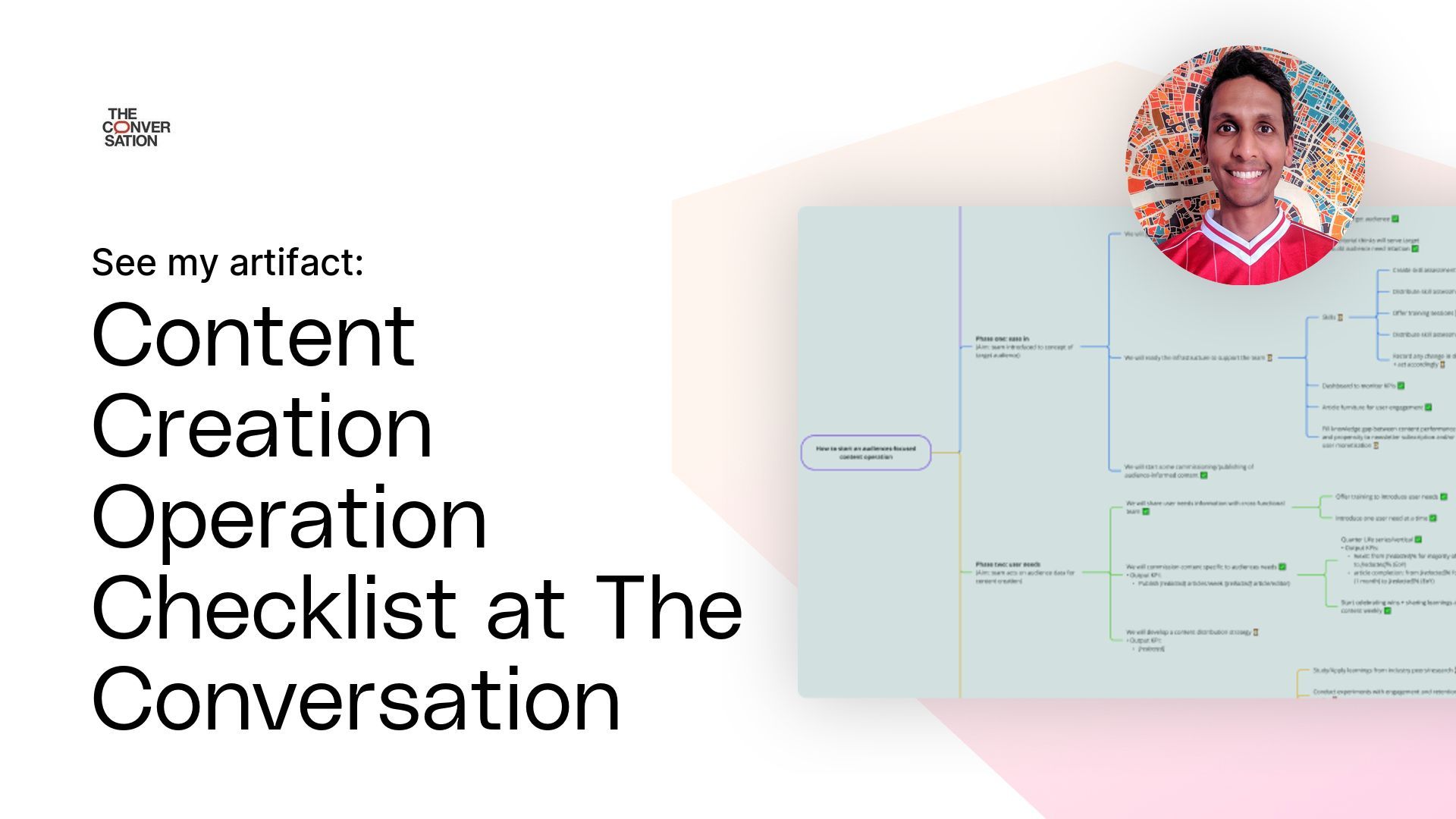
This example showcased how editor intuition and audience insights can be used to connect with users and keep them engaged, first as an experimental initiative and then as a repeatable process.
5. Strategic Marketing Plan at Total Kenya
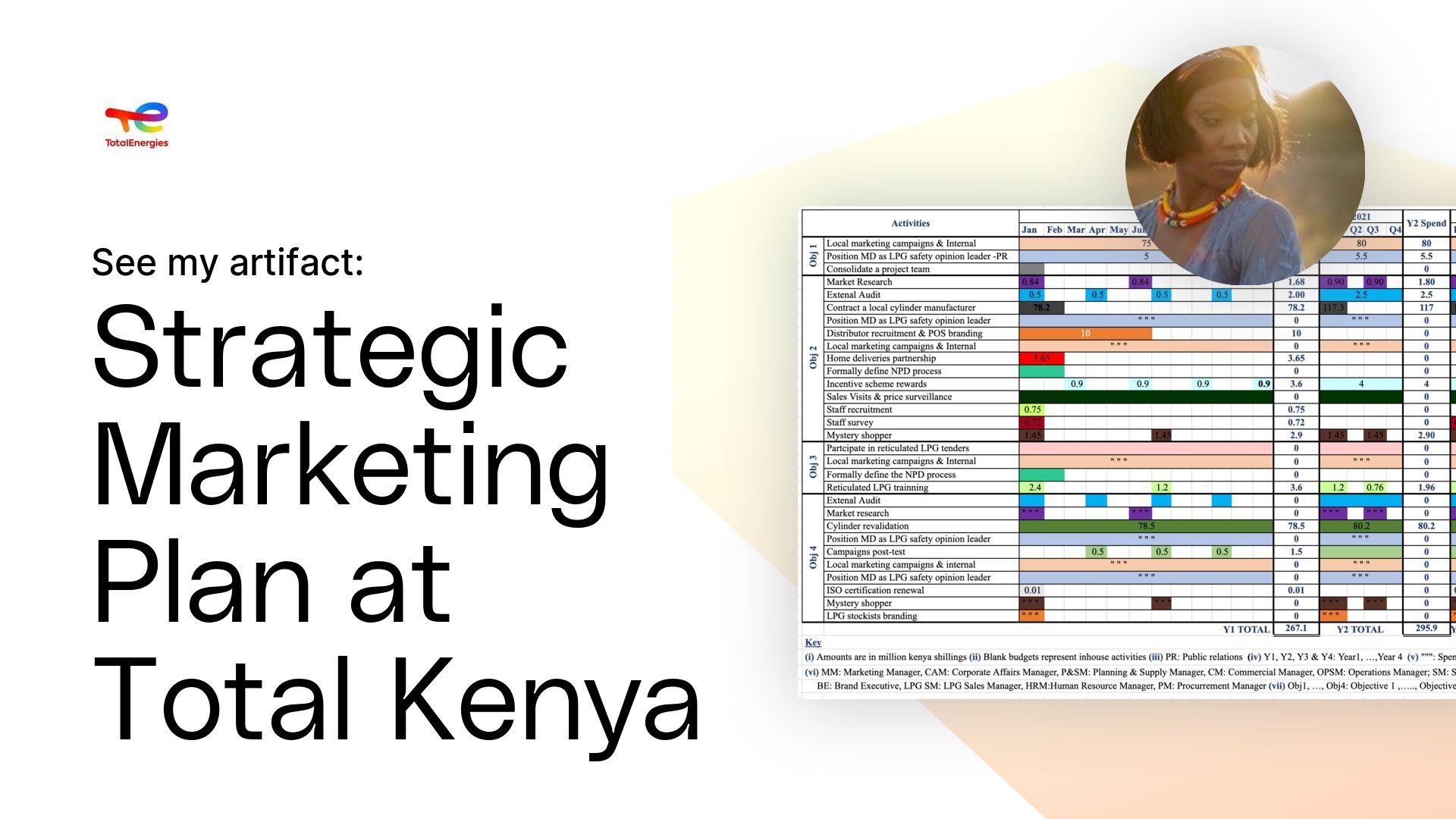
Determined to make Total Kenya a more competitive player, Kawira Irambu, Brand Management-Retail/B2B / Marketing and Communications Lead at TotalEnergies, created a document to help the company stay ahead of the game in the LPG space.
The plan began with a marketing strategy and included detailed budget breakdowns for the allocation of money, resources, and personnel. It was broken down into multiple objectives, each with micro-projects with clear deadlines and resource requirements.
Kawira also distinguished between internal team projects and partnerships with other organizations, which demanded longer timelines and more buy-in from partners.
6. Paid Advertising Structure for B2B Startups
Freelance Growth Marketer Ruben Lozano noticed a disconnect between him and his startup clients when it came to subchannels, campaign structures, and other key elements of a marketing plan.
This was the perfect opportunity for Ruben to create a paid advertising structure that he could use for each of his clients in a repeatable, templatized way. He began with a notion document to outline all the active channels and campaigns, ensuring a clean, organized workspace that clients could see clearly and provide input where needed.
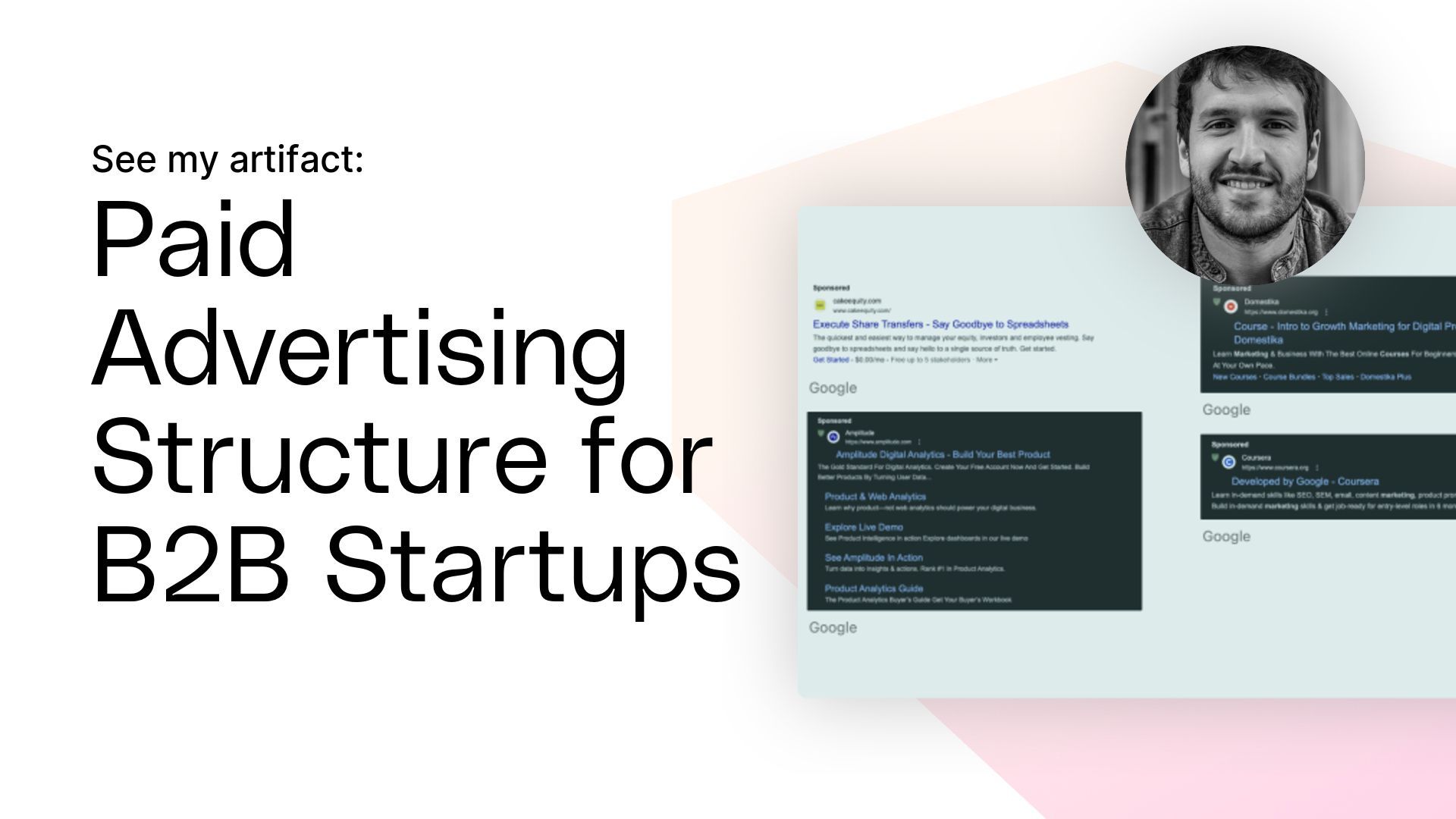
The document brought to light many areas of paid advertising that clients didn’t previously understand, helping them make smarter, data-backed decisions that paid off in the long term.
7. Facebook Ads Workflow SOP at Kettle & Fire
Paid social is an increasingly complex branch of marketing, and Jack Meredith, Vice President Marketing at Kettle & Fire, got ahead of the problem by creating a standard operating procedure (SOP) for everyone involved in the process.
While Jack started by looking at Facebook ads, he the potential of this framework for looping in all paid social channels, broken down into 7 key steps and outlining how key personnel fit into the process.
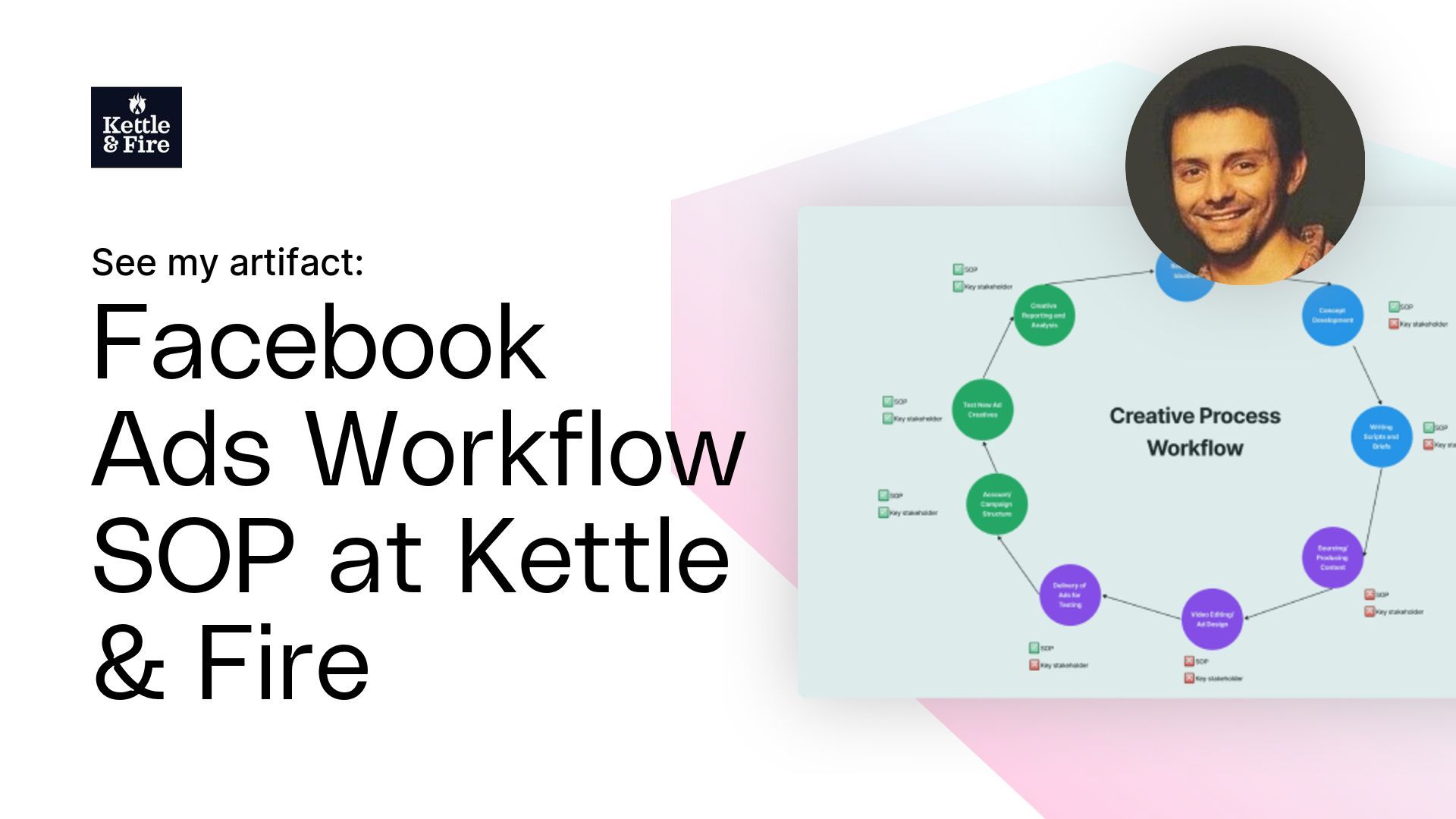
Now Kettle & Fire has a reliable SOP to look at paid social from every angle, including concept development, creative briefing, sourcing, review, and much more.
8. Content Creation Calendar at Reforge
Visual Designer Justin Thrift was limited by the traditional ways of project management and deadlines when working with multiple designers. He had tried Asana, but felt that the platform didn’t give him the big-picture view of projects or keep the right people accountable for key tasks.
So, he started from scratch using Figma, building a content creation calendar that would support the work of several designers, allowing them to collaborate on projects and understand the broader goals of each project at large.
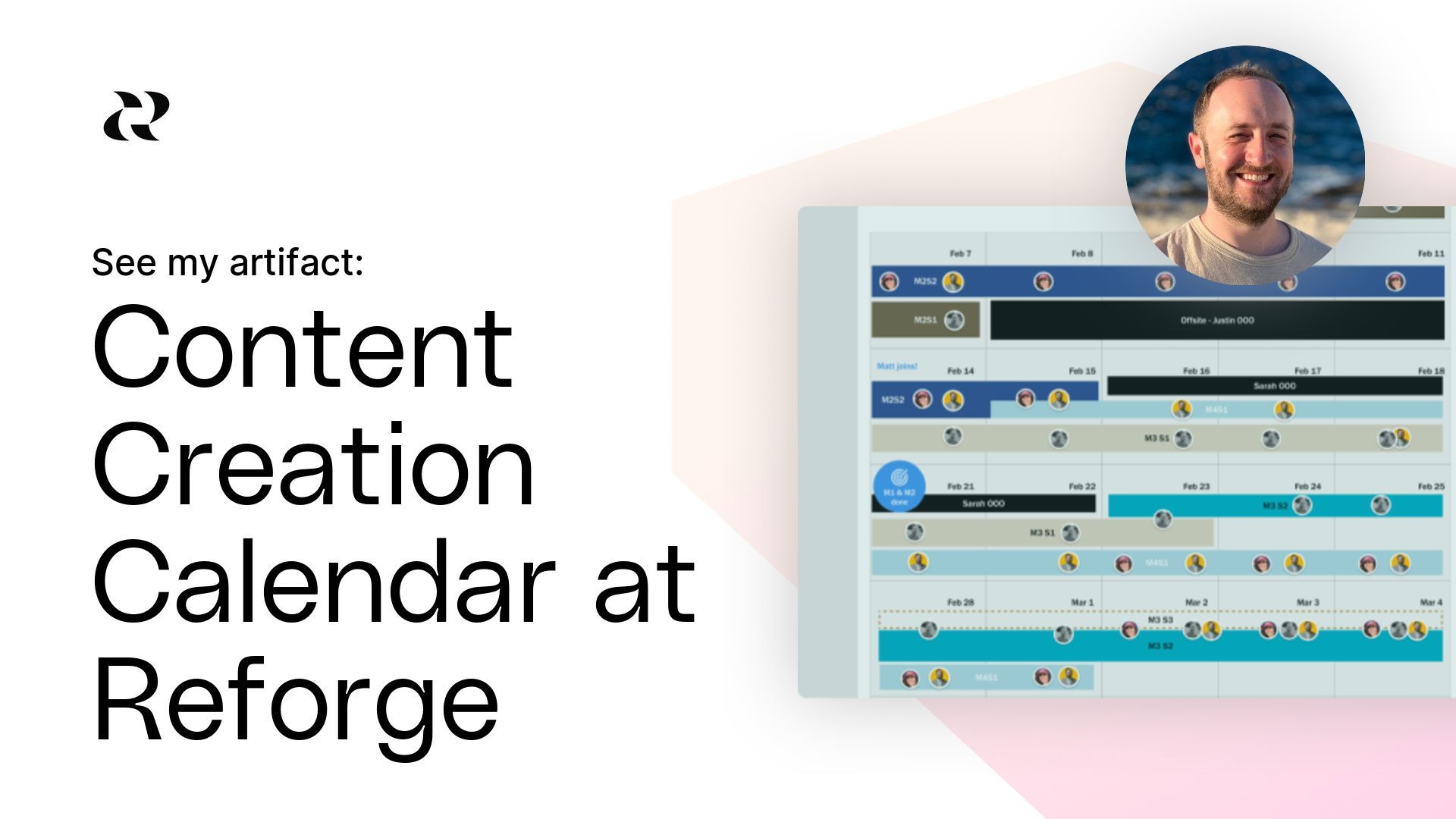
Now, Justin can reliably track the progress of each deliverable, keep team members accountable, and stay on top of major projects from a high-level viewpoint.
9. Business Development Partner Enablement Toolkit at Fundbox
Randi Lee, Head of Product Marketing at Fundbox, developed a microsite that helped speed up and scale partner marketing efforts, driving growth and ensuring the organization of many key players at once.
Partner marketing can be messy, and Randi saw that things were taking too long to get up and running, making them difficult to repeat and scale over time. With the microsite and toolkit enabled, the business development team at Fundbox could now expect consistent results and focus on bigger partners.
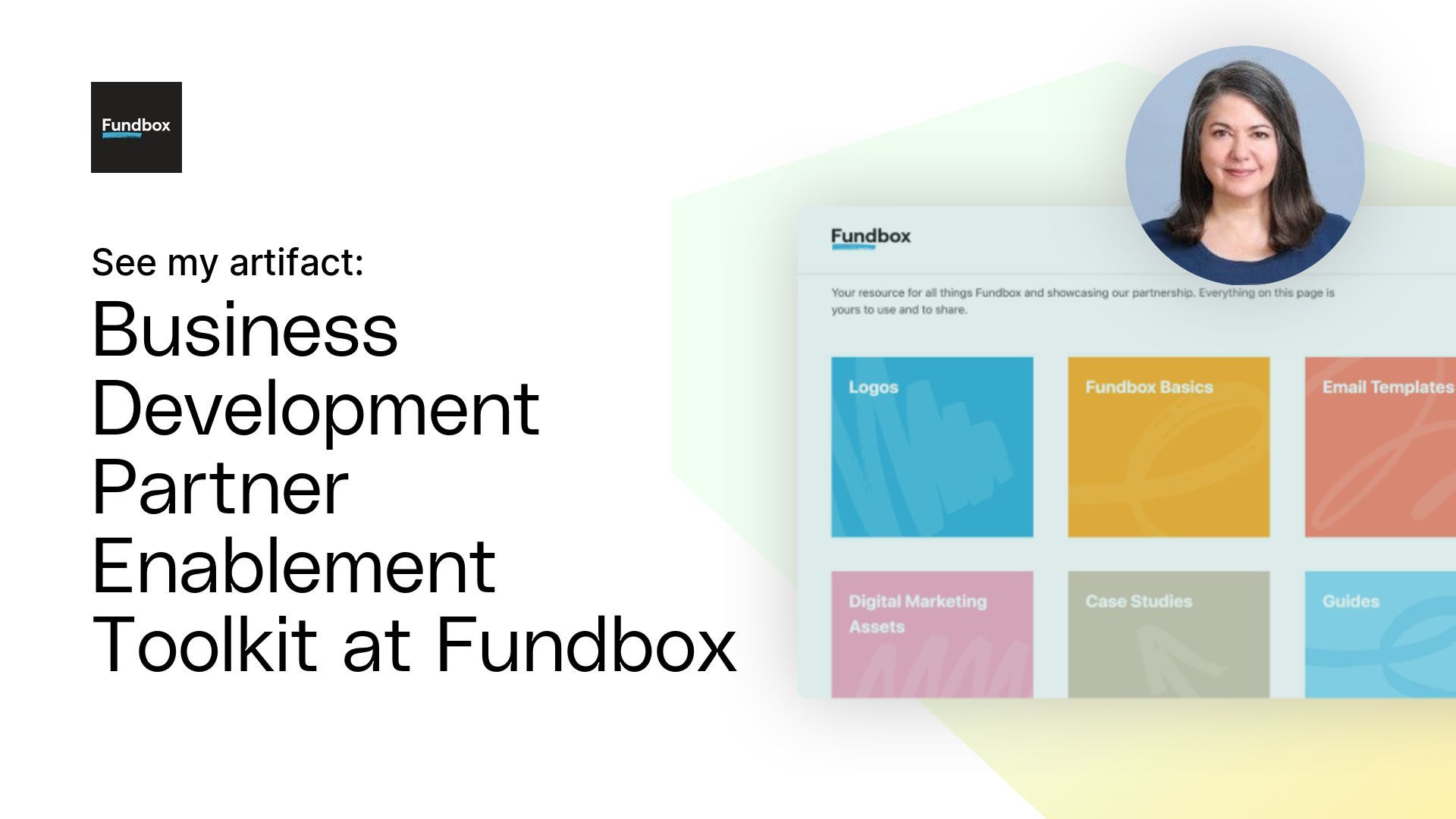
This is a key example of how a simple artifact can turn a good idea into an actual growth lever that could be repeated, scaled, and drive the business forward.
10. Marketing Planning with CSG Advisory
When CSG Founder Saurav Chowdhary noticed his team lacked a structured marketing plan, he took matters into his own hands with a detailed report for all stakeholders to latch onto.
Now, vendors were no longer operating in silos — every channel could now be aligned and partners knew exactly how marketing budget and energy were being spent. From Saurav’s perspective, he had a fresh look at marketing from a top-down level, giving him the chance to see the customer experience as it is meant to be.
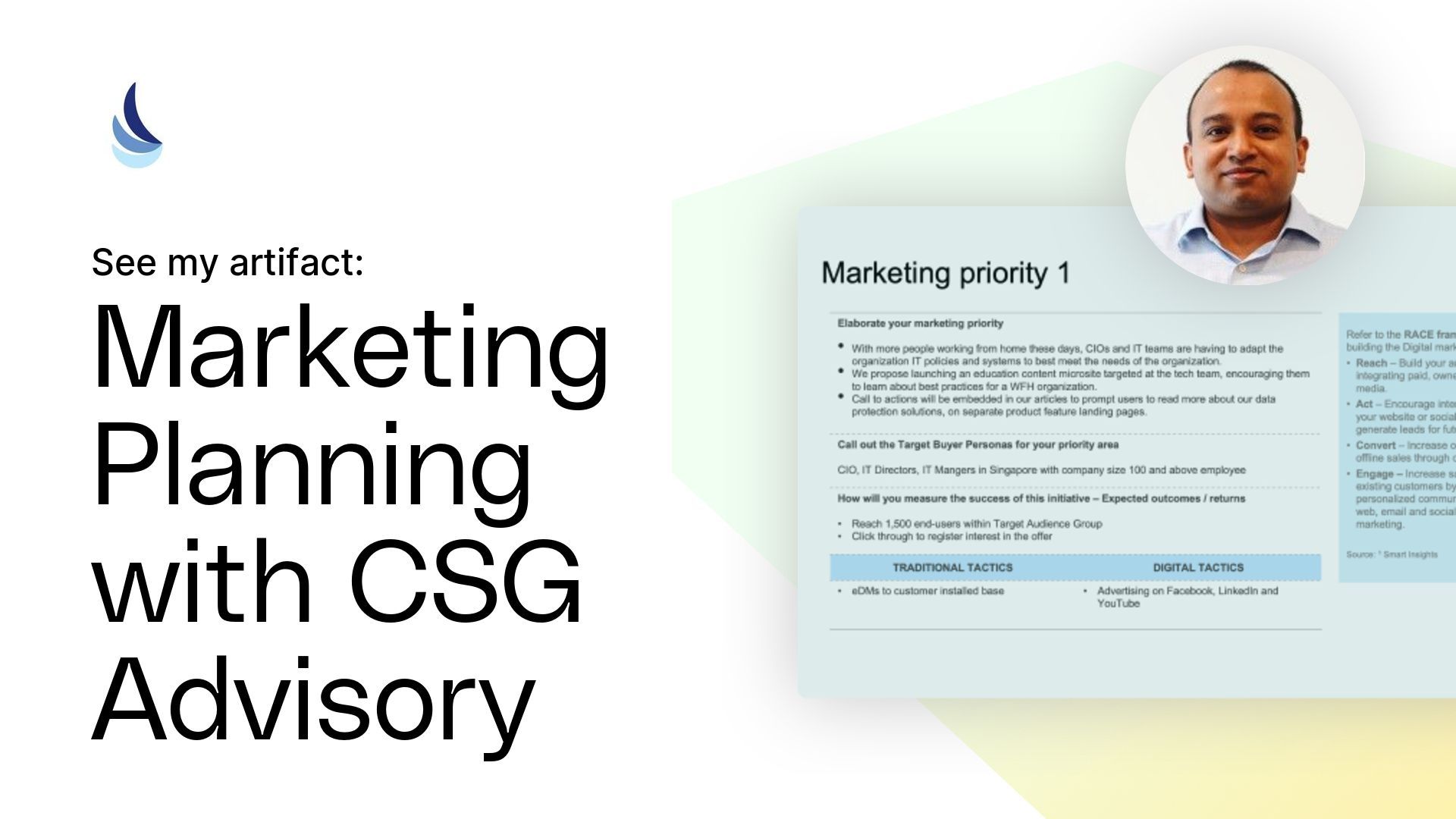
What was once a weakness in the CSG marketing strategy was now a strength, empowering vendors and partners to work together towards common goals, paving the way for future success.
View all Marketing Plans
How To Pick the Best Marketing Plan for You
Reforge eliminates the stress and confusion surrounding marketing plans, and each case study showcases exactly what you can expect from your chosen template.
Are you responsible for managing a range of different partners and vendors? Do you have a stable of in-house creative talent in need of superior product management? Maybe you have all the creative horsepower at your fingertips, but you lack a structured set of KPIs to bring it all together.
No matter what challenge your marketing team faces, Reforge has a template available that grants you a solution.
The Best Marketing Plan Templates for You
Every marketer knows the feeling of starting from scratch and staring at a blank page: too many variables, too many possibilities, and never enough time. Sound familiar?
With deadlines looming and pressure building, marketers often find themselves in a bind — that’s where Reforge comes in with game-changing templates that clarify, simplify, and set the stage for success. Establishing a marketing strategy has never been easier, from setting a marketing budget to a content marketing calendar and much more.
Now, it’s time to learn how the best operators in tech think about Marketing Plans. In this article, we’ll explore examples of Marketing Plans so you never have to start from scratch in pursuit of your business goals.
Key Components of a Marketing Plan
Every great marketing plan shares a few key components. These are the non-negotiables, the nuts and bolts that make sense to marketers and communicate goals to other departments in plain English.
That way, your marketing initiatives fit seamlessly with the broader business plan of your company and match the roadmap of your business goals in the eyes of key stakeholders.
Here are the seven must-have components of any marketing plan, ensuring that all team members are on board with the action plan:
Executive Summary
Think big picture and summarize the entirety of your marketing plan, connecting them with the business and marketing objectives that matter most to executives. An effective marketing plan might look complex on paper, but the best marketers make it simple in the eyes of key stakeholders.
An effective summary will make marketing goals easy to communicate, including marketing channels, marketing budget, pain points, and a plan of action. Once all team members are on board and know their roles, you can follow through and make your plan a reality.
Unique Selling Proposition
Every great brand knows what makes its products and services stand out, and this USP should be recognized in all marketing materials. A concise USP helps marketers differentiate in a crowded marketplace, addressing customer needs and serving as a compass for messaging across marketing channels.
If you ever get lost in constructing a marketing plan, your USP will always point you back in the right direction — make sure it’s built on a strong foundation.
SWOT Analysis
Strengths, Weaknesses, Opportunities, Threats — SWOT analysis covers these bases and gives you the lay of the land when building a marketing strategy from square one. That’s why no marketing plan should be without a basic SWOT analysis, no matter your industry or product category.
While strengths and weaknesses reflect internal factors within your business, opportunities and threats represent external factors like competitors and market trends beyond your control. Smart marketers use SWOT to their benefit, allowing them to take advantage of market gaps and outthink the competition.
Buyer Personas
Leave nothing to chance as you describe your ideal customer, from demographics to interests, behaviors, and preferences. This description will inform all of your marketing plans, including which channels you use to broadcast messages and the types of offers you present.
The more specific, the better when it comes to crafting buyer personas, so dive deep and consider the customers’ needs on an individual level. Using these personas in your marketing playbook can reveal blind spots in your action plan and help you keep your eyes on the prize: connecting real-world people to your products and services.
Target Audience
While your target audience may be slightly broader than precise buyer personas, this is an important exercise nonetheless and should be included in any marketing plan. Here, you can explore demographics, interests, and pricing strategies that ensure a product-market fit — essential to any marketing plan of action.
Think of this as your broad target market, one that is measurable and consistent with your customer base. If you can learn from your current customers to target new customers, all the better. This is how you tap into the power of customer retention while steadily increasing market share with every new marketing initiative.
Competitive Analysis
A bullet-proof marketing plan can’t be created in a vacuum — you need to acknowledge and evaluate competitors in your proximity to make the best possible decisions. Take a measured, objective approach to competitor analysis, and don’t be blinded by bias.
The best marketers see this as a learning opportunity and a chance to outcompete market rivals with better messaging, creative solutions, and key differentiators. Competitor analysis might seem tedious and take more time as you assemble your strategy, but it will all pay off when you face the competition head-on.
KPIs
Metrics are everywhere in the world of marketing, and at some point, they all start blurring together. That’s where key performance indicators make a difference, shining a light on the most important metrics and tying them to the business goals that matter most for your company.
Identify KPIs from the outset, ensuring that your goals are not there to merely fill in the blanks on a chart. If you can demonstrate how KPIs relate to sales and growth, that will prove invaluable when it comes time to share results with stakeholders and take your marketing strategy to the next level.
How Do You Structure a Marketing Plan?
A marketing plan is greater than the sum of its parts, but only with the proper structure and approach. Let’s walk through some practical steps you can follow to get your marketing plan together piece by piece, showing you how the top marketing strategists make it happen.
Establish Marketing Goals and Objectives
Start from square one by determining the most important marketing goals and objectives for your target timeframe. These goals should be both ambitious and achievable, based on real-world data for each channel and the available budget you can work with.
Each channel has its own marketing goals, and this fits into a broader game plan that encompasses the omnichannel business objectives. Take time to research and plan with your team — everyone must be on board so that nothing is left to chance.
Identify KPIs and Measurement Methods
Is your marketing plan focused on top-of-funnel reach and brand awareness? How about mid-funnel engagement and website clicks? Where do leads and conversions come into play? These are the questions you need to ask when identifying KPIs and measuring the results to come.
Setting KPIs is just part one of this plan — they’re only as good as their accurate measurements. Be sure you can actually follow through by measuring these results and conveying them to stakeholders in clear terms so you can prove your worth as a marketer and help your team get the credit they deserve.
Clarify Your Unique Selling Proposition
It never hurts to take a step back and evaluate your brand’s USP, even if you’ve already tested multiple campaigns and know the product well. Remember, your audience doesn’t have the same level of familiarity as you do with your brand, so don’t let user bias get the best of you.
With that said, every bit of messaging should be infused with your company’s USP, with no room for assumptions or ambiguity. This is also an exercise in multi-channel cohesion, making sure every marketing channel is empowered with relevant, precise messaging to impact audiences at every level.
Analyze Competitors and Target Markets
Take all the time you need to analyze what the competition is doing and where you can gain a competitive edge. This means looking at their marketing materials, web presence, social media marketing strategies, and customer engagement tactics. It’s also a chance to evaluate your target market and reaffirm which buyer personas are most relevant to your upcoming campaigns.
Don’t forget that competitors are always adjusting their tactics, and this cat & mouse game never ends in the world of marketing. That’s why competitive analysis is required for every new campaign you launch and why you should take nothing for granted when assembling a marketing plan at any scale.
Set a Budget for All Marketing Activities
It’s the boring part of marketing, but budgeting is critical to the success of any plan. Know exactly how much you have to spend, where the money is allocated across channels, and project the return on investment from every dollar.
Once your budget is set, you can create an executive summary to share with stakeholders and get the green light for your campaign.
Create an Implementation Schedule
This is the execution portion of your marketing plan, including specific times and dates for when key marketing assets are delivered. Every channel deserves its own schedule — whether you manually execute campaigns or automate them is up to you.
What matters most is that your marketing budget is put to good use, and you deliver on your promises, ensuring you get the results you deserve.
10 Marketing Plan Templates Built and Used by Leading Companies
1. Product Marketing Plan for Reforge Feature Releases
Reforge Marketing Lead Chris Eberhardt saw that some of Reforge’s new features had low adoption upon release. This led him to search for new ways that marketing and product could collaborate, which resulted in the creation of a product marketing plan for feature releases.
With the goal of having two separate teams work more closely, Chris built a reference table for tiered releases. This allowed both teams to have a single point of reference for discussing and strategizing around tiered releases. Every release was given a tier with its own requirements, so nothing was left to interpretation for stakeholders.
While this project didn’t have clear success metrics to begin with, the goal of improved adoption was outlined and fortified the connection between marketing and product teams.
2. SaaS marketing plan at O-CMO
Iulia Ihnatenko, Marketing Manager & Strategist at O-CMO, saw a chance to adopt an existing framework for a SaaS marketing plan for B2B service. The framework was originally for Fullfunnel.io, but it was reconfigured into terms that fit the SaaS landscape and the unique goals of O-CMO.
Iulia’s goal was to define a target audience, and allocate resources so that every marketing dollar achieved a specific outcome. This fixed an ongoing issue of lacking clarity, which was resulting in wasted effort and spend.
Ultimately, this framework led the team to understand the importance of quality over quantity, which resulted in more effective campaigns and more qualified leads for sales teams.
3. Best Practices for Driving Projects to Completion at Ramp
As the Head of Marketing Technology at Ramp, Austin Hay felt that his team lacked clear guidance on productivity and best practices for teams throughout the company. What started as a simple guide became a reliable resource for the teams to understand project goals, deadlines, owners, and processes around project execution.
Before the creation of this guide, teams at Ramp didn’t have a common language and set of expectations around project management and how performance was tracked.
Hay created a simple outline that soon became something much bigger, paving the way for improved performance across the board, benefiting productivity at a company-wide level.
4. Content Creation Operation Checklist at The Conversation
When Khalil A. Cassimally saw an opportunity to roll out a new audiences-informed content function at The Conversation, he needed to visualize the entire project in a clear way that all stakeholders could understand.
As head of Audience Insights, Khalil had the resources to make it happen, and he created a visual that defined phases, processes, and assigned responsibilities to team members at every stage. The project started with just one audience to get things rolling, but eventually, this roadmap served a key role in many projects.
This example showcased how editor intuition and audience insights can be used to connect with users and keep them engaged, first as an experimental initiative and then as a repeatable process.
5. Strategic Marketing Plan at Total Kenya
Determined to make Total Kenya a more competitive player, Kawira Irambu, Brand Management-Retail/B2B / Marketing and Communications Lead at TotalEnergies, created a document to help the company stay ahead of the game in the LPG space.
The plan began with a marketing strategy and included detailed budget breakdowns for the allocation of money, resources, and personnel. It was broken down into multiple objectives, each with micro-projects with clear deadlines and resource requirements.
Kawira also distinguished between internal team projects and partnerships with other organizations, which demanded longer timelines and more buy-in from partners.
6. Paid Advertising Structure for B2B Startups
Freelance Growth Marketer Ruben Lozano noticed a disconnect between him and his startup clients when it came to subchannels, campaign structures, and other key elements of a marketing plan.
This was the perfect opportunity for Ruben to create a paid advertising structure that he could use for each of his clients in a repeatable, templatized way. He began with a notion document to outline all the active channels and campaigns, ensuring a clean, organized workspace that clients could see clearly and provide input where needed.
The document brought to light many areas of paid advertising that clients didn’t previously understand, helping them make smarter, data-backed decisions that paid off in the long term.
7. Facebook Ads Workflow SOP at Kettle & Fire
Paid social is an increasingly complex branch of marketing, and Jack Meredith, Vice President Marketing at Kettle & Fire, got ahead of the problem by creating a standard operating procedure (SOP) for everyone involved in the process.
While Jack started by looking at Facebook ads, he the potential of this framework for looping in all paid social channels, broken down into 7 key steps and outlining how key personnel fit into the process.
Now Kettle & Fire has a reliable SOP to look at paid social from every angle, including concept development, creative briefing, sourcing, review, and much more.
8. Content Creation Calendar at Reforge
Visual Designer Justin Thrift was limited by the traditional ways of project management and deadlines when working with multiple designers. He had tried Asana, but felt that the platform didn’t give him the big-picture view of projects or keep the right people accountable for key tasks.
So, he started from scratch using Figma, building a content creation calendar that would support the work of several designers, allowing them to collaborate on projects and understand the broader goals of each project at large.
Now, Justin can reliably track the progress of each deliverable, keep team members accountable, and stay on top of major projects from a high-level viewpoint.
9. Business Development Partner Enablement Toolkit at Fundbox
Randi Lee, Head of Product Marketing at Fundbox, developed a microsite that helped speed up and scale partner marketing efforts, driving growth and ensuring the organization of many key players at once.
Partner marketing can be messy, and Randi saw that things were taking too long to get up and running, making them difficult to repeat and scale over time. With the microsite and toolkit enabled, the business development team at Fundbox could now expect consistent results and focus on bigger partners.
This is a key example of how a simple artifact can turn a good idea into an actual growth lever that could be repeated, scaled, and drive the business forward.
10. Marketing Planning with CSG Advisory
When CSG Founder Saurav Chowdhary noticed his team lacked a structured marketing plan, he took matters into his own hands with a detailed report for all stakeholders to latch onto.
Now, vendors were no longer operating in silos — every channel could now be aligned and partners knew exactly how marketing budget and energy were being spent. From Saurav’s perspective, he had a fresh look at marketing from a top-down level, giving him the chance to see the customer experience as it is meant to be.
What was once a weakness in the CSG marketing strategy was now a strength, empowering vendors and partners to work together towards common goals, paving the way for future success.
View all Marketing Plans
How To Pick the Best Marketing Plan for You
Reforge eliminates the stress and confusion surrounding marketing plans, and each case study showcases exactly what you can expect from your chosen template.
Are you responsible for managing a range of different partners and vendors? Do you have a stable of in-house creative talent in need of superior product management? Maybe you have all the creative horsepower at your fingertips, but you lack a structured set of KPIs to bring it all together.
No matter what challenge your marketing team faces, Reforge has a template available that grants you a solution.