Reforge has joined Miro ↗
During a recent event, Anthony Scarpaci, former VP of Growth at Acorns, shared actionable strategies for financial services teams to convert potential customers into loyal brand advocates by focusing on a critical yet often overlooked element: the full customer journey. Drawing from his extensive experience, Anthony highlighted the importance of perfecting this process—moving from the ad to a landing page, through registration and onboarding, into product engagement, and ultimately advocacy, fueling the growth loop.
Below are the key insights and takeaways from his talk.
The Full Customer Journey: A Disjointed Experience for Most Financial Products.
The first touch points in a user’s journey with financial products can often be a major source of frustration. Intended to attract and onboard new users while laying the groundwork for a long-term relationship, this process can quickly become disjointed if not executed well.
Financial services organizations, in particular, face complexities such as compliance requirements, which necessitate thorough data collection, and internal silos, where different teams manage separate parts of the onboarding journey, each with their own objectives.
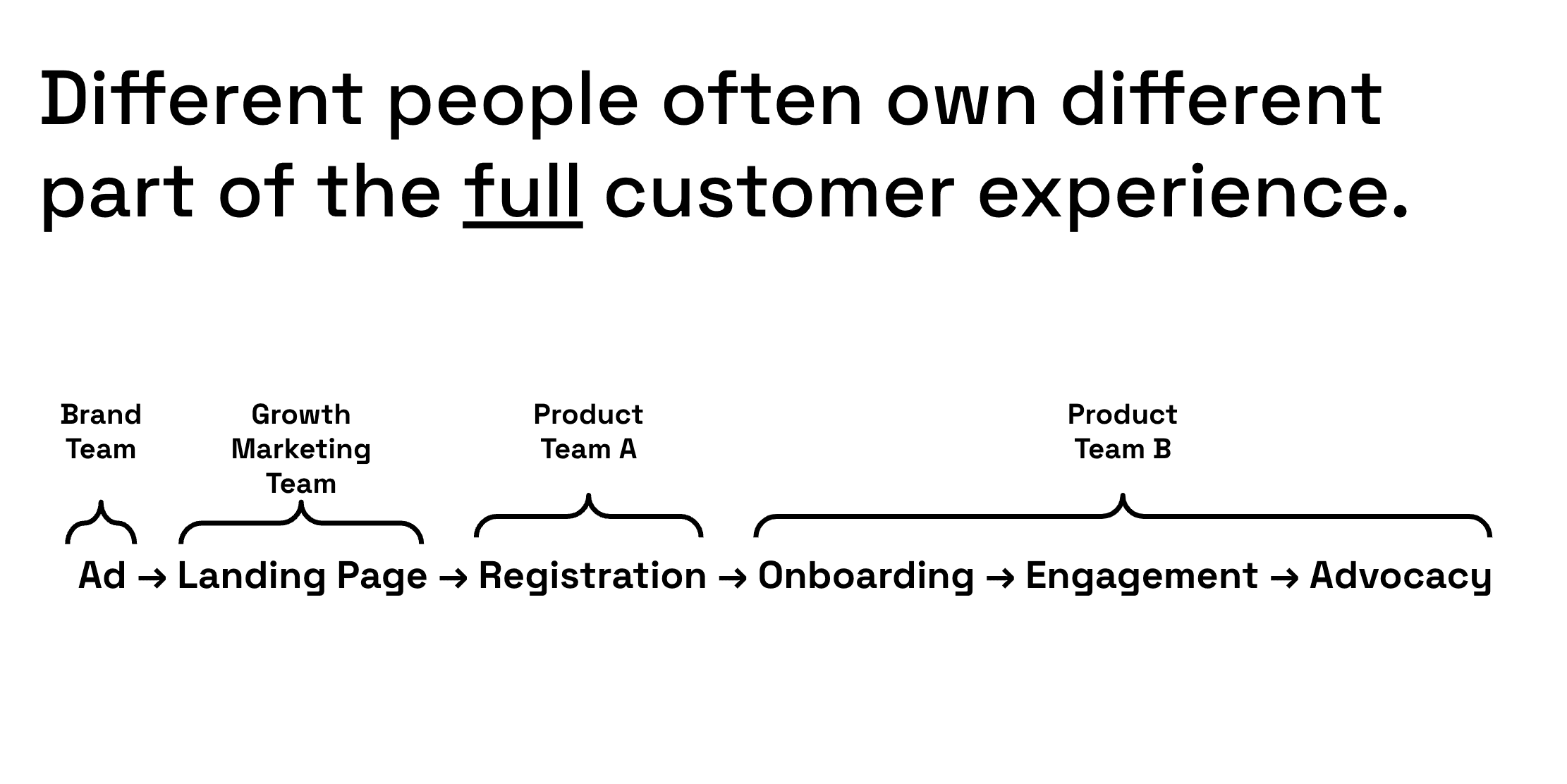
Plus, much of this journey usually occurs within one session, with over 75% of customers beginning their trial experience on the first day. The first few hours, or even minutes of interaction with your brand, can determine whether a new customer sticks with the product or leaves unfulfilled.
For financial firms, making this journey seamless isn’t just about compliance; it’s about creating an engaging experience that instills confidence in the product’s ability to meet customer needs and deliver value.
"When the customer experience suffers, so do your outcomes."
Apply a Three-Step Approach: Understand, Plan, Deliver.
To address these challenges and enhance user experiences, Anthony outlined a three-step approach: Understand, Plan, and Deliver. This structured framework helps financial services companies improve the full customer journey and transform new users into loyal advocates.
Understand the Customer Experience
Truly understanding what your customer experiences is the first step. Anthony emphasized the need to walk through the live experience just as your customers do. 'Go through the entire journey,' he advised, 'starting from the very first touchpoints.'
Record customers as they interact with your product, analyzing their experiences by source and operating system. 'Look at as many permutations as possible,' he explained. This includes testing key media ads and tracking customers through landing pages, sign-up flows, and onboarding steps. It’s not just about paid ads; replicate organic search experiences, affiliate placements, and referral programs to get the full picture.
Running these tests across different platforms—desktop, mobile, and various operating systems—will help spot disjointed areas in the onboarding experience. 'The more variety you have, the more chances you’ll spot areas where things are disjointed,' he noted.
Plan for improvements
Once you have gathered insights from the customer’s perspective, it’s time to plan. This involves analyzing your data, identifying priorities, and aligning your teams around clear goals.
Strategic planning
Begin by building a robust quantitative growth model to understand the full conversion funnel.
This model will encompass the full spectrum of your conversion funnel and its efficiencies. Understanding the dependencies and levers within your business is paramount. For instance, improving customer communication through consistent messaging and effective landing pages can enhance click-through rates and registration conversions.
To illustrate, if we enhance early customer experiences, it not only increases customer conversion rates but also leads to higher lifetime value (LTV) and reduced customer acquisition cost (CAC). The interplay between these metrics is critical: improved LTV coupled with reduced CAC can significantly enhance your LTV to CAC ratio, accelerating profitability.
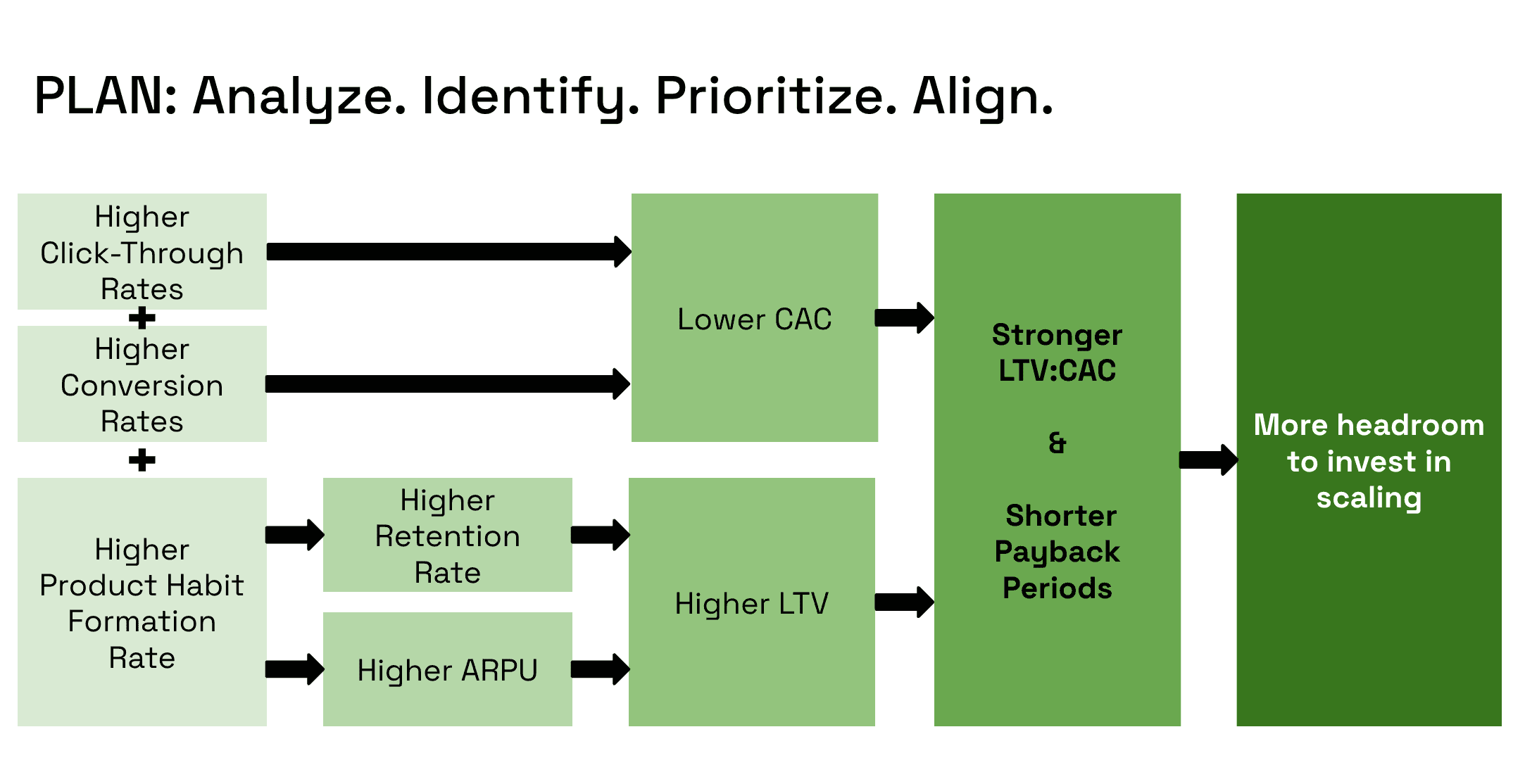
By refining your models and conducting sensitivity analyses, you can prioritize efforts that yield the greatest impact. For example, focusing on conversion rates within the onboarding funnel can yield more customers than improving marketing spend alone.
Unified Team Collaboration
Align your marketing, product, and customer success teams to ensure they work toward the same goal. This collaboration helps establish a shared vision where all team members see how their contributions can drive overall success**. **Without clear communication and prioritization, even the best plans can falter.
Consider establishing a "board seat" concept among teams, allowing for cross-functional discussions between growth product and growth marketing on their roadmaps and priorities. This integrative approach fosters camaraderie and strengthens alliances, increasing the likelihood of achieving top-line growth objectives.
Effective Delivery and Execution
The final step is delivery, which involves breaking through to customers, reinforcing value, and expanding engagement. Use a “wedge” strategy to capture attention, followed by clear messaging that reinforces your value proposition.
For example, Acorns and Chime have successfully utilized compelling hooks like investing spare change and offering cash advances, respectively. These hooks are supported by clear benefits communicated through various channels, from ads to landing pages to onboarding experiences.
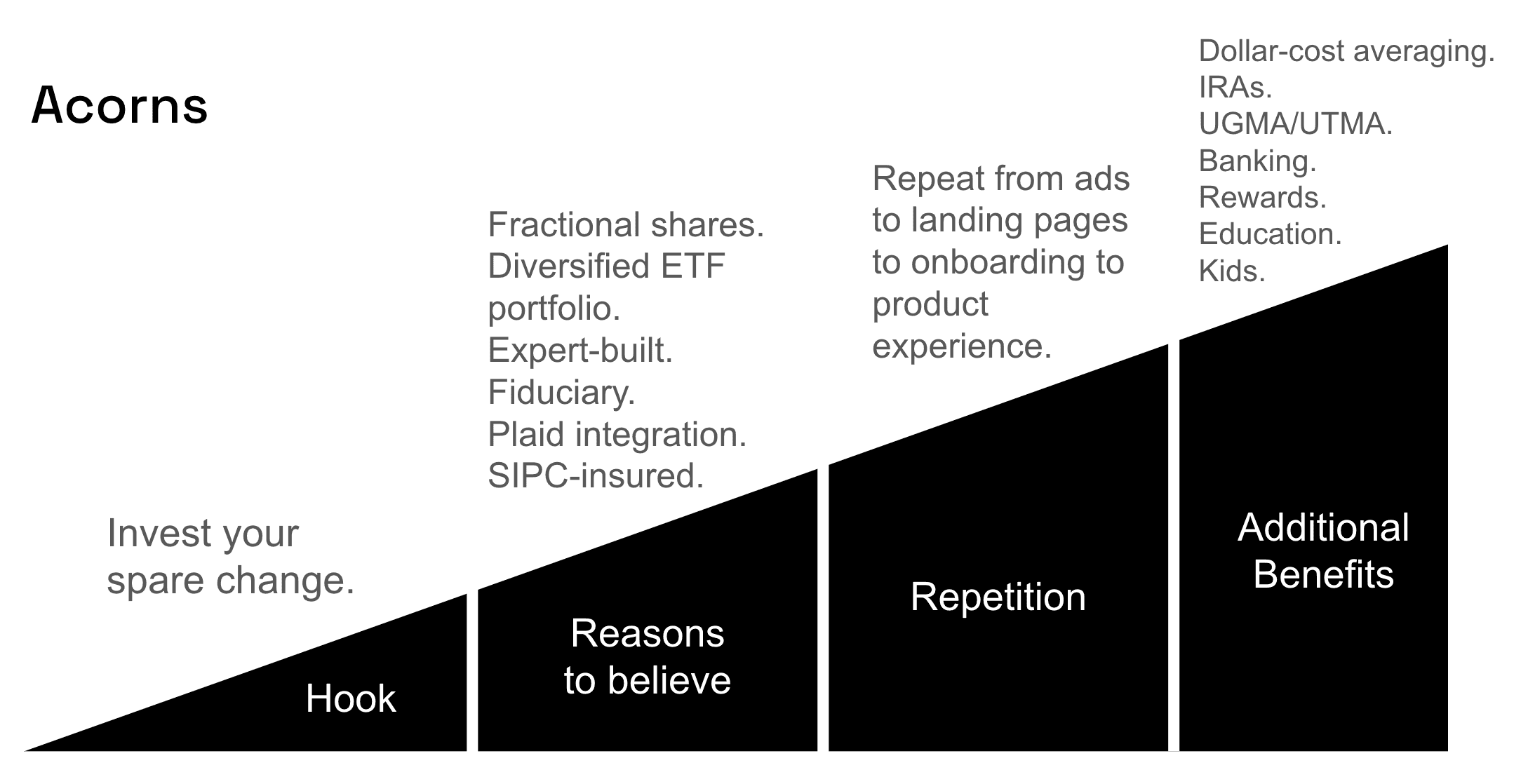
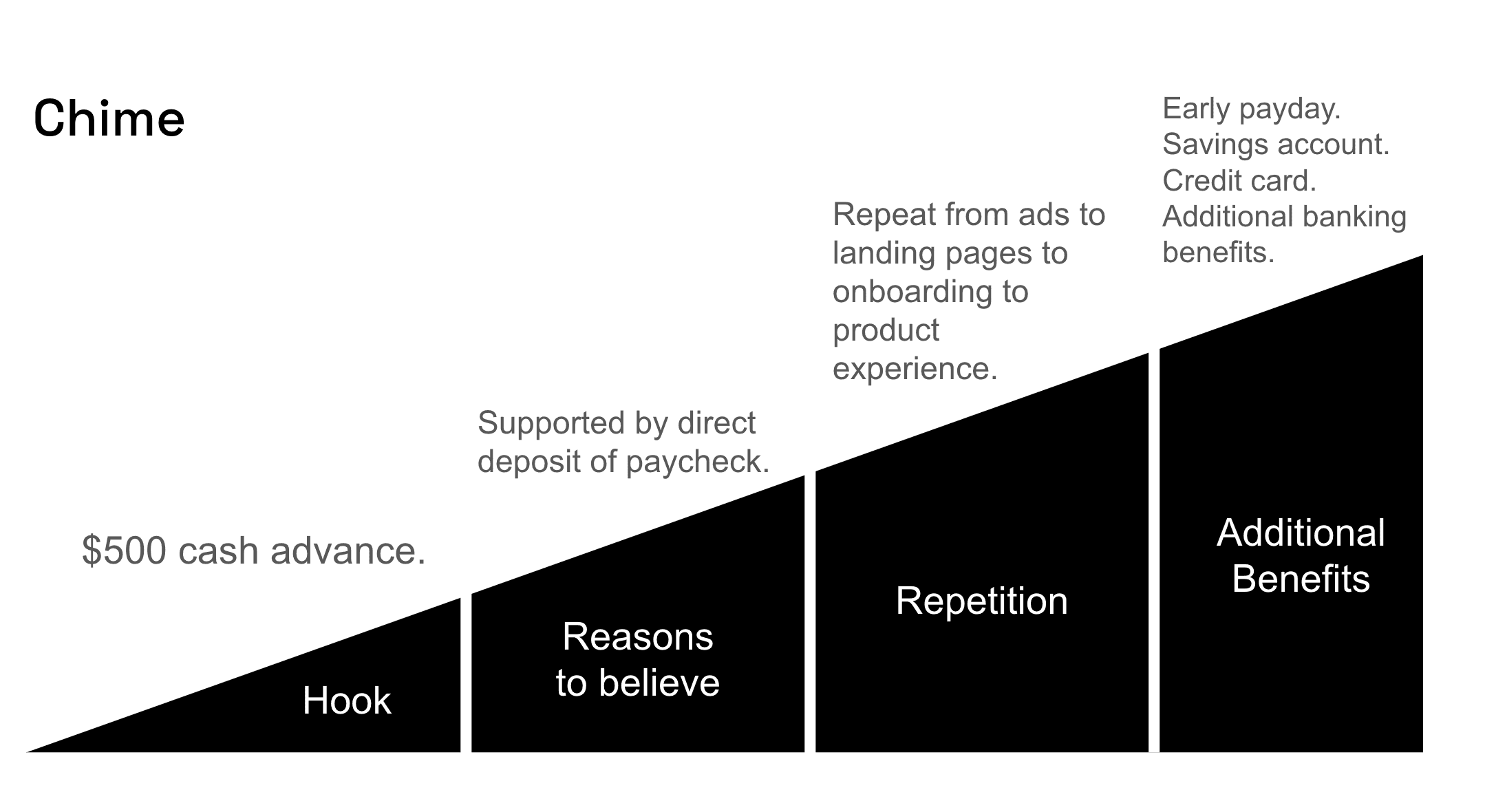
Throughout the customer journey, consistency is critical. Reinforcing the value of investments and habits—from ads to landing pages to onboarding to the actual product experience—can lead to higher customer retention and engagement rates.
Continuous improvement
The journey doesn’t end with execution. Continuously integrate customer feedback into your quantitative models to go beyond internal metrics. While understanding your metrics is essential, live experiences can reveal key pain points. Sharing these insights across teams and rallying support for improvements ensures a more consistent customer experience.
By systematically understanding customers, planning strategically, fostering collaboration, and executing with clarity, you can build a resilient growth framework that not only captures new customers but turns them into loyal advocates.
In the rapidly evolving financial services landscape, these strategic approaches will set your organization apart and drive long-term success.
Reforge equips product and growth teams with the expertise and tools necessary to deliver exceptional work. Our in-depth courses and real-time inspiration from proven examples empower individual contributors, while our productivity tools accelerate work output. With Reforge, you can accelerate growth and amplify your team’s impact, ensuring your organization not only meets the challenges of the financial services landscape but thrives in it.
Explore Reforge For Teams


During a recent event, Anthony Scarpaci, former VP of Growth at Acorns, shared actionable strategies for financial services teams to convert potential customers into loyal brand advocates by focusing on a critical yet often overlooked element: the full customer journey. Drawing from his extensive experience, Anthony highlighted the importance of perfecting this process—moving from the ad to a landing page, through registration and onboarding, into product engagement, and ultimately advocacy, fueling the growth loop.
Below are the key insights and takeaways from his talk.
The Full Customer Journey: A Disjointed Experience for Most Financial Products.
The first touch points in a user’s journey with financial products can often be a major source of frustration. Intended to attract and onboard new users while laying the groundwork for a long-term relationship, this process can quickly become disjointed if not executed well.
Financial services organizations, in particular, face complexities such as compliance requirements, which necessitate thorough data collection, and internal silos, where different teams manage separate parts of the onboarding journey, each with their own objectives.
Plus, much of this journey usually occurs within one session, with over 75% of customers beginning their trial experience on the first day. The first few hours, or even minutes of interaction with your brand, can determine whether a new customer sticks with the product or leaves unfulfilled.
For financial firms, making this journey seamless isn’t just about compliance; it’s about creating an engaging experience that instills confidence in the product’s ability to meet customer needs and deliver value.
"When the customer experience suffers, so do your outcomes."
Apply a Three-Step Approach: Understand, Plan, Deliver.
To address these challenges and enhance user experiences, Anthony outlined a three-step approach: Understand, Plan, and Deliver. This structured framework helps financial services companies improve the full customer journey and transform new users into loyal advocates.
Understand the Customer Experience
Truly understanding what your customer experiences is the first step. Anthony emphasized the need to walk through the live experience just as your customers do. 'Go through the entire journey,' he advised, 'starting from the very first touchpoints.'
Record customers as they interact with your product, analyzing their experiences by source and operating system. 'Look at as many permutations as possible,' he explained. This includes testing key media ads and tracking customers through landing pages, sign-up flows, and onboarding steps. It’s not just about paid ads; replicate organic search experiences, affiliate placements, and referral programs to get the full picture.
Running these tests across different platforms—desktop, mobile, and various operating systems—will help spot disjointed areas in the onboarding experience. 'The more variety you have, the more chances you’ll spot areas where things are disjointed,' he noted.
Plan for improvements
Once you have gathered insights from the customer’s perspective, it’s time to plan. This involves analyzing your data, identifying priorities, and aligning your teams around clear goals.
Strategic planning
Begin by building a robust quantitative growth model to understand the full conversion funnel.
This model will encompass the full spectrum of your conversion funnel and its efficiencies. Understanding the dependencies and levers within your business is paramount. For instance, improving customer communication through consistent messaging and effective landing pages can enhance click-through rates and registration conversions.
To illustrate, if we enhance early customer experiences, it not only increases customer conversion rates but also leads to higher lifetime value (LTV) and reduced customer acquisition cost (CAC). The interplay between these metrics is critical: improved LTV coupled with reduced CAC can significantly enhance your LTV to CAC ratio, accelerating profitability.
By refining your models and conducting sensitivity analyses, you can prioritize efforts that yield the greatest impact. For example, focusing on conversion rates within the onboarding funnel can yield more customers than improving marketing spend alone.
Unified Team Collaboration
Align your marketing, product, and customer success teams to ensure they work toward the same goal. This collaboration helps establish a shared vision where all team members see how their contributions can drive overall success**. **Without clear communication and prioritization, even the best plans can falter.
Consider establishing a "board seat" concept among teams, allowing for cross-functional discussions between growth product and growth marketing on their roadmaps and priorities. This integrative approach fosters camaraderie and strengthens alliances, increasing the likelihood of achieving top-line growth objectives.
Effective Delivery and Execution
The final step is delivery, which involves breaking through to customers, reinforcing value, and expanding engagement. Use a “wedge” strategy to capture attention, followed by clear messaging that reinforces your value proposition.
For example, Acorns and Chime have successfully utilized compelling hooks like investing spare change and offering cash advances, respectively. These hooks are supported by clear benefits communicated through various channels, from ads to landing pages to onboarding experiences.
Throughout the customer journey, consistency is critical. Reinforcing the value of investments and habits—from ads to landing pages to onboarding to the actual product experience—can lead to higher customer retention and engagement rates.
Continuous improvement
The journey doesn’t end with execution. Continuously integrate customer feedback into your quantitative models to go beyond internal metrics. While understanding your metrics is essential, live experiences can reveal key pain points. Sharing these insights across teams and rallying support for improvements ensures a more consistent customer experience.
By systematically understanding customers, planning strategically, fostering collaboration, and executing with clarity, you can build a resilient growth framework that not only captures new customers but turns them into loyal advocates.
In the rapidly evolving financial services landscape, these strategic approaches will set your organization apart and drive long-term success.
Reforge equips product and growth teams with the expertise and tools necessary to deliver exceptional work. Our in-depth courses and real-time inspiration from proven examples empower individual contributors, while our productivity tools accelerate work output. With Reforge, you can accelerate growth and amplify your team’s impact, ensuring your organization not only meets the challenges of the financial services landscape but thrives in it.
Explore Reforge For Teams