Reforge has joined Miro ↗
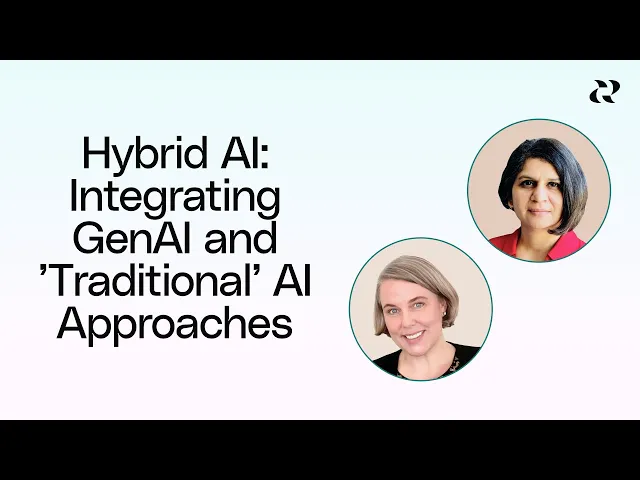
Generative AI has a number of challenges, including hallucinations, security risks, and user trust issues. Hybrid AI leverages both traditional conversational AI and generative AI technologies to create systems that are more efficient, reliable, and secure than generative AI alone.
Focus on Solving User-Centered Problems, Not Tech-Driven Mandates
One of the core lessons we’re learning around AI is the need to align AI initiatives with actual user pain points. A top-down, tech-first approach, driven by excitement around ChatGPT, has led to many failed AI implementations. However, the winners in this space are focusing on user flow and behavior—determining where conversational AI adds real value and where traditional AI methods are better suited.
Hybrid AI allows companies to combine conversational UX with traditional user experiences to meet user expectations more effectively.
Building Trust Through Transparency and Personalization
As generative AI systems mature, users are becoming more discerning and have higher expectations. One key to a successful AI implementation is transparency and personalization. Companies like IBM are moving beyond consumer-facing applications to optimize internal processes, paving the way for trustworthy, business-centric AI applications.
When users trust the system, they are more likely to engage with it and adopt AI-driven solutions. Transparency is non-negotiable in building that trust.
Seamlessly Combining Conversational and Traditional UX
Conversational AI—like chatbots—have become a natural part of the user journey. But users don’t always want a chatbot experience. Hybrid AI allows for a dynamic transition between open-ended conversational systems and more structured, task-based interactions. For example, integrating AI into travel booking systems like Expedia allows users to switch between conversational interaction and visual exploration. This flexibility is key to enhancing both productivity and user satisfaction.
We are moving towards a world where users can start with a conversation and seamlessly move into structured interactions, combining the best of both AI worlds.
Adopting a Hybrid AI Tech Stack to Maximize Efficiency
On the technical side, discussions are highlighting the retrieval-augmented generation (RAG) approach, where generative AI is augmented by retrieval from external data sources. This hybrid approach reduces hallucinations and enhances accuracy. However, the real game changer is how companies are dynamically switching between traditional chatbot designs for routine tasks and LLM-driven systems for creative or complex queries. This ensures consistency while providing the flexibility needed to handle diverse user interactions.
This dynamic integration of AI systems allows companies to balance creativity with efficiency, saving costs and improving performance.
Final Thoughts: The Future of AI is Hybrid
Companies who combine traditional AI methods with generative AI are more likely to succeed in solving real-world user problems. The future of AI is adopting a hybrid mindset that allows seamless transitions between different AI-driven interactions. This not only drives efficiency but also creates a more user-centric and trustworthy experience.
Is your team ready to embrace Hybrid AI? How will you combine the best of both worlds to create a more efficient and personalized experience for your users? Join Polly and Rupa’s course, Generative AI Products: How to Get from Idea to MVP, and gain the insights you need to stay ahead of the curve.



Generative AI has a number of challenges, including hallucinations, security risks, and user trust issues. Hybrid AI leverages both traditional conversational AI and generative AI technologies to create systems that are more efficient, reliable, and secure than generative AI alone.
Focus on Solving User-Centered Problems, Not Tech-Driven Mandates
One of the core lessons we’re learning around AI is the need to align AI initiatives with actual user pain points. A top-down, tech-first approach, driven by excitement around ChatGPT, has led to many failed AI implementations. However, the winners in this space are focusing on user flow and behavior—determining where conversational AI adds real value and where traditional AI methods are better suited.
Hybrid AI allows companies to combine conversational UX with traditional user experiences to meet user expectations more effectively.
Building Trust Through Transparency and Personalization
As generative AI systems mature, users are becoming more discerning and have higher expectations. One key to a successful AI implementation is transparency and personalization. Companies like IBM are moving beyond consumer-facing applications to optimize internal processes, paving the way for trustworthy, business-centric AI applications.
When users trust the system, they are more likely to engage with it and adopt AI-driven solutions. Transparency is non-negotiable in building that trust.
Seamlessly Combining Conversational and Traditional UX
Conversational AI—like chatbots—have become a natural part of the user journey. But users don’t always want a chatbot experience. Hybrid AI allows for a dynamic transition between open-ended conversational systems and more structured, task-based interactions. For example, integrating AI into travel booking systems like Expedia allows users to switch between conversational interaction and visual exploration. This flexibility is key to enhancing both productivity and user satisfaction.
We are moving towards a world where users can start with a conversation and seamlessly move into structured interactions, combining the best of both AI worlds.
Adopting a Hybrid AI Tech Stack to Maximize Efficiency
On the technical side, discussions are highlighting the retrieval-augmented generation (RAG) approach, where generative AI is augmented by retrieval from external data sources. This hybrid approach reduces hallucinations and enhances accuracy. However, the real game changer is how companies are dynamically switching between traditional chatbot designs for routine tasks and LLM-driven systems for creative or complex queries. This ensures consistency while providing the flexibility needed to handle diverse user interactions.
This dynamic integration of AI systems allows companies to balance creativity with efficiency, saving costs and improving performance.
Final Thoughts: The Future of AI is Hybrid
Companies who combine traditional AI methods with generative AI are more likely to succeed in solving real-world user problems. The future of AI is adopting a hybrid mindset that allows seamless transitions between different AI-driven interactions. This not only drives efficiency but also creates a more user-centric and trustworthy experience.
Is your team ready to embrace Hybrid AI? How will you combine the best of both worlds to create a more efficient and personalized experience for your users? Join Polly and Rupa’s course, Generative AI Products: How to Get from Idea to MVP, and gain the insights you need to stay ahead of the curve.