Reforge has joined Miro ↗
Amazon, Etsy, OpenTable, Thumbtack, Uber, Instacart, Airbnb — the rise of successful marketplaces is upon us. Marketplaces are different from other businesses because the focus is not on the product or service that a consumer buys, but on the platform that facilitates the transaction.
Marketplaces are exciting and complex due to a number of concepts and features that are unique to them. The dynamic of a marketplace introduces completely new concepts, and therefore new challenges, that other business models do not have.
In this post, Reforge’s marketplace experts, Adam Fishman, Ben Lauzier, and Kleanthis Georgaris, explain what a marketplace is and outline four concepts that only exist in marketplaces.
Meet The Contributors
What Is A Marketplace?
The best way to understand what a marketplace is, according to Adam Fishman, is to think about a real-life bazaar.
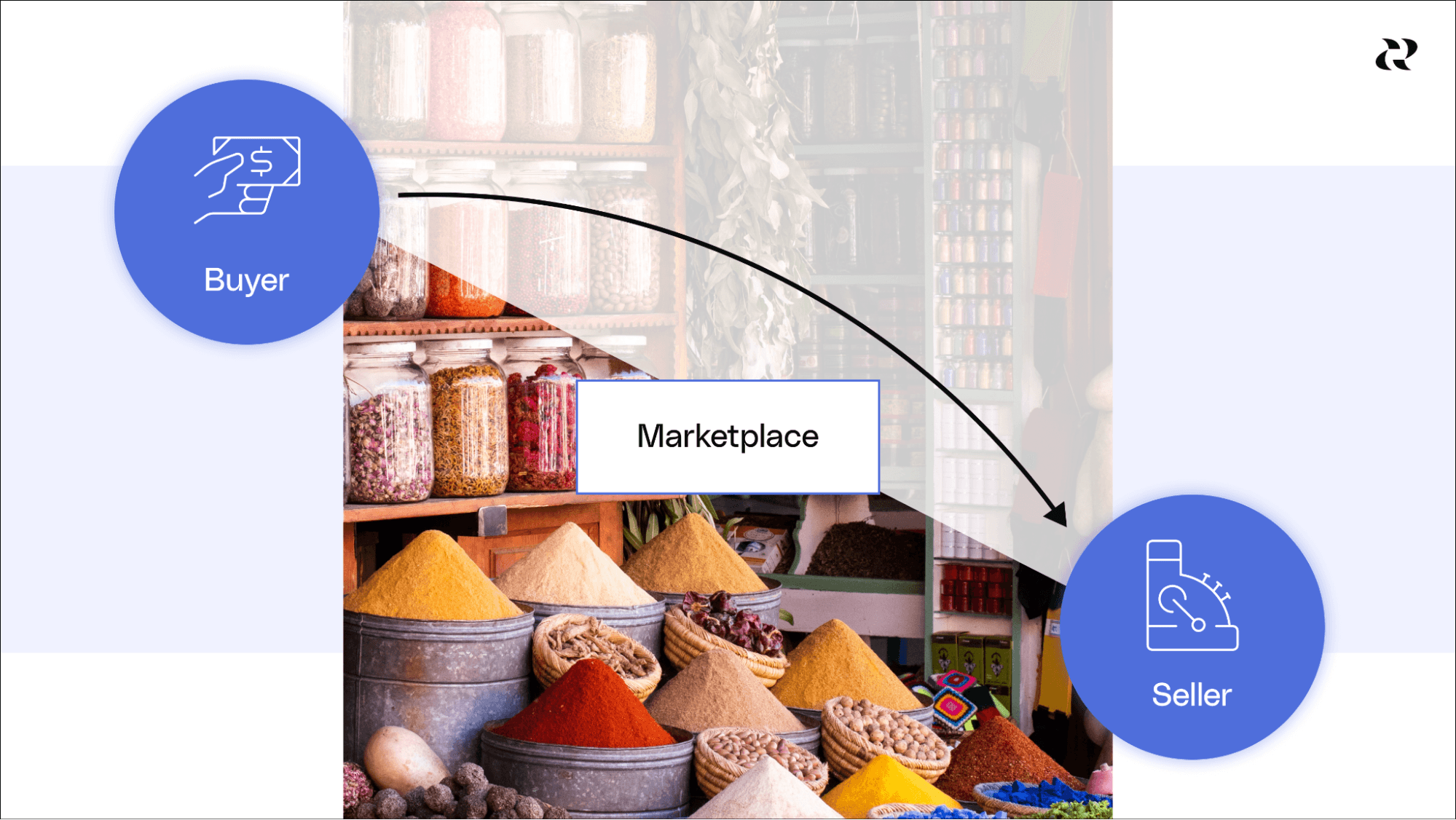
It brings together two groups of people: one group has something to sell and the other group wants to buy the thing the other group is selling.
“You can think of it like the Spice Market in Istanbul, Turkey. If you’re a tourist and you want saffron, you go there because that’s where hundreds of vendors sell saffron, so you know it’s a great place to get it.”
— Adam Fishman, Chief Product and Technology Officer at ResortPass
When technology is involved, you then have a digital marketplace. A digital marketplace is a platform that connects and aggregates both sides, rather than a specific physical location, for instance. The core part to understanding a digital marketplace is that it can be very different from a digital product, or a SaaS product. A marketplace is not the end product that a user buys, it is the facilitator.
“When you’re building a marketplace, you’re not building the actual product. You’re building the platform that facilitates the end product getting to the user.”
— Kleanthis Georgaris, SVP of Product at Toptal
Marketplaces can be unmanaged or managed. Unmanaged marketplaces are when the marketplace brings together both sides but stays relatively “hands off.” The marketplace team instead focuses on the platform functionality.
A managed marketplace is when the business is involved in determining who can participate in the marketplace or if there is a high level of human involvement in managing the match between supply and demand.
Toptal, a talent marketplace, has a screening process for people looking for jobs and companies looking to hire to ensure only the top companies and the top talent are on the marketplace.
On the other hand, BetterHelp, a marketplace that matches patients to therapists, does not necessarily limit who can be a patient but does have a set of questions about patients and their goals to match them to therapists.
Understanding what a marketplace is, however, is just the tip of the iceberg. There are several concepts unique to marketplaces that are critical to grasp in order to make sense of how they work.
Four Concepts Unique To Marketplaces
There are certain concepts that only exist when you launch a marketplace, rather than a traditional SaaS business model. Understanding these concepts is critical to grasping how the marketplace works and how it works as a business.
There are four concepts that all product managers that work in a marketplace need to know are:
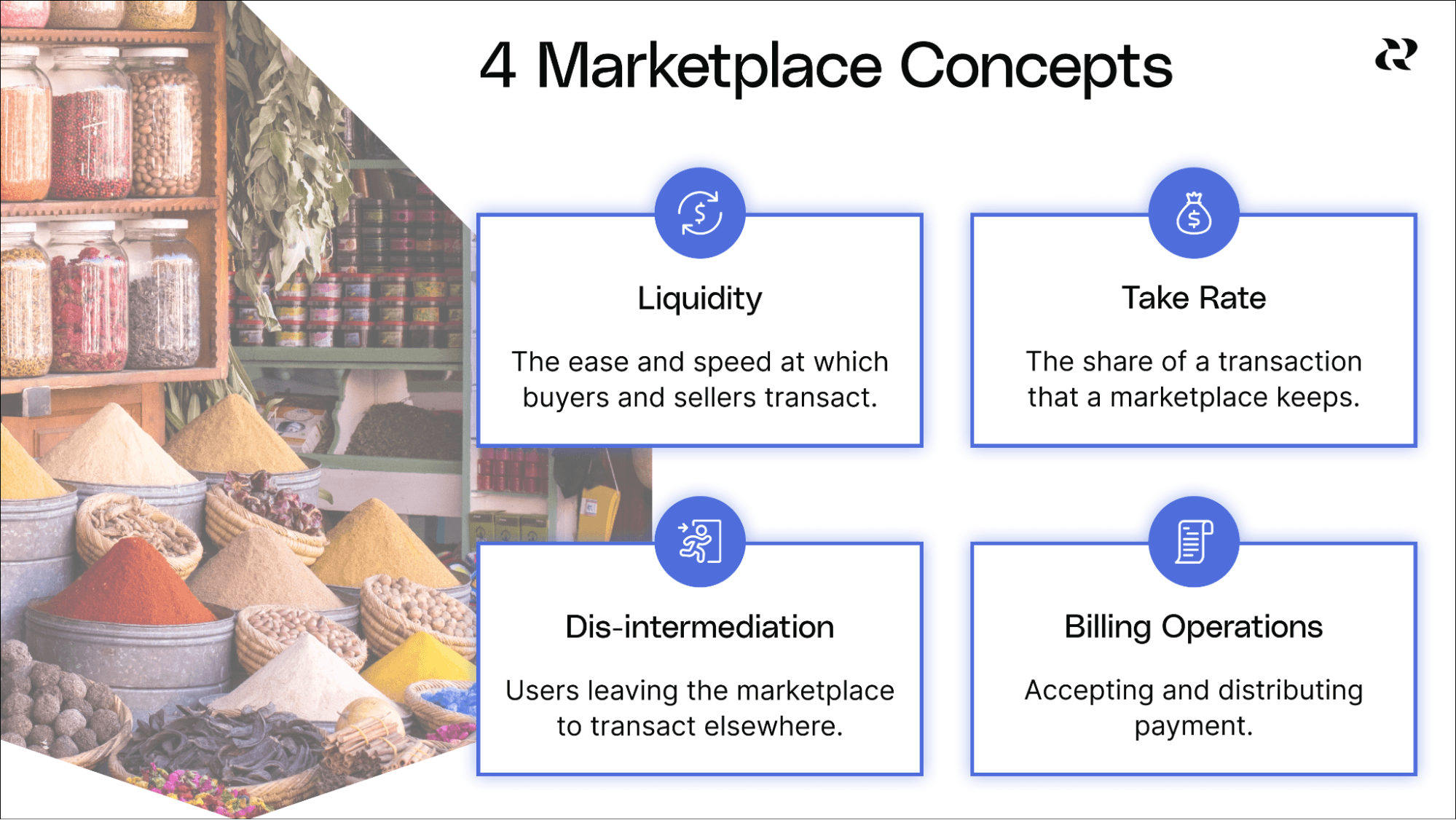
Liquidity: The ease and speed with which buyers and sellers can conduct transactions. The core of the marketplace is helping both sides find success.
Take rate: The share of a transaction that a marketplace keeps. The marketplace revenue is not the same thing as the amount of money that flows through the marketplace.
Dis-intermediation: Users that leave the marketplace to transact outside of it. The marketplace only gets value when the transaction occurs on its platform
Billing operations: Accepting and distributing payment. You don’t just receive money, you also have to pay out money to the users.
1. Liquidity
The measure of marketplace success is the marketplace health metric. For example, Lyft and Uber will look at rides, Airbnb will look at bookings, Etsy will look at the number of sales. To achieve the marketplace health metric, you need to look at liquidity.
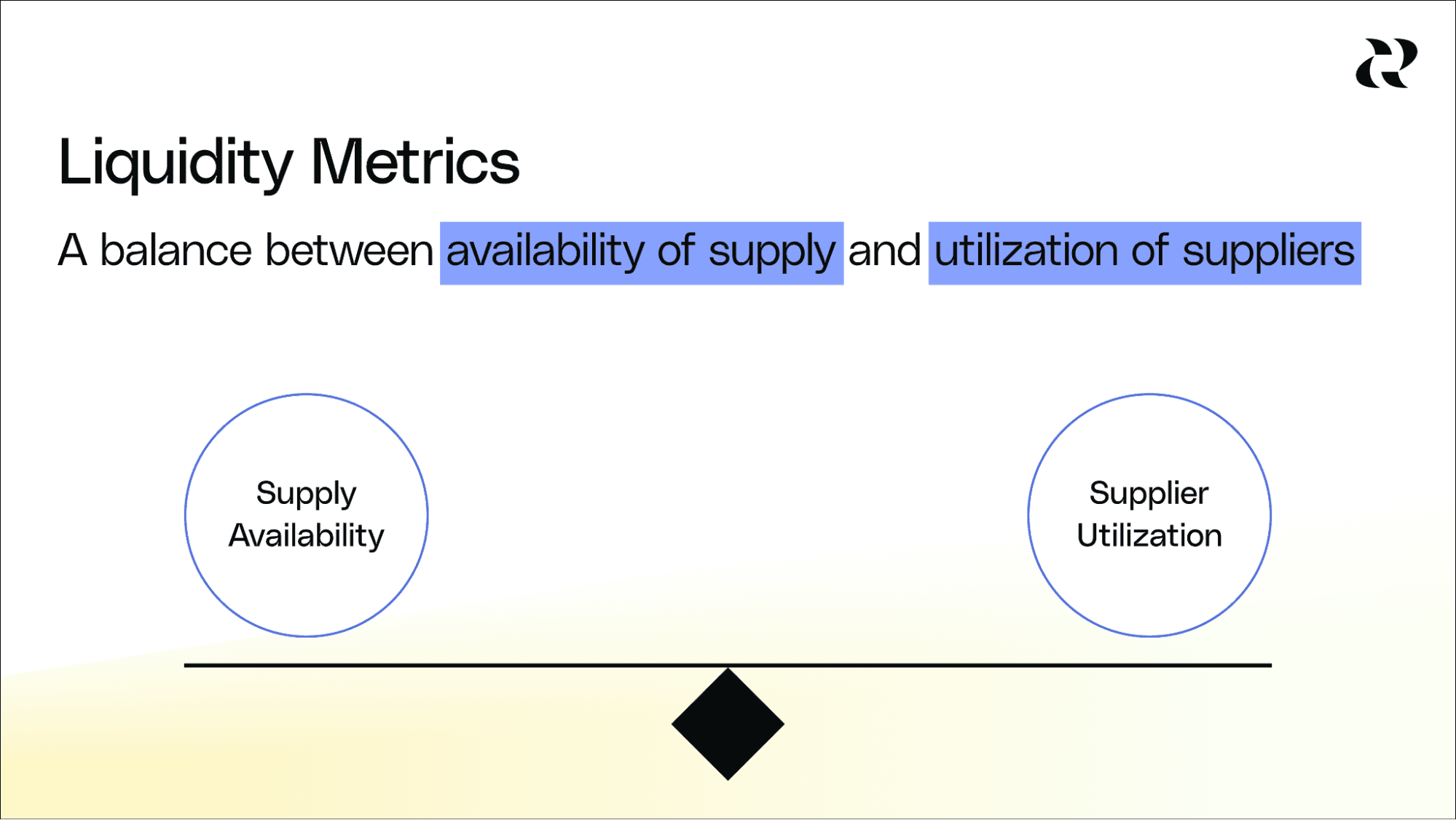
Marketplace **liquidity is about how easy it is to buy and sell goods or services without significantly changing the price. **From a metrics perspective, marketplace liquidity is the balance of two metrics: availability of supply and utilization of suppliers.
“This is the #1 set of metrics to be aware of in a marketplace.”
— Kleanthis Georgaris
Liquidity is something a marketplace is always trying to achieve, and the nature of the challenge changes over time. In the beginning, the challenge is how to get supply to the marketplace if they only come for demand, and how to get demand to come to the marketplace if they are only coming for supply. This is often characterized as the “cold start” problem.
“How do you hold one side constant so you don’t have to fight a battle on two fronts?”
— Adam Fishman
For example, Lyft decided to guarantee the supply side in its early days. They would pay drivers hourly so that they could focus on generating demand. Airbnb was able to stabilize supply by onboarding property management companies to provide properties for potential travelers.
As a marketplace grows, the challenge is to moderate the balance between demand and supply. You need the right amount of supply to match the amount of demand you have, but you also need to be effective at matching supply and demand.
“When you grow a company, you have to grow users, and that’s hard. But when you grow a marketplace, it’s an order of magnitude more complex because it’s like balancing two spinning plates that have to spin at the same time and at the same speed.”
— Ben Lauzier
There are three main parts to the liquidity challenge in a growing company:
**Adding the right amount of supply or demand. **For example, you might continue to add riders on a ride-sharing application, but if you do not also continue to add drivers, riders might have longer wait times and a poor experience. On the other hand, adding too much supply can lead to disengaged suppliers, lower prices due to competition, and eventually, churn.
**Being able to intervene manually. **The opportunity for hands-on and human intervention becomes smaller the bigger the marketplace is.
Marketplace incentives against liquidity. For example, it is better for drivers to drive when demand is too high; they are able to make more money.
Marketplace liquidity is something the marketplace team needs to be constantly trying to achieve, as it is always in flux. If you have more supply than needed, the supply will feel underutilized, have a negative experience, and churn. Or, the supply will become competitive and push prices down, which can impact how viable the business is - leading us to our next concept.
2. Take Rate
If liquidity is the measure of marketplace health, then take rate is the measure of business health.
“You might have a healthy marketplace, but do you also make enough money to sustain yourself?”
— Adam Fishman
A marketplace has two different types of revenue numbers, the gross merchandise value, or the value of the goods or services that flow through the marketplace, and the take rate, the part of the transaction that the marketplace keeps.
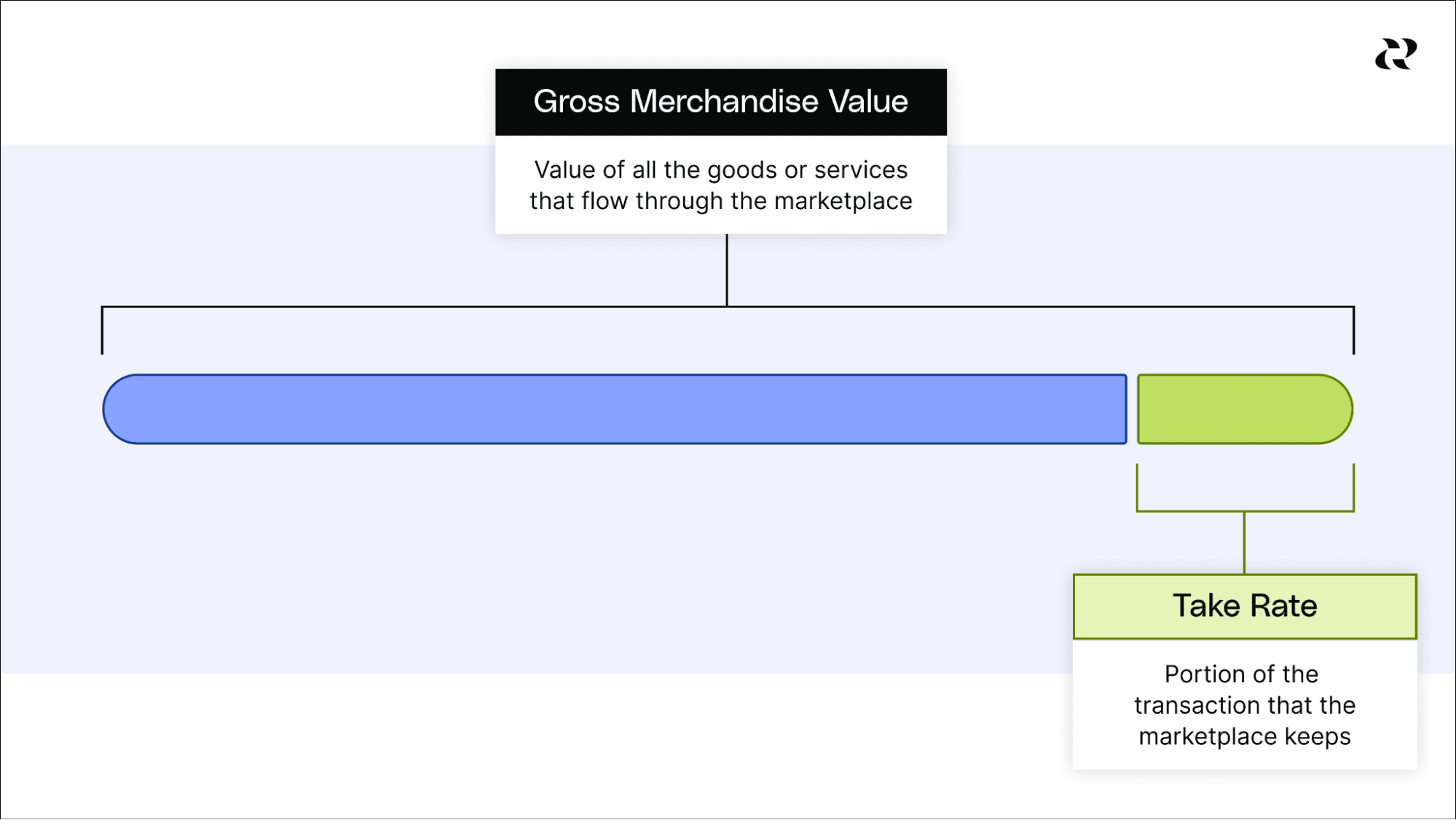
Both of these metrics are important to measure because one metric going up might not tell the full story. For example, if more money is flowing through your marketplace but the take rate is decreasing, there might be an issue with scaling your business model. If the take rate is increasing but there is less value in transactions, you might not capture enough revenue over time.
3. Dis-intermediation
Dis-intermediation is when a seller and buyer move off of the marketplace to complete a transaction. This is unique to marketplaces because the nature of their business is to be the intermediary. When disintermediation happens, the marketplace did the work of making the match, they did not capture the value of retaining the transaction fee.
Some marketplaces have a higher risk of a dis-intermediation problem than others. Whether or not your marketplace is likely to have a dis-intermediation problem is based on three factors.
**The cost of the transaction. **The more expensive the transaction is, the more money the seller or buyer is spending to do the transaction on the marketplace. As a result, the more incentive there is to move the transaction off the marketplace. For example, if it just costs a couple extra dollars to buy via a marketplace, there’s not a big incentive to try and go around the marketplace. However, if you could save hundreds of dollars on a week-long vacation rental, you might be more inclined to try and deal with the seller directly.
**The risk of taking the transaction off the platform. **Different platforms provide different levels of assurances and guarantees. The risk of taking a transaction off of eBay, for example, might be the potential for broken items that can’t be returned. The risk of not using a ride-share app could be lack of price, or payment, guarantee. The lower the risks are to transact off of the platform, the higher the chance of dis-intermediation.
The likelihood of a buyer to buy from the same seller. Marketplaces when buyers and sellers are likely going to transact again are at a higher risk for dis-intermediation because the repeat engagement increases the risk of taking the transaction off the platform. The marketplace is most valuable for the first engagement, but then becomes overhead.
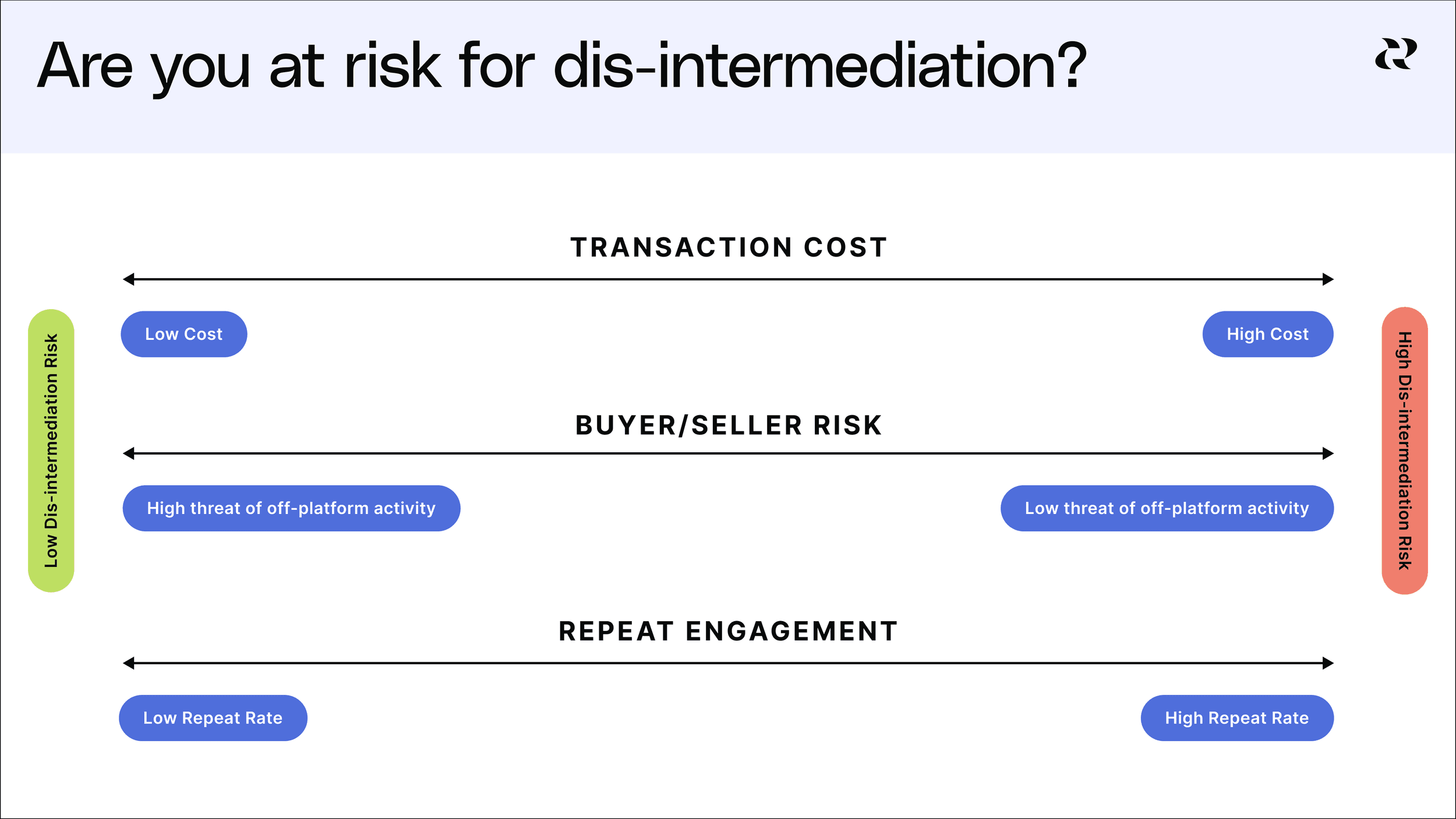
While being at risk of disintermediation does not mean there is a disintermediation problem, it is a new concept that product managers need to think about monitoring.
4. Billing Operations
Finally, a marketplace has different billing operations compared to a traditional SaaS business. Unlike businesses that own the end product that is sold, a marketplace is often facilitating the transaction by taking the money from the buyer and paying out the seller.
It is important to understand that there are two sides to payments that you need to consider, not just how to take payment.
“You always need to think you’re like a bank; the money flows through you. ”
— Kleanthis Georgaris
The needs of those paying and those getting paid can be fundamentally different, on topics such as:
Payment method. How people want to pay and how people want to get paid can be fundamentally different.
Currency. There might be changes in currencies; buyers might purchase in one currency and a seller might expect to get paid in another.
Access to capital. Buyers and sellers might have different expectations on if they will pay or receive payment immediately or with a delay, all at once or in increments
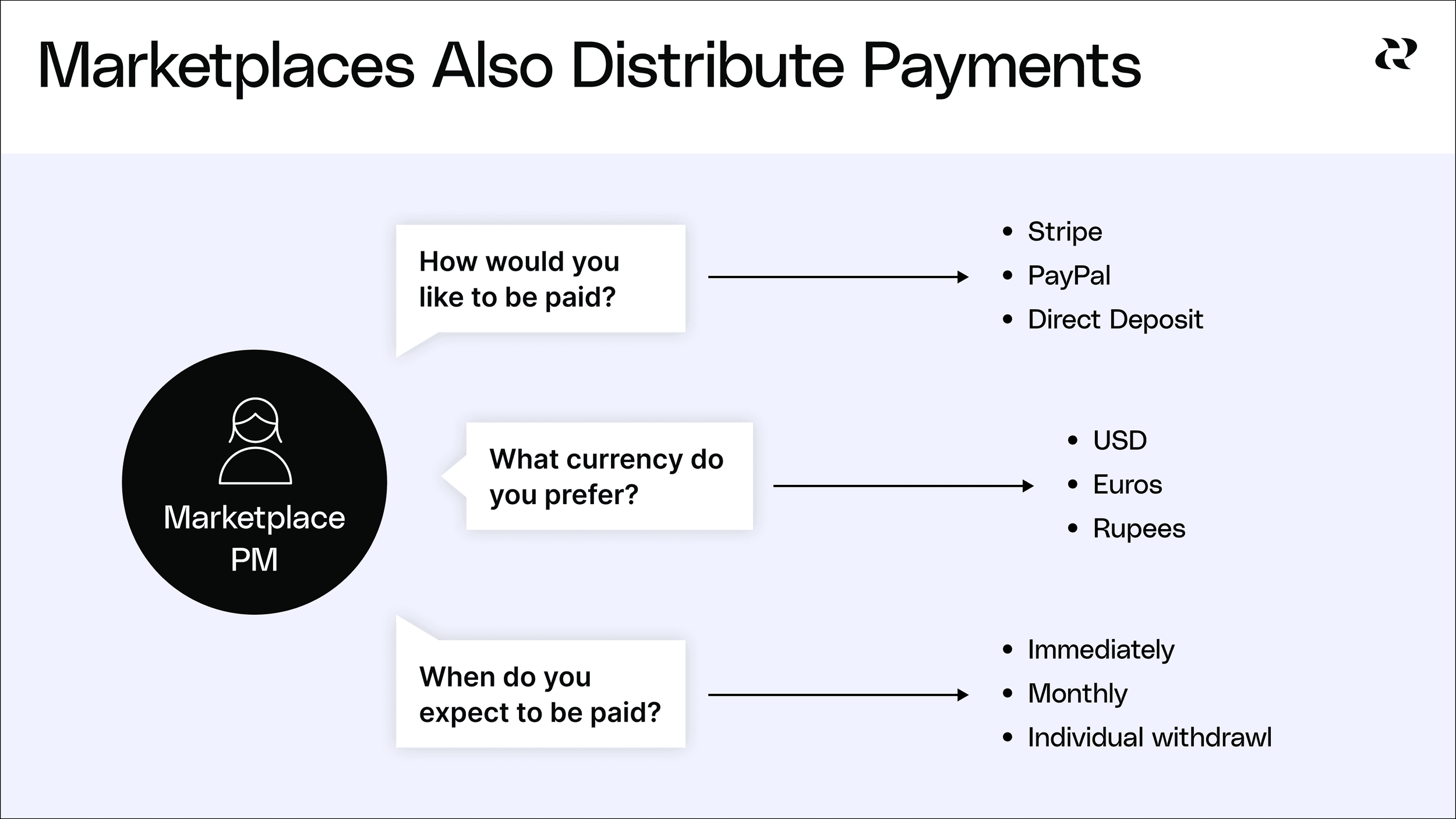
While not all product managers will specialize in payments, it is important to understand the mechanics of the business. Even billing operations ties back to the very first point: you have two, very distinct customers in a marketplace.
Marketplaces Are Complex But Powerful
Marketplaces can be incredibly powerful businesses. When they work, they solve a critical problem for two distinct users with the same solution. They are exciting businesses for product managers to work in, as they are dynamic, complex, and nuanced.
However, with new business models come new concepts. Anyone working in a marketplace should understand liquidity, take rate, dis-intermediation, and billing operations at a high level in order to better connect their work to marketplace strategy.
To learn more about product and growth, check out the library of content Reforge offers and consider signing up for Reforge today.
Amazon, Etsy, OpenTable, Thumbtack, Uber, Instacart, Airbnb — the rise of successful marketplaces is upon us. Marketplaces are different from other businesses because the focus is not on the product or service that a consumer buys, but on the platform that facilitates the transaction.
Marketplaces are exciting and complex due to a number of concepts and features that are unique to them. The dynamic of a marketplace introduces completely new concepts, and therefore new challenges, that other business models do not have.
In this post, Reforge’s marketplace experts, Adam Fishman, Ben Lauzier, and Kleanthis Georgaris, explain what a marketplace is and outline four concepts that only exist in marketplaces.
Meet The Contributors
What Is A Marketplace?
The best way to understand what a marketplace is, according to Adam Fishman, is to think about a real-life bazaar.
It brings together two groups of people: one group has something to sell and the other group wants to buy the thing the other group is selling.
“You can think of it like the Spice Market in Istanbul, Turkey. If you’re a tourist and you want saffron, you go there because that’s where hundreds of vendors sell saffron, so you know it’s a great place to get it.”
— Adam Fishman, Chief Product and Technology Officer at ResortPass
When technology is involved, you then have a digital marketplace. A digital marketplace is a platform that connects and aggregates both sides, rather than a specific physical location, for instance. The core part to understanding a digital marketplace is that it can be very different from a digital product, or a SaaS product. A marketplace is not the end product that a user buys, it is the facilitator.
“When you’re building a marketplace, you’re not building the actual product. You’re building the platform that facilitates the end product getting to the user.”
— Kleanthis Georgaris, SVP of Product at Toptal
Marketplaces can be unmanaged or managed. Unmanaged marketplaces are when the marketplace brings together both sides but stays relatively “hands off.” The marketplace team instead focuses on the platform functionality.
A managed marketplace is when the business is involved in determining who can participate in the marketplace or if there is a high level of human involvement in managing the match between supply and demand.
Toptal, a talent marketplace, has a screening process for people looking for jobs and companies looking to hire to ensure only the top companies and the top talent are on the marketplace.
On the other hand, BetterHelp, a marketplace that matches patients to therapists, does not necessarily limit who can be a patient but does have a set of questions about patients and their goals to match them to therapists.
Understanding what a marketplace is, however, is just the tip of the iceberg. There are several concepts unique to marketplaces that are critical to grasp in order to make sense of how they work.
Four Concepts Unique To Marketplaces
There are certain concepts that only exist when you launch a marketplace, rather than a traditional SaaS business model. Understanding these concepts is critical to grasping how the marketplace works and how it works as a business.
There are four concepts that all product managers that work in a marketplace need to know are:
Liquidity: The ease and speed with which buyers and sellers can conduct transactions. The core of the marketplace is helping both sides find success.
Take rate: The share of a transaction that a marketplace keeps. The marketplace revenue is not the same thing as the amount of money that flows through the marketplace.
Dis-intermediation: Users that leave the marketplace to transact outside of it. The marketplace only gets value when the transaction occurs on its platform
Billing operations: Accepting and distributing payment. You don’t just receive money, you also have to pay out money to the users.
1. Liquidity
The measure of marketplace success is the marketplace health metric. For example, Lyft and Uber will look at rides, Airbnb will look at bookings, Etsy will look at the number of sales. To achieve the marketplace health metric, you need to look at liquidity.
Marketplace **liquidity is about how easy it is to buy and sell goods or services without significantly changing the price. **From a metrics perspective, marketplace liquidity is the balance of two metrics: availability of supply and utilization of suppliers.
“This is the #1 set of metrics to be aware of in a marketplace.”
— Kleanthis Georgaris
Liquidity is something a marketplace is always trying to achieve, and the nature of the challenge changes over time. In the beginning, the challenge is how to get supply to the marketplace if they only come for demand, and how to get demand to come to the marketplace if they are only coming for supply. This is often characterized as the “cold start” problem.
“How do you hold one side constant so you don’t have to fight a battle on two fronts?”
— Adam Fishman
For example, Lyft decided to guarantee the supply side in its early days. They would pay drivers hourly so that they could focus on generating demand. Airbnb was able to stabilize supply by onboarding property management companies to provide properties for potential travelers.
As a marketplace grows, the challenge is to moderate the balance between demand and supply. You need the right amount of supply to match the amount of demand you have, but you also need to be effective at matching supply and demand.
“When you grow a company, you have to grow users, and that’s hard. But when you grow a marketplace, it’s an order of magnitude more complex because it’s like balancing two spinning plates that have to spin at the same time and at the same speed.”
— Ben Lauzier
There are three main parts to the liquidity challenge in a growing company:
**Adding the right amount of supply or demand. **For example, you might continue to add riders on a ride-sharing application, but if you do not also continue to add drivers, riders might have longer wait times and a poor experience. On the other hand, adding too much supply can lead to disengaged suppliers, lower prices due to competition, and eventually, churn.
**Being able to intervene manually. **The opportunity for hands-on and human intervention becomes smaller the bigger the marketplace is.
Marketplace incentives against liquidity. For example, it is better for drivers to drive when demand is too high; they are able to make more money.
Marketplace liquidity is something the marketplace team needs to be constantly trying to achieve, as it is always in flux. If you have more supply than needed, the supply will feel underutilized, have a negative experience, and churn. Or, the supply will become competitive and push prices down, which can impact how viable the business is - leading us to our next concept.
2. Take Rate
If liquidity is the measure of marketplace health, then take rate is the measure of business health.
“You might have a healthy marketplace, but do you also make enough money to sustain yourself?”
— Adam Fishman
A marketplace has two different types of revenue numbers, the gross merchandise value, or the value of the goods or services that flow through the marketplace, and the take rate, the part of the transaction that the marketplace keeps.
Both of these metrics are important to measure because one metric going up might not tell the full story. For example, if more money is flowing through your marketplace but the take rate is decreasing, there might be an issue with scaling your business model. If the take rate is increasing but there is less value in transactions, you might not capture enough revenue over time.
3. Dis-intermediation
Dis-intermediation is when a seller and buyer move off of the marketplace to complete a transaction. This is unique to marketplaces because the nature of their business is to be the intermediary. When disintermediation happens, the marketplace did the work of making the match, they did not capture the value of retaining the transaction fee.
Some marketplaces have a higher risk of a dis-intermediation problem than others. Whether or not your marketplace is likely to have a dis-intermediation problem is based on three factors.
**The cost of the transaction. **The more expensive the transaction is, the more money the seller or buyer is spending to do the transaction on the marketplace. As a result, the more incentive there is to move the transaction off the marketplace. For example, if it just costs a couple extra dollars to buy via a marketplace, there’s not a big incentive to try and go around the marketplace. However, if you could save hundreds of dollars on a week-long vacation rental, you might be more inclined to try and deal with the seller directly.
**The risk of taking the transaction off the platform. **Different platforms provide different levels of assurances and guarantees. The risk of taking a transaction off of eBay, for example, might be the potential for broken items that can’t be returned. The risk of not using a ride-share app could be lack of price, or payment, guarantee. The lower the risks are to transact off of the platform, the higher the chance of dis-intermediation.
The likelihood of a buyer to buy from the same seller. Marketplaces when buyers and sellers are likely going to transact again are at a higher risk for dis-intermediation because the repeat engagement increases the risk of taking the transaction off the platform. The marketplace is most valuable for the first engagement, but then becomes overhead.
While being at risk of disintermediation does not mean there is a disintermediation problem, it is a new concept that product managers need to think about monitoring.
4. Billing Operations
Finally, a marketplace has different billing operations compared to a traditional SaaS business. Unlike businesses that own the end product that is sold, a marketplace is often facilitating the transaction by taking the money from the buyer and paying out the seller.
It is important to understand that there are two sides to payments that you need to consider, not just how to take payment.
“You always need to think you’re like a bank; the money flows through you. ”
— Kleanthis Georgaris
The needs of those paying and those getting paid can be fundamentally different, on topics such as:
Payment method. How people want to pay and how people want to get paid can be fundamentally different.
Currency. There might be changes in currencies; buyers might purchase in one currency and a seller might expect to get paid in another.
Access to capital. Buyers and sellers might have different expectations on if they will pay or receive payment immediately or with a delay, all at once or in increments
While not all product managers will specialize in payments, it is important to understand the mechanics of the business. Even billing operations ties back to the very first point: you have two, very distinct customers in a marketplace.
Marketplaces Are Complex But Powerful
Marketplaces can be incredibly powerful businesses. When they work, they solve a critical problem for two distinct users with the same solution. They are exciting businesses for product managers to work in, as they are dynamic, complex, and nuanced.
However, with new business models come new concepts. Anyone working in a marketplace should understand liquidity, take rate, dis-intermediation, and billing operations at a high level in order to better connect their work to marketplace strategy.
To learn more about product and growth, check out the library of content Reforge offers and consider signing up for Reforge today.