
Reforge has joined Miro ↗
All articles
How to Accelerate Innovation in a Highly Regulated World: Lessons from SoFi's former CPO/CTO
Oct 1, 2024
During our recent event, How to Accelerate Innovation in a Highly Regulated World, Assaf Ronen, former CPO/CTO at SoFi, delivered an insightful exploration of the intersection between customer-centricity, innovation, and regulation in the financial industry. Drawing from his rich experiences at companies like SoFi and Payoneer, Assaf shared actionable strategies for navigating fintech challenges. Below is a breakdown of the key insights and takeaways from his talk.
Why is Financial Services More Complicated?
The financial services industry is inherently more complicated than traditional software development organizations due to a combination of rapidly evolving technology, stringent regulatory requirements, and high customer expectations. As financial products become more sophisticated, so do the edge cases and exceptions that must be addressed. This complexity often results in bloated systems that slow down innovation.
However, financial services leaders have discovered that the key to staying ahead isn’t about managing this complexity—it's about reducing it. The more a system can be simplified, the faster it can move.
Focus on the “Happy Path” to Accelerate Innovation
When you're in the fast-paced world of fintech, simplicity and focus often outperform attempting to please everyone. Prioritizing the "happy path" means optimizing your product for core users and their primary needs, delivering faster value and higher satisfaction. Rather than spreading your resources thin trying to accommodate every use case, focus on perfecting the experience for your most engaged customers. This not only delights them but often encourages them to advocate for your brand.
Being customer-centric doesn't mean serving every customer right away. Start small, move fast, and expand intelligently. This strategy leads to real, lasting success.
Set a High Bar for Meaningful Interactions: The "Thank You Bar"
The concept of the "Thank You Bar" is a reminder that every interaction with your customers should feel valuable. Notifications or cross-sell offers that are irrelevant or intrusive erode trust, but a message that genuinely solves a problem or adds value can leave a lasting positive impression. When you deliver real benefits, users will figuratively say "thank you," even if they don't send the words directly.
Take SoFi's approach, where they sent customers personalized offers that guaranteed real savings. This wasn't just a product promotion—it was a financial solution. SoFi cleared the "Thank You Bar" because they were offering something valuable, relevant, and beneficial.
If your messages or offers don’t help solve a real problem for your customer, it might be time to rethink them.
Collaborate Early with Compliance to Unlock Innovation
In regulated industries, involving compliance from the start can turn a potential roadblock into a creative partnership. By working closely with compliance teams from day one, you can move forward with innovation without having to backtrack later.
For instance, Marketers often hear, “Compliance needs to review every ad and customer message”. This can slow down experimentation. A solution is to create a bank of pre-approved words, phrases, offers, and images, allowing you to mix and match without constant oversight. The goal is to increase the options in this bank, so compliance doesn't have to review every small change, like email subject lines or ads.
Treasury is another challenge. Their job is to protect money, but when experimenting, you often need funds to move quickly. The key is to define your boundaries upfront and how much you’re willing to lose by introducing the concept of “breakage".
At SoFi, we had to bridge two distinct mindsets—traditional bankers from Citibank and Bank of America, and tech-driven product managers from the Bay Area. A critical distinction was between breakage and fraud. While 95% of referral rewards worked as expected, 5% didn’t generate much value. Bankers might see this as fraud, but it’s simply breakage, something you need to bake into your business model. The focus should be on the 95% success rate to maintain speed and momentum.
💡Pro Tip: Establish a culture where compliance and product teams collaborate as allies to ensure both innovation and adherence to regulations.
Document Decisions Like a Pro to Minimize Risk
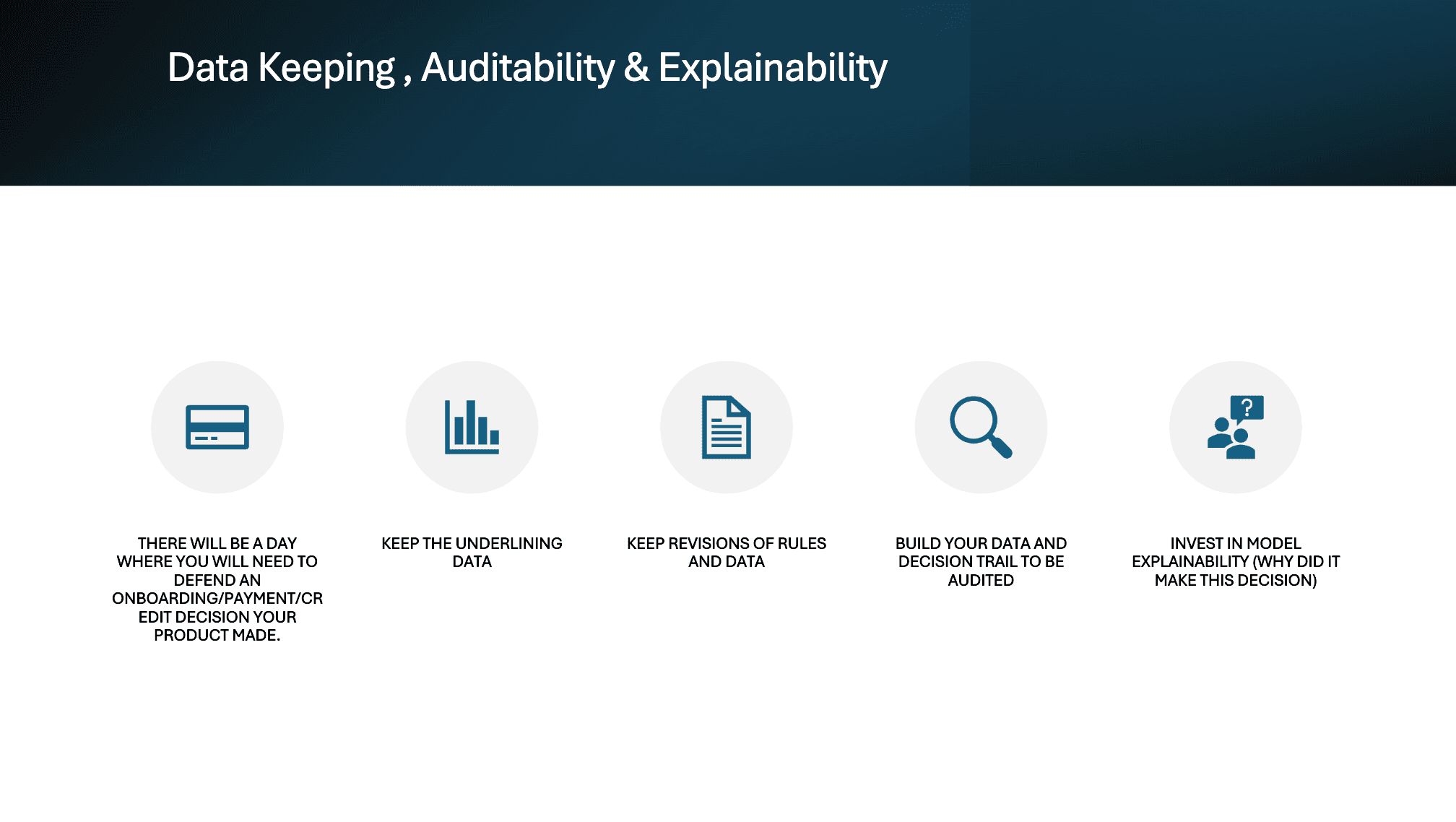
Decision-making in fintech is complex, especially when rules and regulations are constantly changing. To mitigate risk and ensure transparency, it's essential to document both business and rule-based decisions. Doing this ensures that you can clearly show how a decision was made based on the rules at the time, which is critical for internal audits and regulatory reviews.
Documentation isn’t just about tracking decisions; it’s about creating a historical log of the rules and models that were in place when decisions were made.
💡Pro Tip: Automate documentation whenever possible to ensure accuracy and reduce the burden on your team.
Hire Product Managers Who Excel in Collaboration
In a regulated industry, a product manager's ability to collaborate is a superpower. While technical skills and vision are essential, the ability to bridge gaps between different teams—especially compliance and product—is what sets successful leaders apart. The best product managers know how to communicate complex technical ideas in ways that resonate with non-technical stakeholders, creating alignment across the board.
“Great product leaders know that in regulated environments, it’s less about moving fast alone and more about moving fast together.”
💡Pro Tip: When hiring, prioritize candidates with strong collaboration skills, as they can lead more effectively across diverse teams.
Leverage AI to Improve Decision-Making—Start Simple
AI can be a game changer in Financial firms, but don’t get caught up trying to implement the perfect model right away. Start by integrating simple, rule-based systems and then gradually layer in machine learning models as they improve over time. This incremental approach lets you innovate without overhauling your entire system from the start.
“The power of AI is that it evolves with your business. Start small, and let the AI grow with your data.”
💡Pro Tip: Incorporate AI into your decision-making processes slowly but surely, allowing room for growth and refinement as the technology—and your data—progress.
Q&A Highlights: Insights from the Audience
In the second part of the event, Assaf answered a range of questions from the audience, offering additional insights into the evolving world of fintech and the challenges it presents.
Q: What are the critical challenges fintechs face in scaling up globally?
One of the key challenges in scaling fintech globally is navigating the complex web of regulations that differ from country to country. While technology can scale across borders relatively easily, compliance with local laws, understanding cultural nuances, and establishing trust with new markets are far more challenging. It's essential to invest in strong local partnerships and to tailor solutions to fit regional needs.
Q: How do you foresee AI continuing to impact the fintech industry?
AI has already made significant inroads, especially in areas like fraud detection, personalized financial advice, and automating customer service. However, there’s still a lot of untapped potential. As AI continues to evolve, fintechs will increasingly leverage it to make smarter decisions, offer hyper-personalized services, and reduce operational costs. The ability to build trust and transparency in AI-driven solutions will be key to customer adoption.
Q: What are the most important skills product managers need to succeed in fintech?
Product managers in fintech must have a deep understanding of both technology and the financial ecosystem. On the technical side, they need to stay updated on advancements in areas like AI, blockchain, and data analytics. But just as important is a strong grasp of regulatory environments and compliance requirements. PMs should be highly adaptable, balancing regulatory complexities while continuously innovating to meet customer demands. Analytical skills, cross-functional collaboration, and customer empathy are essential for building products that not only solve problems but also meet high compliance standards.
Q: How should fintech startups approach customer acquisition given the competition?
Customer acquisition in fintech is becoming more difficult as competition heats up, so startups need to focus on creating truly differentiated value propositions. Building trust is critical—especially when dealing with people’s finances—so it's important to offer transparency, security, and tangible benefits that resonate with users. Partnerships with established financial institutions or other fintechs can also provide access to new customer bases and credibility.
Conclusion: A Roadmap for Financial Services Firm's Success
As the industry continues to evolve, companies that stay agile, embrace digital transformation, and prioritize customer needs will lead the way. By following the insights and recommendations shared, fintech leaders can chart a course for sustained success in a rapidly changing landscape.
Reforge can facilitate your enterprise's product transformation with proven expertise, real examples, and productivity tools enabling your team to do their best work.
As a product leader aiming to transform your product and ways of operating, consider Reforge for Teams. This tool helps upskill your team and bridge any skill gaps essential for navigating new product strategies. Embrace change with confidence, knowing your team has the tool they need to succeed.
Explore Reforge for Teams


During our recent event, How to Accelerate Innovation in a Highly Regulated World, Assaf Ronen, former CPO/CTO at SoFi, delivered an insightful exploration of the intersection between customer-centricity, innovation, and regulation in the financial industry. Drawing from his rich experiences at companies like SoFi and Payoneer, Assaf shared actionable strategies for navigating fintech challenges. Below is a breakdown of the key insights and takeaways from his talk.
Why is Financial Services More Complicated?
The financial services industry is inherently more complicated than traditional software development organizations due to a combination of rapidly evolving technology, stringent regulatory requirements, and high customer expectations. As financial products become more sophisticated, so do the edge cases and exceptions that must be addressed. This complexity often results in bloated systems that slow down innovation.
However, financial services leaders have discovered that the key to staying ahead isn’t about managing this complexity—it's about reducing it. The more a system can be simplified, the faster it can move.
Focus on the “Happy Path” to Accelerate Innovation
When you're in the fast-paced world of fintech, simplicity and focus often outperform attempting to please everyone. Prioritizing the "happy path" means optimizing your product for core users and their primary needs, delivering faster value and higher satisfaction. Rather than spreading your resources thin trying to accommodate every use case, focus on perfecting the experience for your most engaged customers. This not only delights them but often encourages them to advocate for your brand.
Being customer-centric doesn't mean serving every customer right away. Start small, move fast, and expand intelligently. This strategy leads to real, lasting success.
Set a High Bar for Meaningful Interactions: The "Thank You Bar"
The concept of the "Thank You Bar" is a reminder that every interaction with your customers should feel valuable. Notifications or cross-sell offers that are irrelevant or intrusive erode trust, but a message that genuinely solves a problem or adds value can leave a lasting positive impression. When you deliver real benefits, users will figuratively say "thank you," even if they don't send the words directly.
Take SoFi's approach, where they sent customers personalized offers that guaranteed real savings. This wasn't just a product promotion—it was a financial solution. SoFi cleared the "Thank You Bar" because they were offering something valuable, relevant, and beneficial.
If your messages or offers don’t help solve a real problem for your customer, it might be time to rethink them.
Collaborate Early with Compliance to Unlock Innovation
In regulated industries, involving compliance from the start can turn a potential roadblock into a creative partnership. By working closely with compliance teams from day one, you can move forward with innovation without having to backtrack later.
For instance, Marketers often hear, “Compliance needs to review every ad and customer message”. This can slow down experimentation. A solution is to create a bank of pre-approved words, phrases, offers, and images, allowing you to mix and match without constant oversight. The goal is to increase the options in this bank, so compliance doesn't have to review every small change, like email subject lines or ads.
Treasury is another challenge. Their job is to protect money, but when experimenting, you often need funds to move quickly. The key is to define your boundaries upfront and how much you’re willing to lose by introducing the concept of “breakage".
At SoFi, we had to bridge two distinct mindsets—traditional bankers from Citibank and Bank of America, and tech-driven product managers from the Bay Area. A critical distinction was between breakage and fraud. While 95% of referral rewards worked as expected, 5% didn’t generate much value. Bankers might see this as fraud, but it’s simply breakage, something you need to bake into your business model. The focus should be on the 95% success rate to maintain speed and momentum.
💡Pro Tip: Establish a culture where compliance and product teams collaborate as allies to ensure both innovation and adherence to regulations.
Document Decisions Like a Pro to Minimize Risk
Decision-making in fintech is complex, especially when rules and regulations are constantly changing. To mitigate risk and ensure transparency, it's essential to document both business and rule-based decisions. Doing this ensures that you can clearly show how a decision was made based on the rules at the time, which is critical for internal audits and regulatory reviews.
Documentation isn’t just about tracking decisions; it’s about creating a historical log of the rules and models that were in place when decisions were made.
💡Pro Tip: Automate documentation whenever possible to ensure accuracy and reduce the burden on your team.
Hire Product Managers Who Excel in Collaboration
In a regulated industry, a product manager's ability to collaborate is a superpower. While technical skills and vision are essential, the ability to bridge gaps between different teams—especially compliance and product—is what sets successful leaders apart. The best product managers know how to communicate complex technical ideas in ways that resonate with non-technical stakeholders, creating alignment across the board.
“Great product leaders know that in regulated environments, it’s less about moving fast alone and more about moving fast together.”
💡Pro Tip: When hiring, prioritize candidates with strong collaboration skills, as they can lead more effectively across diverse teams.
Leverage AI to Improve Decision-Making—Start Simple
AI can be a game changer in Financial firms, but don’t get caught up trying to implement the perfect model right away. Start by integrating simple, rule-based systems and then gradually layer in machine learning models as they improve over time. This incremental approach lets you innovate without overhauling your entire system from the start.
“The power of AI is that it evolves with your business. Start small, and let the AI grow with your data.”
💡Pro Tip: Incorporate AI into your decision-making processes slowly but surely, allowing room for growth and refinement as the technology—and your data—progress.
Q&A Highlights: Insights from the Audience
In the second part of the event, Assaf answered a range of questions from the audience, offering additional insights into the evolving world of fintech and the challenges it presents.
Q: What are the critical challenges fintechs face in scaling up globally?
One of the key challenges in scaling fintech globally is navigating the complex web of regulations that differ from country to country. While technology can scale across borders relatively easily, compliance with local laws, understanding cultural nuances, and establishing trust with new markets are far more challenging. It's essential to invest in strong local partnerships and to tailor solutions to fit regional needs.
Q: How do you foresee AI continuing to impact the fintech industry?
AI has already made significant inroads, especially in areas like fraud detection, personalized financial advice, and automating customer service. However, there’s still a lot of untapped potential. As AI continues to evolve, fintechs will increasingly leverage it to make smarter decisions, offer hyper-personalized services, and reduce operational costs. The ability to build trust and transparency in AI-driven solutions will be key to customer adoption.
Q: What are the most important skills product managers need to succeed in fintech?
Product managers in fintech must have a deep understanding of both technology and the financial ecosystem. On the technical side, they need to stay updated on advancements in areas like AI, blockchain, and data analytics. But just as important is a strong grasp of regulatory environments and compliance requirements. PMs should be highly adaptable, balancing regulatory complexities while continuously innovating to meet customer demands. Analytical skills, cross-functional collaboration, and customer empathy are essential for building products that not only solve problems but also meet high compliance standards.
Q: How should fintech startups approach customer acquisition given the competition?
Customer acquisition in fintech is becoming more difficult as competition heats up, so startups need to focus on creating truly differentiated value propositions. Building trust is critical—especially when dealing with people’s finances—so it's important to offer transparency, security, and tangible benefits that resonate with users. Partnerships with established financial institutions or other fintechs can also provide access to new customer bases and credibility.
Conclusion: A Roadmap for Financial Services Firm's Success
As the industry continues to evolve, companies that stay agile, embrace digital transformation, and prioritize customer needs will lead the way. By following the insights and recommendations shared, fintech leaders can chart a course for sustained success in a rapidly changing landscape.
Reforge can facilitate your enterprise's product transformation with proven expertise, real examples, and productivity tools enabling your team to do their best work.
As a product leader aiming to transform your product and ways of operating, consider Reforge for Teams. This tool helps upskill your team and bridge any skill gaps essential for navigating new product strategies. Embrace change with confidence, knowing your team has the tool they need to succeed.
Explore Reforge for Teams