Reforge has joined Miro ↗
If you don’t have a clear and simple definition of a product manager’s role, you’re not alone. There are a number of reasons why this essential product role has become difficult to describe:
First, Product Management is a newer career with a less than neatly-defined path to getting hired than long-established professions, like medicine or the law.
Second, even product managers at the same company might not do the same day-to-day work as product management is a multi-faceted role with lots of moving parts that vary depending on your focus.
And third, there isn’t a single track to landing a product management job and being successful. For example, product managers can be former developers, but they can also have liberal arts degrees or MBAs.
However hard it is to describe, it is a job that pays well. The median product manager makes over $100k — and people like what they do; product management ranks in the top ten professions on Glassdoor!
Without an obvious path into product management, it can be helpful to understand what the job is. Here, we’ll first define what a product manager does in its simplest terms, and then we’ll start to go deeper into the dynamic responsibilities of the role.
About The Contributors
What is a product manager?
Successful product managers work with engineers and designers to create products that people want. In many ways, a product manager is a professional problem-solver; they anticipate their users’ needs and work to adapt and expand the value of their products to reflect those needs.
While a product manager’s key responsibility is to understand the user and think through how to solve their problems, a large component of their day-to-day can end up being addressing issues that rapidly come up.
In fact, they can spend more than 50% of their time addressing unforeseen issues that come up in the product development cycle. A good product manager knows how to balance quality and efficiency.
Ravi Mehta, former Chief Product Officer at Tinder, reflects on a series of competing binaries that encapsulate the complexities of the product manager role.
“The product manager has to be empathetic and analytical, qualitative and quantitative, detail-oriented and good at abstract thinking.”
He emphasizes that good product managers are capable of innovating and doing the work of optimizing what already exists.
3 responsibilities of a product manager
There are threefundamental responsibilities product managers have:
Find opportunities
Focus on the user
Solve problems
None of these responsibilities is more important than the next. In fact, you may have extended periods of time where you focus on one component of the work more than the others.
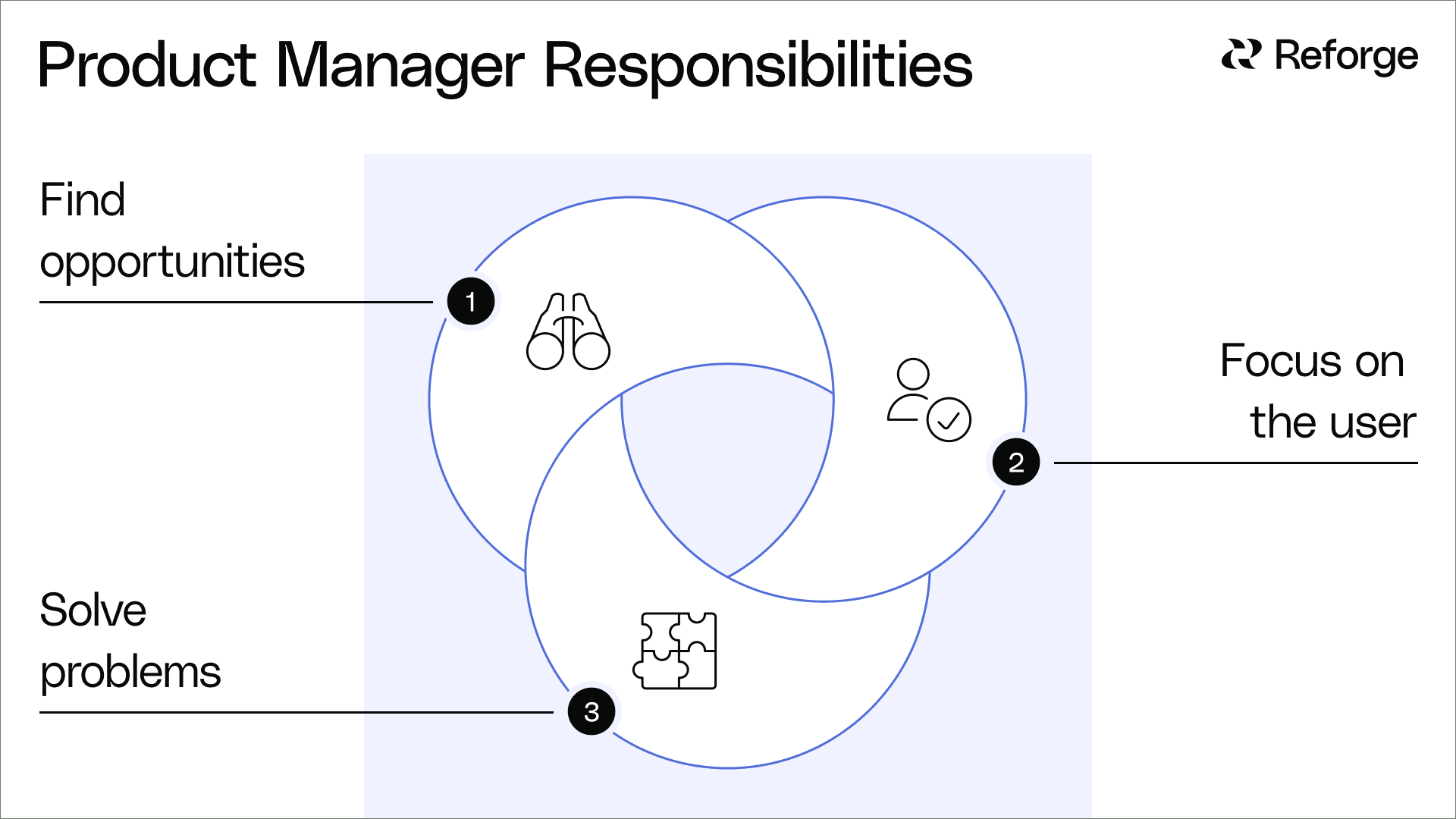
Let’s dive a bit deeper into each of those responsibilities.
1. Find opportunities
Product managers are responsible for identifying opportunities to address their users' problems. Then, they define the parameters of the opportunity by outlining the scope of a project and what the first version, or a minimum viable product (MVP), should look like.
The period of discovery and opportunity validation asks product managers to be:
Experts on the target users and what they need from your product
Creative problem-solvers who are capable of building effective feature or product solutions that adhere to the business' vision and constraints
Clear communicators who can keep multiple components of a project moving forward, at pace, for an extended period of time
A great product manager is always thinking about optimization and how the product should evolve to meet the market.
Anand Subramani, Reforge program collaborator and SVP of Product at Path says, “part of your job is to be right a lot, and it’s important for you as a product manager to figure out how to maximize that, but you will not be right all of the time.”
2. Focus on the user
Ultimately, a product manager has to put user advocacy at the center of their work. Anand says, “the actual goal of a product manager is to have a complete mental model of your users.”
This includes current and future users, which is a lot of information sometimes. But the best product managers have an almost encyclopedic knowledge of their customers.
A product manager should understand:
The primary users of the product
The people who are still part of the audience but in a more ancillary way
The prospective users who would use the product if certain foreseeable factors change
Anand emphasizes that a product manager needs to know what users care about. One mistake is they tend to assume their users are like them. He says great product managers know that their users may see the world differently than they do. Engaged product managers reach out and speak to their users frequently in order to build a deep and thorough understanding of their worldview.
3. Solve problems
The third fundamental responsibility of a product manager is that they have to be able to troubleshoot in the face of ambiguity, complexity, and urgency. According to uxcam, the top two challenges product managers face are competing objectives and lack of time. They frequently find themselves navigating three key, sometimes conflicting, stakeholder groups:
Users
The company’s various goals and initiatives
And the cross-functional teams working on a project
Reforge expert Jiaona Zhang, VP of Product at Webflow, adds some more information about how important collaboration is.
“At the end of the day, people are looking to the product manager to help them understand why they're doing the work they're doing, and then collaborate with everyone to figure out how to get that work done.”
Product manager’s role in the product development cycle
A product manager leads a product development cycle, which has four key steps:
Opportunity validation
Design
Development
Launch and iteration
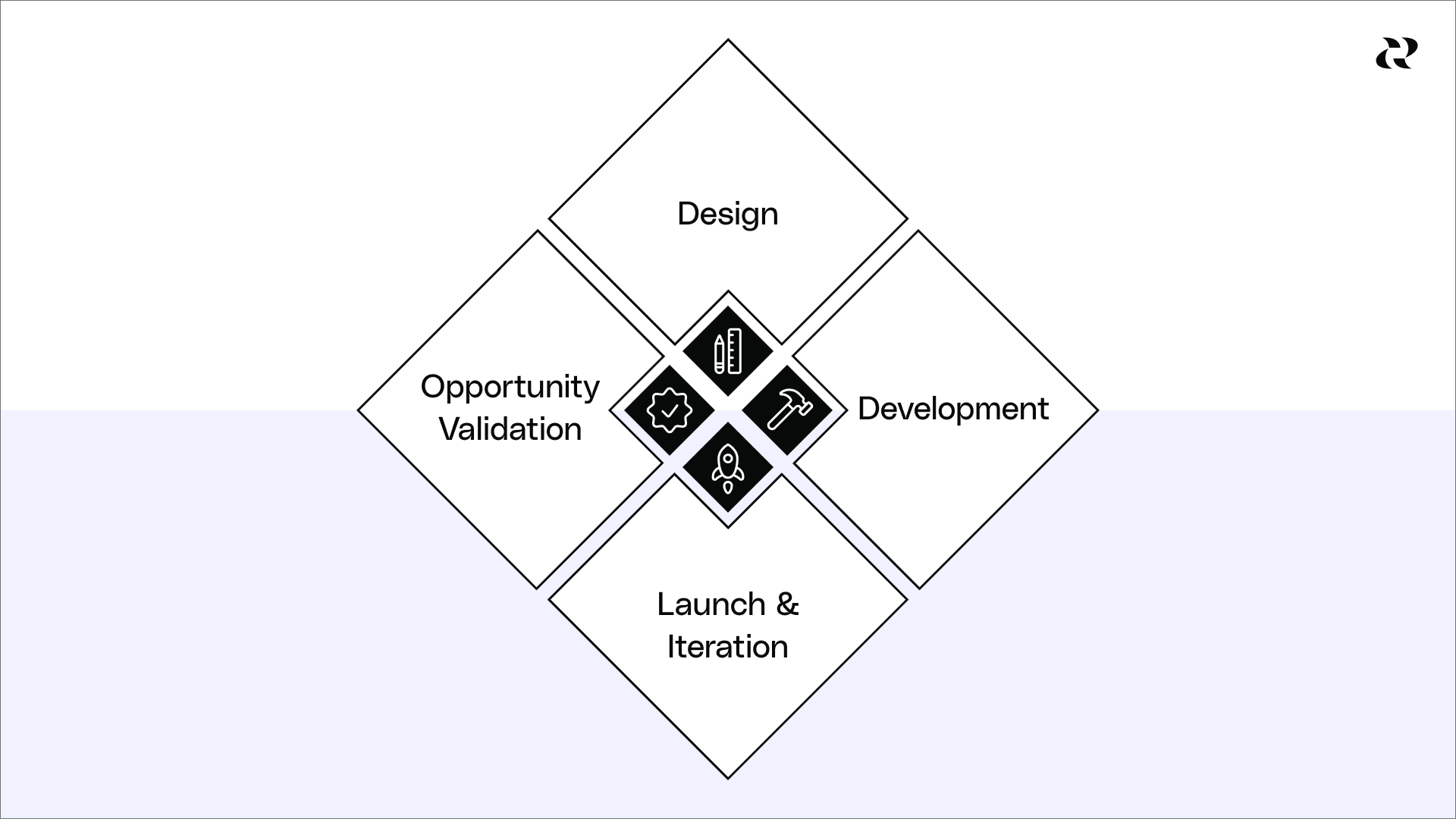
Let’s walk through what a product manager does at each major phase of the product development process.
As we move through the product development process, we’ll use a hypothetical example of a junior product manager who works for WeDesign, a made-up company that offers visualization and collaboration tools for design teams
1. Opportunity validation
First, we’ll have a look at the role of a product manager during the opportunity validation phase.
In this phase, product managers usually focus on competitor and user research to ensure that their hypotheses will benefit the company and that the user will actually want to use what they build.
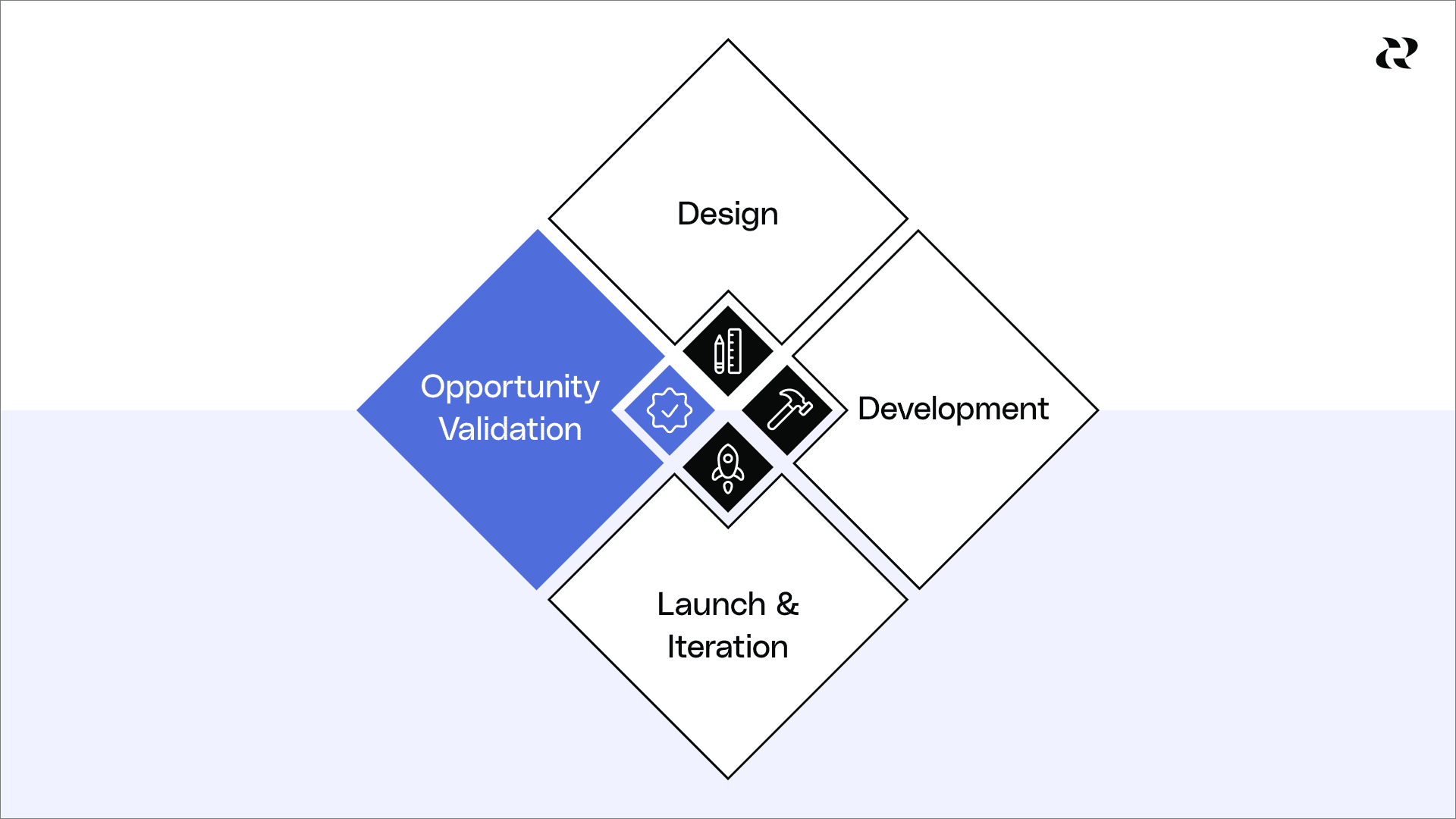
A junior product manager's role in this phase is often to pressure test the opportunities their managers have identified when defining the team's product vision and product roadmap.
For example, a product manager — let’s call her Sharon — at the fake company WeDesign is tasked with improving how users collaborate with teammates while using the product. The product manager then seeks to understand how users collaborate in the product today, and what problems they face when doing so.
Sharon learns from customer success, and then subsequently from users themselves, that a major frustration in the current collaboration tool is that it’s difficult to acknowledge teammates’ responses because there is no ability to react to them beyond adding a new comment.
2. Design
Next, let’s have a look at what a product manager does during the design phase.
Here, the product manager works closely with designers to build and prototype an experience that addresses the validated opportunity. Typically, this phase starts with brainstorming to come up with a shortlist of potential solutions and ends with a single prototype that’s been vetted through user testing.
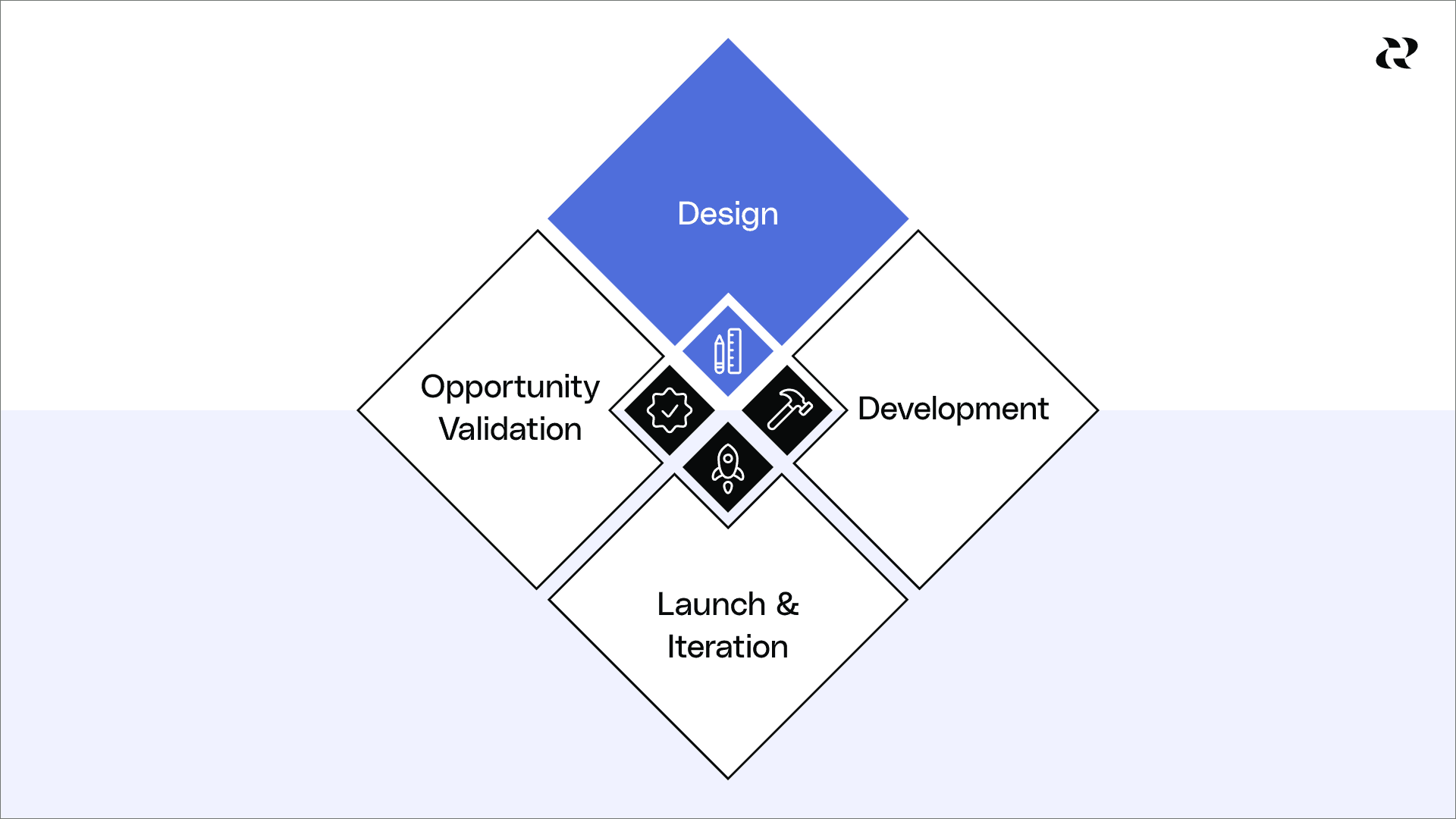
Returning to our WeDesign example, our product manager Sharon would bring her user problem to designers and brainstorm potential solutions. The team might ultimately decide to create a reaction button that enables users to pick from a set of emojis to respond to their teammates’ comments. Through prototyping, the team can narrow in more specific feature requirements, like whether or not users can add more than one emoji, or whether the react button exists on all comments or only on certain ones.
3. Development
Now, let’s zoom in on what a product manager does in the third developmental phase of product development.
Once feature specifications and prototypes have been created, product managers work with engineers to bring designs to life in the product. While engineers tend to own the actual development work that happens in this phase, product managers are critical enablers, defining project milestones, managing communication between the product team and the broader organization, identifying ways to improve how the team works together and mitigating risks that might pop up along the way.
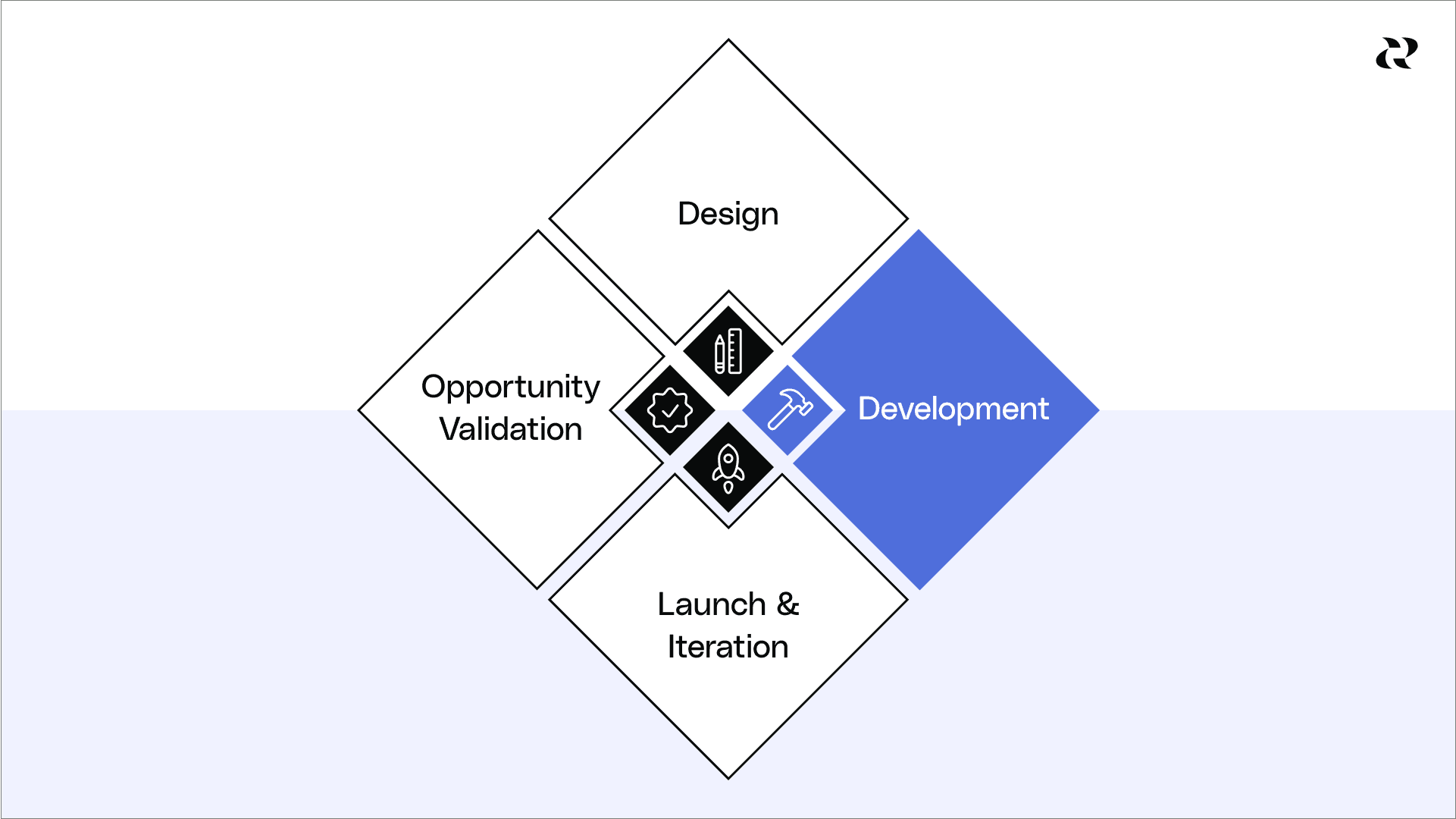
The product manager at WeDesign would collaborate with the engineers to break down the work into milestones and tasks. They would track the progress against the plan and share updates with leadership, their manager, and cross-functional teams that are involved in development.
4. Launch and Iteration
Once the product manager has overseen the product development process, they are ready to launch the product.
A smooth product launch is one where the new feature or product functions according to plan and is able to solve the user problem initially defined during opportunity validation. Product managers then measure post-launch performance to determine where more interaction is needed; then, they disseminate their findings across various stakeholder teams which will help inform future builds.
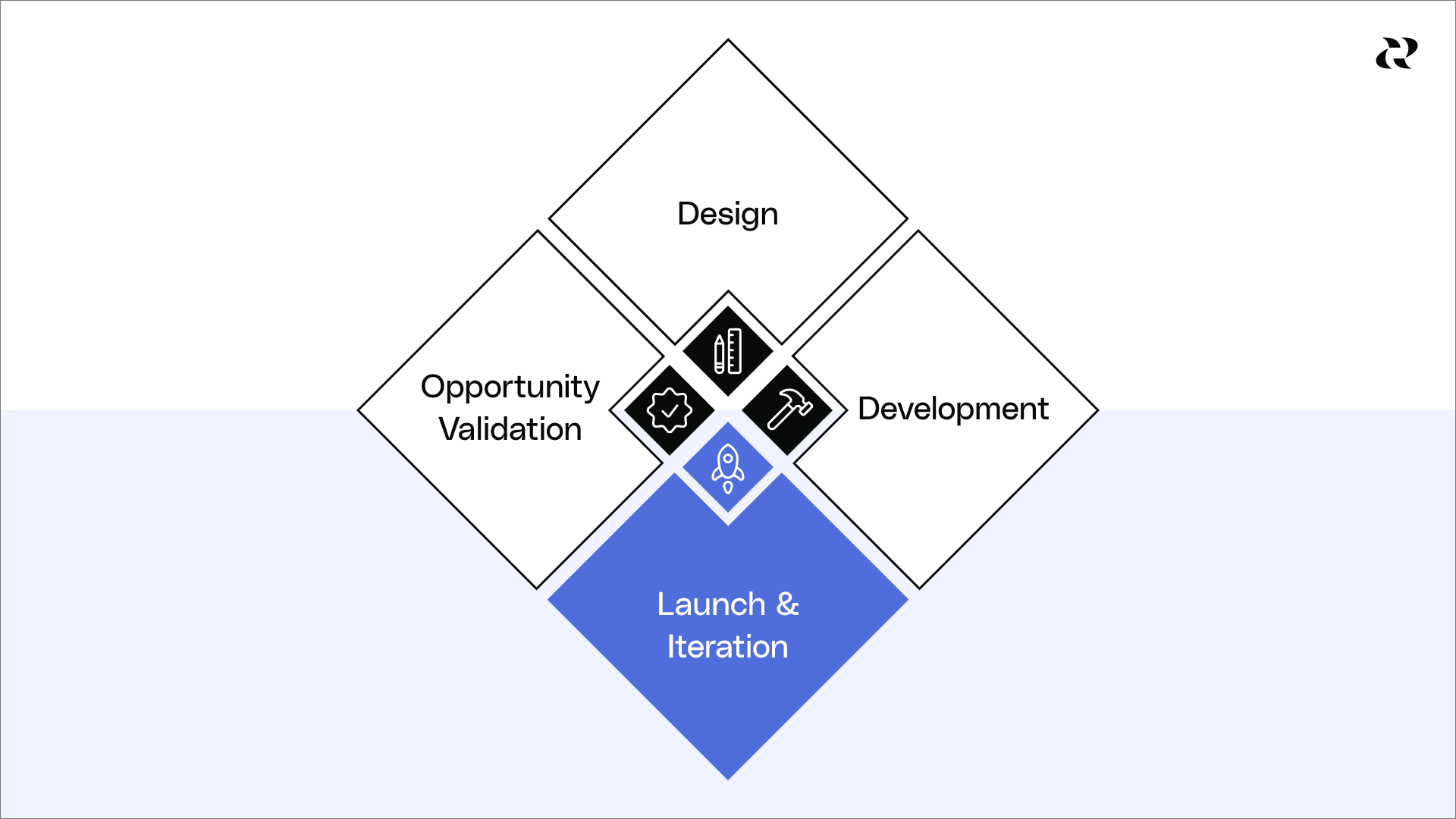
In our example, the product manager, Sharon, who launches a reaction feature for comments in WeDesign would ensure that the feature is marketed during and after launch via email and app notifications, social media, and other channels. They would then evaluate how the feature is performing and figure out whether it makes sense to change anything about it, or if they should move on to other projects.
Ultimately, they would be looking to understand if users actually do react to comments and if it moves the needle on engagement as substantially as the team had anticipated.
Take the next step in becoming a product manager
If you think the varied and complex role of the product manager might be right for you, there are a number of ways to learn more about product work. You’ll want to develop a deeper understanding of what product management entails and the kinds of skills great product managers tend to have.
Reforge offers a rich program called Product Management Foundations that can help you jump-start a career in product management. It uses the four pillars of product development: opportunity validation, design, development, and launch and iteration to walk through the early stages of a product manager’s career.
Sign up now for Reforge to learn from working experts in the field about how to break through and stand out. Then, it’ll be up to you to decide if you want to walk through the intricate details of feature development when a new friend asks you about what you do.



If you don’t have a clear and simple definition of a product manager’s role, you’re not alone. There are a number of reasons why this essential product role has become difficult to describe:
First, Product Management is a newer career with a less than neatly-defined path to getting hired than long-established professions, like medicine or the law.
Second, even product managers at the same company might not do the same day-to-day work as product management is a multi-faceted role with lots of moving parts that vary depending on your focus.
And third, there isn’t a single track to landing a product management job and being successful. For example, product managers can be former developers, but they can also have liberal arts degrees or MBAs.
However hard it is to describe, it is a job that pays well. The median product manager makes over $100k — and people like what they do; product management ranks in the top ten professions on Glassdoor!
Without an obvious path into product management, it can be helpful to understand what the job is. Here, we’ll first define what a product manager does in its simplest terms, and then we’ll start to go deeper into the dynamic responsibilities of the role.
About The Contributors
What is a product manager?
Successful product managers work with engineers and designers to create products that people want. In many ways, a product manager is a professional problem-solver; they anticipate their users’ needs and work to adapt and expand the value of their products to reflect those needs.
While a product manager’s key responsibility is to understand the user and think through how to solve their problems, a large component of their day-to-day can end up being addressing issues that rapidly come up.
In fact, they can spend more than 50% of their time addressing unforeseen issues that come up in the product development cycle. A good product manager knows how to balance quality and efficiency.
Ravi Mehta, former Chief Product Officer at Tinder, reflects on a series of competing binaries that encapsulate the complexities of the product manager role.
“The product manager has to be empathetic and analytical, qualitative and quantitative, detail-oriented and good at abstract thinking.”
He emphasizes that good product managers are capable of innovating and doing the work of optimizing what already exists.
3 responsibilities of a product manager
There are threefundamental responsibilities product managers have:
Find opportunities
Focus on the user
Solve problems
None of these responsibilities is more important than the next. In fact, you may have extended periods of time where you focus on one component of the work more than the others.
Let’s dive a bit deeper into each of those responsibilities.
1. Find opportunities
Product managers are responsible for identifying opportunities to address their users' problems. Then, they define the parameters of the opportunity by outlining the scope of a project and what the first version, or a minimum viable product (MVP), should look like.
The period of discovery and opportunity validation asks product managers to be:
Experts on the target users and what they need from your product
Creative problem-solvers who are capable of building effective feature or product solutions that adhere to the business' vision and constraints
Clear communicators who can keep multiple components of a project moving forward, at pace, for an extended period of time
A great product manager is always thinking about optimization and how the product should evolve to meet the market.
Anand Subramani, Reforge program collaborator and SVP of Product at Path says, “part of your job is to be right a lot, and it’s important for you as a product manager to figure out how to maximize that, but you will not be right all of the time.”
2. Focus on the user
Ultimately, a product manager has to put user advocacy at the center of their work. Anand says, “the actual goal of a product manager is to have a complete mental model of your users.”
This includes current and future users, which is a lot of information sometimes. But the best product managers have an almost encyclopedic knowledge of their customers.
A product manager should understand:
The primary users of the product
The people who are still part of the audience but in a more ancillary way
The prospective users who would use the product if certain foreseeable factors change
Anand emphasizes that a product manager needs to know what users care about. One mistake is they tend to assume their users are like them. He says great product managers know that their users may see the world differently than they do. Engaged product managers reach out and speak to their users frequently in order to build a deep and thorough understanding of their worldview.
3. Solve problems
The third fundamental responsibility of a product manager is that they have to be able to troubleshoot in the face of ambiguity, complexity, and urgency. According to uxcam, the top two challenges product managers face are competing objectives and lack of time. They frequently find themselves navigating three key, sometimes conflicting, stakeholder groups:
Users
The company’s various goals and initiatives
And the cross-functional teams working on a project
Reforge expert Jiaona Zhang, VP of Product at Webflow, adds some more information about how important collaboration is.
“At the end of the day, people are looking to the product manager to help them understand why they're doing the work they're doing, and then collaborate with everyone to figure out how to get that work done.”
Product manager’s role in the product development cycle
A product manager leads a product development cycle, which has four key steps:
Opportunity validation
Design
Development
Launch and iteration
Let’s walk through what a product manager does at each major phase of the product development process.
As we move through the product development process, we’ll use a hypothetical example of a junior product manager who works for WeDesign, a made-up company that offers visualization and collaboration tools for design teams
1. Opportunity validation
First, we’ll have a look at the role of a product manager during the opportunity validation phase.
In this phase, product managers usually focus on competitor and user research to ensure that their hypotheses will benefit the company and that the user will actually want to use what they build.
A junior product manager's role in this phase is often to pressure test the opportunities their managers have identified when defining the team's product vision and product roadmap.
For example, a product manager — let’s call her Sharon — at the fake company WeDesign is tasked with improving how users collaborate with teammates while using the product. The product manager then seeks to understand how users collaborate in the product today, and what problems they face when doing so.
Sharon learns from customer success, and then subsequently from users themselves, that a major frustration in the current collaboration tool is that it’s difficult to acknowledge teammates’ responses because there is no ability to react to them beyond adding a new comment.
2. Design
Next, let’s have a look at what a product manager does during the design phase.
Here, the product manager works closely with designers to build and prototype an experience that addresses the validated opportunity. Typically, this phase starts with brainstorming to come up with a shortlist of potential solutions and ends with a single prototype that’s been vetted through user testing.
Returning to our WeDesign example, our product manager Sharon would bring her user problem to designers and brainstorm potential solutions. The team might ultimately decide to create a reaction button that enables users to pick from a set of emojis to respond to their teammates’ comments. Through prototyping, the team can narrow in more specific feature requirements, like whether or not users can add more than one emoji, or whether the react button exists on all comments or only on certain ones.
3. Development
Now, let’s zoom in on what a product manager does in the third developmental phase of product development.
Once feature specifications and prototypes have been created, product managers work with engineers to bring designs to life in the product. While engineers tend to own the actual development work that happens in this phase, product managers are critical enablers, defining project milestones, managing communication between the product team and the broader organization, identifying ways to improve how the team works together and mitigating risks that might pop up along the way.
The product manager at WeDesign would collaborate with the engineers to break down the work into milestones and tasks. They would track the progress against the plan and share updates with leadership, their manager, and cross-functional teams that are involved in development.
4. Launch and Iteration
Once the product manager has overseen the product development process, they are ready to launch the product.
A smooth product launch is one where the new feature or product functions according to plan and is able to solve the user problem initially defined during opportunity validation. Product managers then measure post-launch performance to determine where more interaction is needed; then, they disseminate their findings across various stakeholder teams which will help inform future builds.
In our example, the product manager, Sharon, who launches a reaction feature for comments in WeDesign would ensure that the feature is marketed during and after launch via email and app notifications, social media, and other channels. They would then evaluate how the feature is performing and figure out whether it makes sense to change anything about it, or if they should move on to other projects.
Ultimately, they would be looking to understand if users actually do react to comments and if it moves the needle on engagement as substantially as the team had anticipated.
Take the next step in becoming a product manager
If you think the varied and complex role of the product manager might be right for you, there are a number of ways to learn more about product work. You’ll want to develop a deeper understanding of what product management entails and the kinds of skills great product managers tend to have.
Reforge offers a rich program called Product Management Foundations that can help you jump-start a career in product management. It uses the four pillars of product development: opportunity validation, design, development, and launch and iteration to walk through the early stages of a product manager’s career.
Sign up now for Reforge to learn from working experts in the field about how to break through and stand out. Then, it’ll be up to you to decide if you want to walk through the intricate details of feature development when a new friend asks you about what you do.