Reforge has joined Miro ↗
All articles
ref:AI Presents: Strategies to Beat the AI S-Curve [Unsolicited Feedback Live]
Jun 27, 2024
Navigating the AI S-Curve: Insights from Unsolicited Feedback Live with Andrew Chen & Fareed Mosavat
Introduction: Embrace the AI Wave
Welcome to an exploration of the AI revolution through the lenses of product management and tech innovation. This blog post distills the insights shared by Andrew Chen (General Partner at Andreessen Horowitz) and Fareed Mosavat (Host of Unsolicited Feedback) in a special episode of Unsolicited Feedback LIVE on the AI S-curve, tech incumbents' rapid adoption, and the future of AI in sectors like gaming and entertainment. If you're interested in how businesses can navigate the complex terrain of AI-driven changes, this post is for you.
Click here to listen to the audio version!
Understanding the S-Curve: A Framework for Technology Adoption
What Is an S-Curve?
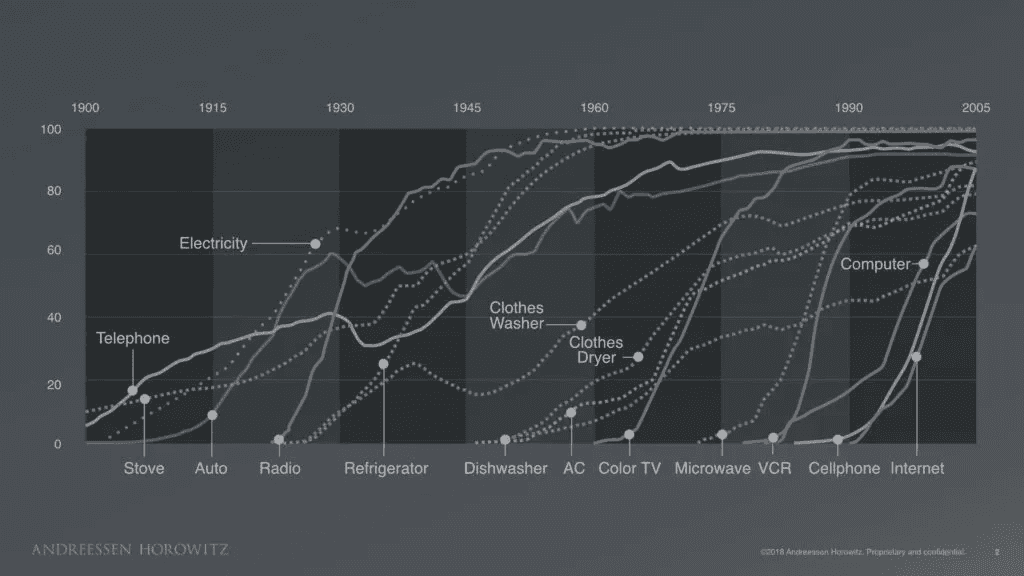
The S-Curve is a graphical representation used to describe the adoption and diffusion of new technologies. It generally starts with a slow uptake as early adopters experiment with the technology, followed by steep growth as it becomes mainstream, and finally stabilization as the market saturates.
S-Curves have been pivotal in understanding trends in tech adoption over the last decade, affecting innovations from mobile technology to cloud computing.
Phases of the S-Curve
Andrew Chen breaks down the S-Curve into three main phases:
Novelty Phase: This is where products are fresh, exciting, and rapidly gain attention. Examples include early iPhone apps like flashlight and fart apps, which may not have high retention but are novel and fun.
Functionality Phase: In this stage, the technology begins to offer indispensable features that significantly improve user experience. Key examples include Uber and on-demand services using mobile platforms' GPS and connectivity features.
Brand Phase: Here, products differentiate through brand, design, and minor feature tweaks. Think of how different messaging apps like WhatsApp, Telegram, and Signal cater to various user bases.
Andrew elaborates, “The whole interesting thing is that, like, maybe everyone's retention is kind of similarly shaped. It's just that, you know, what happens in the first seven days kind of determines whether or not you're going to stick or not.”
Related Reading: The Mobile S-Curve Ends and the AI S-Curve Begins
It Actually Works: The Power of Novelty
Early in the S-Curve, Functionality is Enough
In the early stages of a technological S-Curve, the novelty itself can drive high engagement levels. People are fascinated by new capabilities, and even a single working feature can propel a product to virality.
Consider AI products like ChatGPT. Initially, a simple text box for generating responses ended up becoming a groundbreaking product, showing how powerful a well-executed novelty can be.
Fareed adds, “The friction doesn't matter because the 'it just works' is so cool, so novel, so new that you can get away with breaking all the rules of product growth and product experience."
Example: MidJourney
MidJourney, an AI art generator using Discord for user interaction, became an instant hit despite the friction of learning to navigate Discord. Why? Because the AI-generated art was so novel and captivating that it overrode the initial barriers to use.
Adapting to a Fast-Moving AI Landscape
Incumbents Aren’t Sleeping
Unlike previous technological shifts, AI has seen rapid adoption by tech incumbents like Google, Microsoft, and Apple. These giants are not just dabbling but are investing heavily to make AI central to their strategies.
Andrew points out, “The amazing thing about AI is that it is the thing that the incumbents are the most excited about and that they're embracing very quickly. Everyone is setting OKRs that have AI-related targets inside."
As a result, the S-Curve is tightening. AI products “just working” is not enough to remain relevant in the market. You have to have unique functionality.
What Does This Mean for Startups?
For startups, this means the playing field is more competitive than ever. Building yet another AI chatbot won't cut it. Startups need to focus on:
Vertical Specialization: Develop solutions tailored for specific industries or workflows that incumbents may overlook.
Unique User Interfaces: Leverage AI to create novel user experiences that incumbents cannot easily replicate.
Fareed Mosavat highlights, "For somebody getting into this now, given the S-curve is moving faster, your MVP better be something that hooks users long-term, or you will face quick obsolescence."
Related Reading: AI and Marketing: What Happens Next
The Games and Film Industry: Slow to Change
Uneven Adoption in Entertainment
While tech giants are going all-in on AI, the entertainment industry, including Hollywood and AAA gaming, is more reticent. This hesitancy is partly due to heavily unionized labor markets and concerns about job displacement.
That said, he anticipates that robust functionality will help overcome this initial resistance. At some point, the technology will become so powerful that it will have to be used to keep pace.
Opportunities for Innovation
For innovators, this reluctance presents opportunities. Those who can navigate these industries' complexities and show how AI can augment rather than replace jobs will stand to gain significantly.
Fareed adds, "Imagine a single creator using AI to produce content that rivals traditional production houses. This could reshape entertainment." Could we see a world where someone could create their own Game of Thrones quality show just using brilliant prompting?
Related Reading: Why Hollywood and AAA Gaming Can’t Innovate
Recommendations for Builders
Lessons from Linear and TikTok
Late entrants like Linear (a SaaS tool) and TikTok (a social media platform) show that even late in an S-Curve, it's possible to disrupt markets with:
Superior User Experience: Better design, faster performance, and more focused features.
Community and Viral Growth: Leveraging network effects to grow quickly.
Building AI Products with Lasting Value
Focus Beyond Novelty: Ensure that your product's value transcends the initial 'wow' factor. Look for real, sustainable use cases.
Segmentation and Retention: Instead of casting a wide net, target high-value segments and ensure they find lasting utility in your product.
Fareed emphasizes, “You may have great fit with people who aren’t a good business. You need to iterate on the market and align towards those who drive value long-term.”
Further Reading: Understanding Mobile Retention
Q&A: Answering Your Burning Questions
When to Jump In?
Timing in the AI industry is crucial. The best time is often "yesterday," but your entry point depends on your background and skill set. Always assess whether the current stage aligns with your expertise before diving in.
Andrew advises, “The best time to jump into a new S-curve is, is, is, uh, yesterday and you should just do it. Find the problem that best suits your skill set.”
Smaller Budgets and Staying Relevant
For companies with smaller budgets, partnering with startups or using open-source AI models can be cost-effective ways to stay in the game.
Fareed suggests, “If you’re under-resourced, don’t fight the battle alone. Leverage open ecosystems and find narrower verticals that incumbents may overlook.”
Conclusion: Are You Ready to Ride the AI S-Curve?
The AI landscape is evolving at a breathtaking pace, and businesses must navigate this dynamic environment with agility and foresight. Whether you’re a tech giant or a scrappy startup, understanding the S-Curve and leveraging your unique strengths will be key to long-term success.
Embrace the challenges, focus on sustainable value, and be prepared to reinvent yourself – the future is AI.
Engage with Us
Share your thoughts: How is your business adapting to the AI revolution? What challenges are you facing, and what solutions are you exploring? Let's continue the conversation!
Related Resources:
Artifacts: Free, real-world products from leading experts
AI/ML roadmap at Neurons Lab
Product spec for AI-powered malware scan MVP at BitNinja
Using Reforge’s AI to brainstorm around a new use case
GenAI Product Strategy and Roadmap at Spiffy.ai
Guides: Members-only, step by step instruction
Evaluate the value of Gen AI for your product
Define Successful Conversational AI Products
Understand conversational AI technology
Courses: Live, in-depth upskilling face-to-face with Reforge experts
Generative AI Products: How to Get from Idea to MVP - Polly Allen and Rupa Chaturvedi
GenAI Product Strategy - Aniket Deosthali
Blog Post + Demo Video - How we built the Reforge Extension!
Podcast: Reforge’s Unsolicited Feedback is available on the platform of your choice
Listen to Brian Balfour, Ravi Mehta, Fareed Mosavat, and Joff Redfern discuss key takeaways from H1 2024 - Part 1 & Part 2.
Hear Box CTO, Ben Kus, evaluate AI models and discuss his approach to building enterprise AI tools.
Listen to Sachin Rekhi react to the shrinking S-Curve’s impact on Product and Marketing Strategy and learn how to quickly find product-market fit in an AI world.
Discover how Claire Vo built Chat PRD.
Learn how Kieran Flanagan (SVP Marketing at HubSpot) formulated the AI Marketing Playbook, initially on Unsolicited Feedback.
Q&A Summary
Question: Given the speed of how things are moving, how do you know when to jump in and attack something when you live in a world where the problem can be solved better, faster, cheaper, literally tomorrow?
Answer: Andrew advises that the best time to jump into a new S-curve is usually "yesterday." Your entry point should align with your skills and background. It's crucial to start now and find the problem best suited to your expertise rather than waiting for the perfect moment, which might never come.
Question: Do you believe that companies will need to reinvent themselves often due to the fast-paced nature of tech evolution? What can companies with smaller budgets do to stay relevant?
Answer: Both Andrew and Fareed agree that frequent reinvention is becoming a necessity. For companies with smaller budgets, partnering with startups or using open-source AI models are cost-effective ways to stay relevant. Additionally, focusing on narrower verticals and leveraging existing ecosystems can provide a competitive edge.
Question: How do you successfully and strongly differentiate your product if you're leveraging existing foundational models that others also have access to?
Answer: The key to differentiation lies in offering features that provide sustainable value beyond the initial novelty. Andrew suggests focusing on vertical specializations and unique user experiences. Building strong viral loops, network effects, and segmentation are other strategies to make your product stick.
Question: What is the timeline for moving from novelty phase to functionality phase in AI? Is the S-curve moving faster in AI?
Answer: Yes, the S-curve is moving faster with AI than with previous technologies. Andrew and Fareed note that the industry is rapidly transitioning from the novelty phase to more functional applications. They estimate this shift could happen in as little as 12-18 months due to accelerated consumer interest and technological advancements.
Question: How are tech incumbents adopting AI faster than they did with previous technology platforms like mobile or SaaS?
Answer: The rapid adoption by tech incumbents is primarily because AI represents a clear competitive advantage, unlike previous platforms where incumbents were slow to adapt. Andrew mentions that companies like Google, Microsoft, and Apple are integrating AI deeply into their core strategies, making it central to their operations and goals.
Question: Why are industries like Hollywood and AAA gaming more reticent to embrace AI technologies?
Answer: Andrew attributes this hesitation to the unionized labor markets in these industries, which are concerned about job displacement due to AI. Additionally, these sectors have different business models that don't align as easily with the fast-paced, iterative world of tech, and it’s harder for them to attract AI talent compared to tech companies.
Question: How can product managers and founders differentiate novelty from lasting value in AI products?
Answer: Fareed emphasizes that one must look beyond the initial 'wow' factor and focus on long-term utility. It requires segmenting the market to target high-value users and refining the product to ensure it solves real, enduring problems. Understanding user retention and feedback will also help discern between transient novelty and lasting value.



Navigating the AI S-Curve: Insights from Unsolicited Feedback Live with Andrew Chen & Fareed Mosavat
Introduction: Embrace the AI Wave
Welcome to an exploration of the AI revolution through the lenses of product management and tech innovation. This blog post distills the insights shared by Andrew Chen (General Partner at Andreessen Horowitz) and Fareed Mosavat (Host of Unsolicited Feedback) in a special episode of Unsolicited Feedback LIVE on the AI S-curve, tech incumbents' rapid adoption, and the future of AI in sectors like gaming and entertainment. If you're interested in how businesses can navigate the complex terrain of AI-driven changes, this post is for you.
Click here to listen to the audio version!
Understanding the S-Curve: A Framework for Technology Adoption
What Is an S-Curve?
The S-Curve is a graphical representation used to describe the adoption and diffusion of new technologies. It generally starts with a slow uptake as early adopters experiment with the technology, followed by steep growth as it becomes mainstream, and finally stabilization as the market saturates.
S-Curves have been pivotal in understanding trends in tech adoption over the last decade, affecting innovations from mobile technology to cloud computing.
Phases of the S-Curve
Andrew Chen breaks down the S-Curve into three main phases:
Novelty Phase: This is where products are fresh, exciting, and rapidly gain attention. Examples include early iPhone apps like flashlight and fart apps, which may not have high retention but are novel and fun.
Functionality Phase: In this stage, the technology begins to offer indispensable features that significantly improve user experience. Key examples include Uber and on-demand services using mobile platforms' GPS and connectivity features.
Brand Phase: Here, products differentiate through brand, design, and minor feature tweaks. Think of how different messaging apps like WhatsApp, Telegram, and Signal cater to various user bases.
Andrew elaborates, “The whole interesting thing is that, like, maybe everyone's retention is kind of similarly shaped. It's just that, you know, what happens in the first seven days kind of determines whether or not you're going to stick or not.”
Related Reading: The Mobile S-Curve Ends and the AI S-Curve Begins
It Actually Works: The Power of Novelty
Early in the S-Curve, Functionality is Enough
In the early stages of a technological S-Curve, the novelty itself can drive high engagement levels. People are fascinated by new capabilities, and even a single working feature can propel a product to virality.
Consider AI products like ChatGPT. Initially, a simple text box for generating responses ended up becoming a groundbreaking product, showing how powerful a well-executed novelty can be.
Fareed adds, “The friction doesn't matter because the 'it just works' is so cool, so novel, so new that you can get away with breaking all the rules of product growth and product experience."
Example: MidJourney
MidJourney, an AI art generator using Discord for user interaction, became an instant hit despite the friction of learning to navigate Discord. Why? Because the AI-generated art was so novel and captivating that it overrode the initial barriers to use.
Adapting to a Fast-Moving AI Landscape
Incumbents Aren’t Sleeping
Unlike previous technological shifts, AI has seen rapid adoption by tech incumbents like Google, Microsoft, and Apple. These giants are not just dabbling but are investing heavily to make AI central to their strategies.
Andrew points out, “The amazing thing about AI is that it is the thing that the incumbents are the most excited about and that they're embracing very quickly. Everyone is setting OKRs that have AI-related targets inside."
As a result, the S-Curve is tightening. AI products “just working” is not enough to remain relevant in the market. You have to have unique functionality.
What Does This Mean for Startups?
For startups, this means the playing field is more competitive than ever. Building yet another AI chatbot won't cut it. Startups need to focus on:
Vertical Specialization: Develop solutions tailored for specific industries or workflows that incumbents may overlook.
Unique User Interfaces: Leverage AI to create novel user experiences that incumbents cannot easily replicate.
Fareed Mosavat highlights, "For somebody getting into this now, given the S-curve is moving faster, your MVP better be something that hooks users long-term, or you will face quick obsolescence."
Related Reading: AI and Marketing: What Happens Next
The Games and Film Industry: Slow to Change
Uneven Adoption in Entertainment
While tech giants are going all-in on AI, the entertainment industry, including Hollywood and AAA gaming, is more reticent. This hesitancy is partly due to heavily unionized labor markets and concerns about job displacement.
That said, he anticipates that robust functionality will help overcome this initial resistance. At some point, the technology will become so powerful that it will have to be used to keep pace.
Opportunities for Innovation
For innovators, this reluctance presents opportunities. Those who can navigate these industries' complexities and show how AI can augment rather than replace jobs will stand to gain significantly.
Fareed adds, "Imagine a single creator using AI to produce content that rivals traditional production houses. This could reshape entertainment." Could we see a world where someone could create their own Game of Thrones quality show just using brilliant prompting?
Related Reading: Why Hollywood and AAA Gaming Can’t Innovate
Recommendations for Builders
Lessons from Linear and TikTok
Late entrants like Linear (a SaaS tool) and TikTok (a social media platform) show that even late in an S-Curve, it's possible to disrupt markets with:
Superior User Experience: Better design, faster performance, and more focused features.
Community and Viral Growth: Leveraging network effects to grow quickly.
Building AI Products with Lasting Value
Focus Beyond Novelty: Ensure that your product's value transcends the initial 'wow' factor. Look for real, sustainable use cases.
Segmentation and Retention: Instead of casting a wide net, target high-value segments and ensure they find lasting utility in your product.
Fareed emphasizes, “You may have great fit with people who aren’t a good business. You need to iterate on the market and align towards those who drive value long-term.”
Further Reading: Understanding Mobile Retention
Q&A: Answering Your Burning Questions
When to Jump In?
Timing in the AI industry is crucial. The best time is often "yesterday," but your entry point depends on your background and skill set. Always assess whether the current stage aligns with your expertise before diving in.
Andrew advises, “The best time to jump into a new S-curve is, is, is, uh, yesterday and you should just do it. Find the problem that best suits your skill set.”
Smaller Budgets and Staying Relevant
For companies with smaller budgets, partnering with startups or using open-source AI models can be cost-effective ways to stay in the game.
Fareed suggests, “If you’re under-resourced, don’t fight the battle alone. Leverage open ecosystems and find narrower verticals that incumbents may overlook.”
Conclusion: Are You Ready to Ride the AI S-Curve?
The AI landscape is evolving at a breathtaking pace, and businesses must navigate this dynamic environment with agility and foresight. Whether you’re a tech giant or a scrappy startup, understanding the S-Curve and leveraging your unique strengths will be key to long-term success.
Embrace the challenges, focus on sustainable value, and be prepared to reinvent yourself – the future is AI.
Engage with Us
Share your thoughts: How is your business adapting to the AI revolution? What challenges are you facing, and what solutions are you exploring? Let's continue the conversation!
Related Resources:
Artifacts: Free, real-world products from leading experts
AI/ML roadmap at Neurons Lab
Product spec for AI-powered malware scan MVP at BitNinja
Using Reforge’s AI to brainstorm around a new use case
GenAI Product Strategy and Roadmap at Spiffy.ai
Guides: Members-only, step by step instruction
Evaluate the value of Gen AI for your product
Define Successful Conversational AI Products
Understand conversational AI technology
Courses: Live, in-depth upskilling face-to-face with Reforge experts
Generative AI Products: How to Get from Idea to MVP - Polly Allen and Rupa Chaturvedi
GenAI Product Strategy - Aniket Deosthali
Blog Post + Demo Video - How we built the Reforge Extension!
Podcast: Reforge’s Unsolicited Feedback is available on the platform of your choice
Listen to Brian Balfour, Ravi Mehta, Fareed Mosavat, and Joff Redfern discuss key takeaways from H1 2024 - Part 1 & Part 2.
Hear Box CTO, Ben Kus, evaluate AI models and discuss his approach to building enterprise AI tools.
Listen to Sachin Rekhi react to the shrinking S-Curve’s impact on Product and Marketing Strategy and learn how to quickly find product-market fit in an AI world.
Discover how Claire Vo built Chat PRD.
Learn how Kieran Flanagan (SVP Marketing at HubSpot) formulated the AI Marketing Playbook, initially on Unsolicited Feedback.
Q&A Summary
Question: Given the speed of how things are moving, how do you know when to jump in and attack something when you live in a world where the problem can be solved better, faster, cheaper, literally tomorrow?
Answer: Andrew advises that the best time to jump into a new S-curve is usually "yesterday." Your entry point should align with your skills and background. It's crucial to start now and find the problem best suited to your expertise rather than waiting for the perfect moment, which might never come.
Question: Do you believe that companies will need to reinvent themselves often due to the fast-paced nature of tech evolution? What can companies with smaller budgets do to stay relevant?
Answer: Both Andrew and Fareed agree that frequent reinvention is becoming a necessity. For companies with smaller budgets, partnering with startups or using open-source AI models are cost-effective ways to stay relevant. Additionally, focusing on narrower verticals and leveraging existing ecosystems can provide a competitive edge.
Question: How do you successfully and strongly differentiate your product if you're leveraging existing foundational models that others also have access to?
Answer: The key to differentiation lies in offering features that provide sustainable value beyond the initial novelty. Andrew suggests focusing on vertical specializations and unique user experiences. Building strong viral loops, network effects, and segmentation are other strategies to make your product stick.
Question: What is the timeline for moving from novelty phase to functionality phase in AI? Is the S-curve moving faster in AI?
Answer: Yes, the S-curve is moving faster with AI than with previous technologies. Andrew and Fareed note that the industry is rapidly transitioning from the novelty phase to more functional applications. They estimate this shift could happen in as little as 12-18 months due to accelerated consumer interest and technological advancements.
Question: How are tech incumbents adopting AI faster than they did with previous technology platforms like mobile or SaaS?
Answer: The rapid adoption by tech incumbents is primarily because AI represents a clear competitive advantage, unlike previous platforms where incumbents were slow to adapt. Andrew mentions that companies like Google, Microsoft, and Apple are integrating AI deeply into their core strategies, making it central to their operations and goals.
Question: Why are industries like Hollywood and AAA gaming more reticent to embrace AI technologies?
Answer: Andrew attributes this hesitation to the unionized labor markets in these industries, which are concerned about job displacement due to AI. Additionally, these sectors have different business models that don't align as easily with the fast-paced, iterative world of tech, and it’s harder for them to attract AI talent compared to tech companies.
Question: How can product managers and founders differentiate novelty from lasting value in AI products?
Answer: Fareed emphasizes that one must look beyond the initial 'wow' factor and focus on long-term utility. It requires segmenting the market to target high-value users and refining the product to ensure it solves real, enduring problems. Understanding user retention and feedback will also help discern between transient novelty and lasting value.