Reforge has joined Miro ↗
Product Roadmap: What Is It & How To Create One
A product roadmap has become an indispensable tool in many business sectors. Think of it as your strategic compass that aligns your team’s efforts with the overall product vision.
A well-crafted product roadmap outlines key milestones, features, and timelines—all to guide your product from concept to reality and beyond.
In this guide, we’ll explore what product roadmaps are and why they’re crucial for success. Stay tuned to learn how to take a step-by-step approach to creating a roadmap that will drive your product forward.
What Is a Product Roadmap?
A product roadmap is a strategic blueprint that visualizes the overarching direction, goals, and evolution of a product throughout its lifecycle. It’s much more than a project timeline. Rather, a well-designed roadmap connects your product’s vision and strategy with the practical steps and milestones needed to bring that vision to life.
While product roadmapping can vary depending on your organization and product, roadmaps often include these fundamental elements:
Vision: A clear statement of what the product aims to achieve and its value proposition.
Strategic Goals & Business Objectives: The core outcomes the product roadmap should support and align with overall company goals.
Themes or Initiatives: High-level focus areas that group together product development efforts.
Features & Functionality: Descriptions of new offerings, enhancements, or major updates.
Timeframe: A general timeline indicating quarters, months, or even broader ranges (short-term, mid-term, long-term).
Metrics: Key indicators to track progress toward goals and ensure the roadmap aligns with success criteria.
Dependencies: Interrelated features or tasks, highlighting potential bottlenecks or areas requiring cross-team coordination.
Be aware that roadmapping is not a simple box-ticking exercise. A thoughtfully crafted product roadmap offers multiple benefits. Let’s explore these now so you can see just how important product roadmaps can be.
Why Are Product Roadmaps Important?
Product roadmaps are far more than just schedules or feature lists. They play a crucial role in steering your product toward success by offering a strategic framework for decision-making and execution.
Let’s dive into the core reasons why roadmaps are essential for effective product management:
Alignment of Product Vision and Strategy
A roadmap translates your product’s aspirations into concrete goals and directions. This helps everyone on the team, from designers to engineers to marketers, understand the overarching purpose of their work and how they contribute to the larger picture.
Prioritization and Focus
With countless feature requests and ideas floating around, a product roadmap helps you cut through the noise. It forces you to consider what truly delivers value to customers, aligns with your strategic objectives, and is feasible within your constraints.
Clear Communication and Buy-In
Roadmaps become your central tool for communicating the product’s direction to stakeholders across the organization. Whether you’re presenting to executives, coordinating with the sales team, or collaborating with development teams, the roadmap offers a shared language and source of truth. Transparent communication leads to better buy-in and smoother execution.
Resource Allocation and Efficiency
A solid roadmap informs decisions about how to invest your most precious resources—time, talent, and budget. By seeing the big picture, you can proactively identify potential bottlenecks, allocate teams effectively, and prevent development efforts from getting bogged down by misaligned priorities.
Adaptable to Change
While a roadmap provides direction, it’s not set in stone. Market trends shift, customer feedback reveals new insights, and sometimes unexpected opportunities arise. A well-maintained roadmap enables you to revisit your plan, make adjustments, and communicate these shifts effectively to your teams and stakeholders.
Proactive Problem Solving
You can start addressing these issues early by thinking ahead about potential dependencies, bottlenecks, or resourcing challenges as you develop your roadmap. This results in a smoother product development process and fewer unexpected delays.
Your product roadmap is the foundation for making strategic decisions. With it, you justify resource allocation and communicate with all stakeholders who are invested in your product’s success.
How To Write a 12-Month Product Roadmap
Crafting a product roadmap is an essential step in aligning your team’s efforts with your product strategy.
Here’s a comprehensive guide to creating a 12-month roadmap, integrating key concepts throughout the process:
Step 1: Define Your Goals and Metrics
Your roadmap should be an extension of your product strategy. Begin by reviewing your overarching goals and ensure your roadmap aligns with broader business objectives. What specific outcomes do you want your product to achieve in the next 12 months?
Next, translate those goals into measurable targets. Define key metrics that will track your progress toward objectives. These metrics could encompass user adoption rates, revenue generated by new features, user engagement levels, customer satisfaction scores, or any other indicators most relevant to your product’s success.
Step 2: Map Out High-Level Themes
Dividing your 12-month timeline into manageable chunks, like quarters, is crucial for effective planning. Within each quarter, identify the major themes or initiatives that will drive your product’s development. These themes should connect strategically to your goals and metrics defined in step one.
Step 3: Prioritize Initiatives and Features Using 4D
In order to develop and rank roadmaps, teams commonly rely on conventional prioritization frameworks such as the following methods:
Prioritization based on voting
RICE (or scoring-based) prioritization
Despite their benefits, these tactics for product roadmap prioritization do not always yield the most effective outcomes. Each method carries inherent biases that introduce risks, including the possibility of lacking impactful initiatives, focusing efforts inefficiently, and struggling to gain support from leadership.
To tackle these issues, skilled Product Managers adopt a targeted, strategic approach to prioritizing product roadmaps. This unique strategy is termed 4D Product Roadmapping.
This innovative concept has been derived from our Mastering Product Management program. For those keen on honing their skills in developing a compelling product roadmap and much more, we encourage exploring it further!
What Is 4D?
Developing 4D product roadmaps entails a method that involves brainstorming roadmap initiatives through four distinct perspectives, each possessing individual merits, demerits, and constraints. The process then prioritizes these initiatives solely to those that enhance a specific set of metrics and goals.
The four lenses for product roadmapping are:
Strategy - initiatives that strongly align with your product strategy
Vision - activities that bring you closer to realizing your vision
Customer - features explicitly requested by users
Business - enhancements that affect critical input metrics
While each lens offers distinct advantages, overemphasizing any one can lead to drawbacks. It is crucial to strike a balance by integrating ideas from all four lenses to craft a comprehensive roadmap.
Using this framework, brainstorm potential epics (large features) and user stories (smaller, more granular features) that could address the specific objectives of each theme.
Consider valuable customer insights, market needs, and your product team’s capacity when weighing the potential value of each feature against the development effort required. Here, an agile prioritization approach comes into play.
Step 4: Create a Visual Timeline
Now, it’s time to translate your roadmap into a visual representation. Choose the tool that best suits your needs and audience. Popular options include specialized roadmap software, spreadsheets, slide presentations, Gantt charts, or even a whiteboard sketch.
The key elements of your timeline should be your themes, prioritized features (epics and user stories), and their general placement over a 12-month span. Consider using a color scheme to differentiate between quarters or indicate the certainty level of specific release dates.
Step 5: Get Feedback and Iterate
Collaboration is key to a successful roadmap. Share your draft roadmap with relevant team members across various departments—development, design, sales, marketing—and even executives. Gather their input, concerns, and fresh perspectives on your prioritization choices.
Incorporate valuable feedback and proactively address potential bottlenecks identified by different teams. This open communication and willingness to iterate are crucial for creating a roadmap that is both practical and adaptable.
Before we move on, you should consider the following when crafting your roadmap:
User Focus: Never lose sight of the customer. Feature ideas, new product launches, and sprint iterations should all connect back to how they ultimately deliver value and enhance the user experience.
Adaptability: Remember, your roadmap is a living document, not a rigid plan set in stone. Revisit it regularly (ideally at least quarterly) and be prepared to adjust it based on new insights, market changes, shifting customer needs, or resource constraints. However, always strive to maintain strategic alignment with your long-term product vision.
Communication Tool: Leverage your roadmap as a central communication tool between product teams, internal stakeholders across departments, and even external partners you might be collaborating with. Tailor your presentation style to focus on aspects most relevant to your audience.
This approach ensures your 12-month product roadmap is both strategic and adaptable, fostering clear communication and user-centric development throughout the product lifecycle.
Product Roadmap Templates Built and Used by Leading Companies
Gain insight from real-world examples of product roadmaps used by successful companies. These templates illustrate diverse approaches and highlight how roadmaps can be adapted for different businesses and goals.
Product Strategy and Roadmap 2023-24 at ResortPass
By Adam Fishman, Interim Chief Product & Technology Officer @ ResortPass
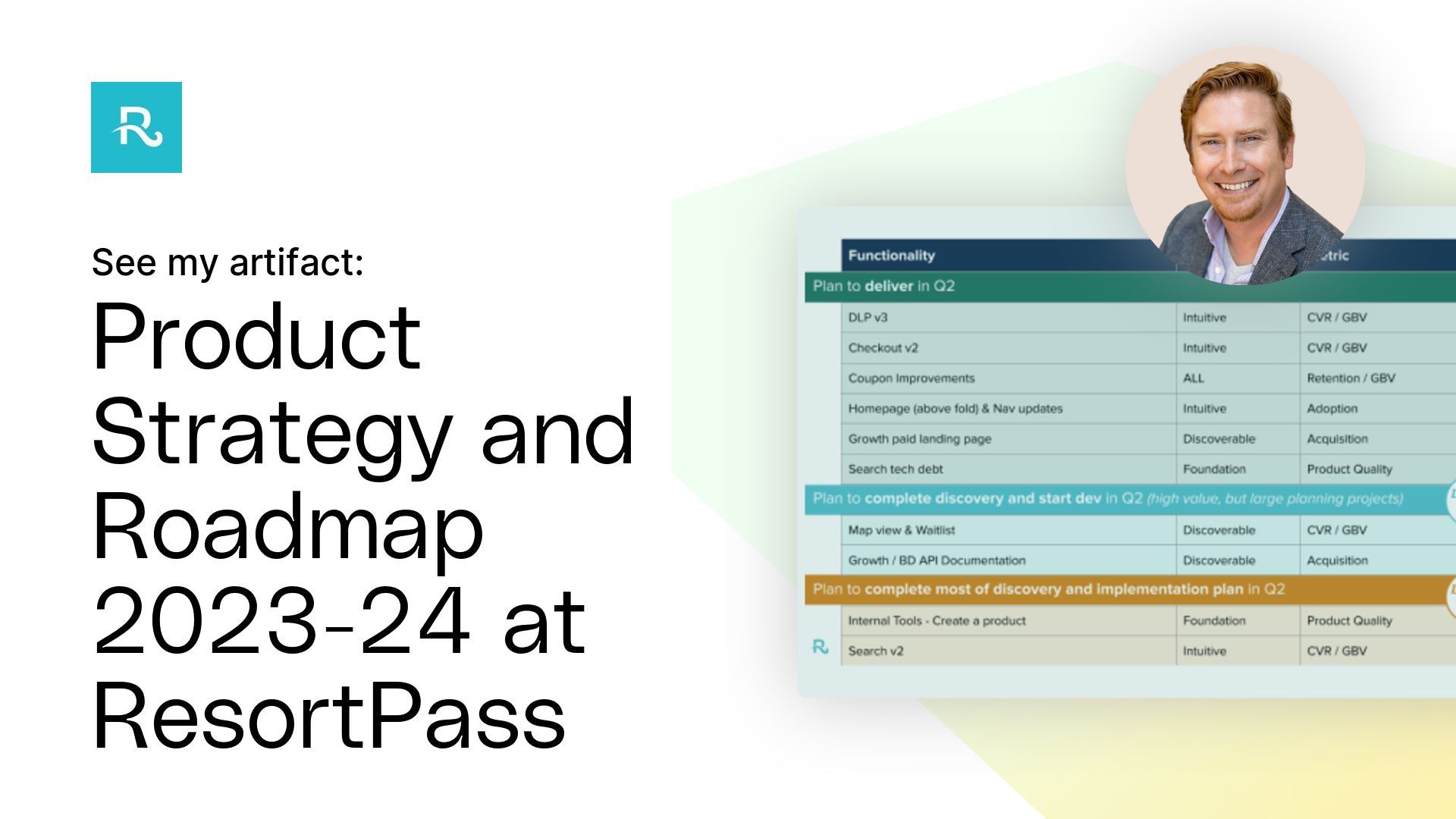
This presentation offers a high-level overview of ResortPass’s past product objectives, successes, and future priorities. Prior to presenting broadly, Adam built a strategy document and secured buy-in from key executives. The adaptable roadmap prioritizes impact and incorporates lessons learned.
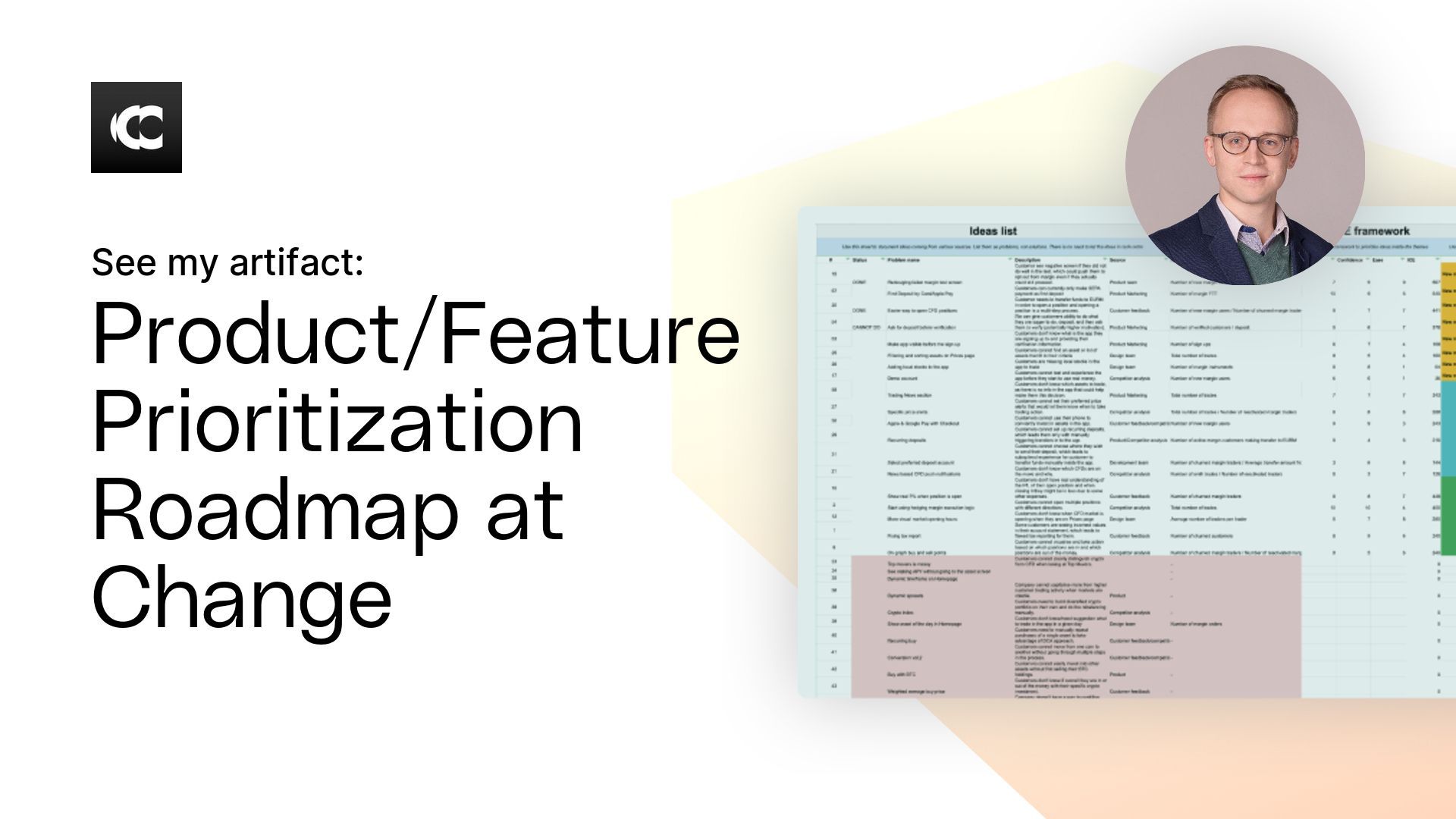
Product/Feature Prioritization Roadmap at Change
By Karl Vään, Senior Product Manager @ Change
Karl developed this prioritization framework to guide Change’s roadmap as the company scales. The process begins with clear objectives, involves analyses of customer feedback, team inputs, and market data, and aligns ideas with KPIs using an ICE scoring system. The roadmap emphasizes strategic KPIs, team collaboration, and informed problem-solving.
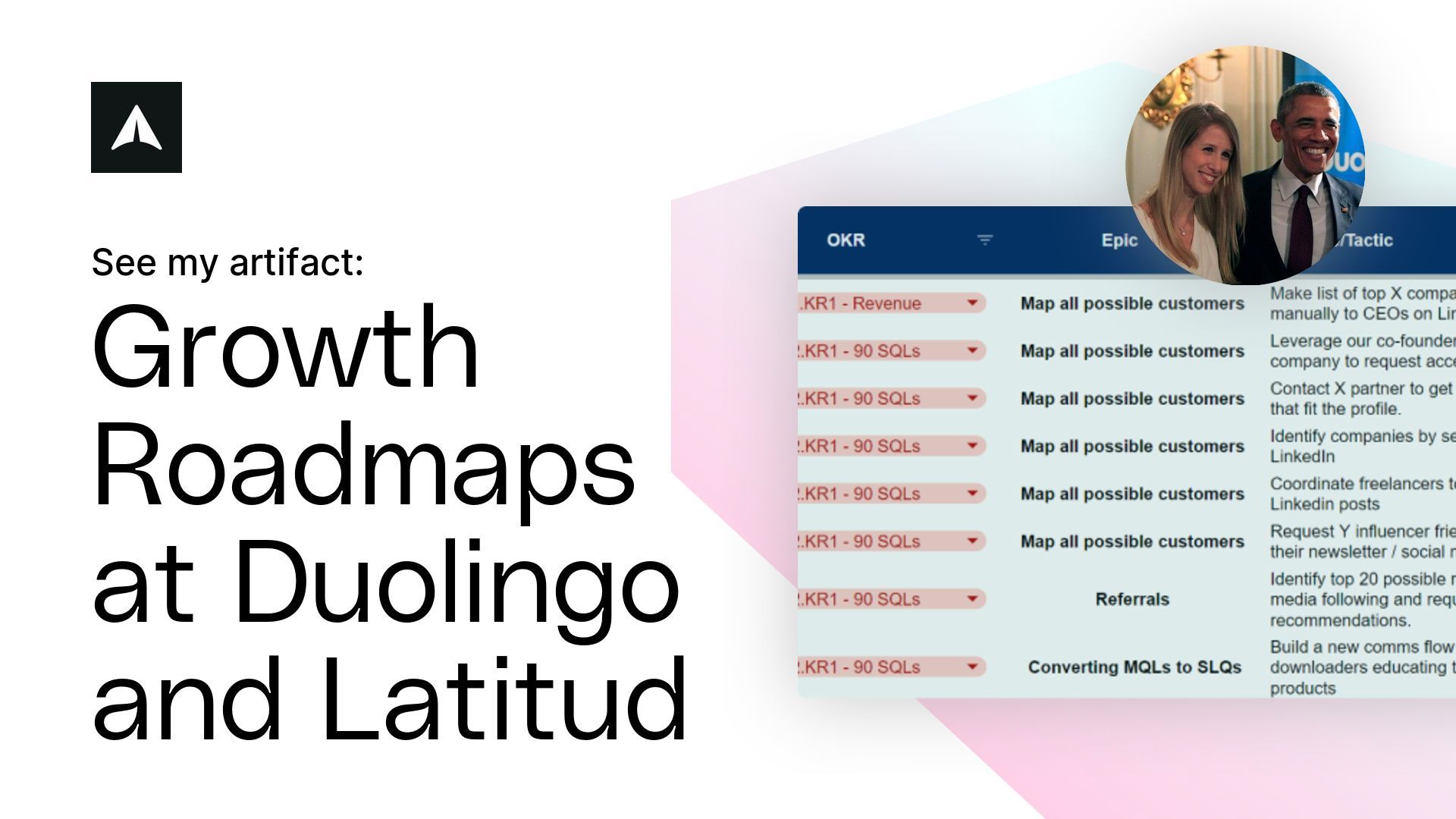
Growth Roadmaps at Duolingo and Latitud
By Gina Gotthilf, Co-founder, and COO @ Latitud
See how Gina adapted her successful growth model from Duolingo for use at Latitud. The document focuses on prioritizing growth initiatives around cross-functional goals. It emphasizes aligning cross-functional OKRs with marketing OKRs and using a North Star metric to drive impact and minimize efforts that don’t advance core goals.
Product Strategy and Roadmap at Vivint Solar
By Sanjay Bhatia
This presentation outlines a customer-focused product vision for Vivint Solar’s iOS/Android apps. Sanjay’s strategy prioritizes solving customer pain points, driving adoption and retention, and finding monetization opportunities. The roadmap employs the Jobs To Be Done framework to deeply understand customer needs, creating a strategic path forward.

Product Roadmap at Eaze
By Natasha Pecor, VP of Product @ Eaze
Natasha led the evolution of Eaze’s product roadmap, making it more collaborative and transparent. The “What’s Product Team Doing?” tab promoted openness and progress tracking.
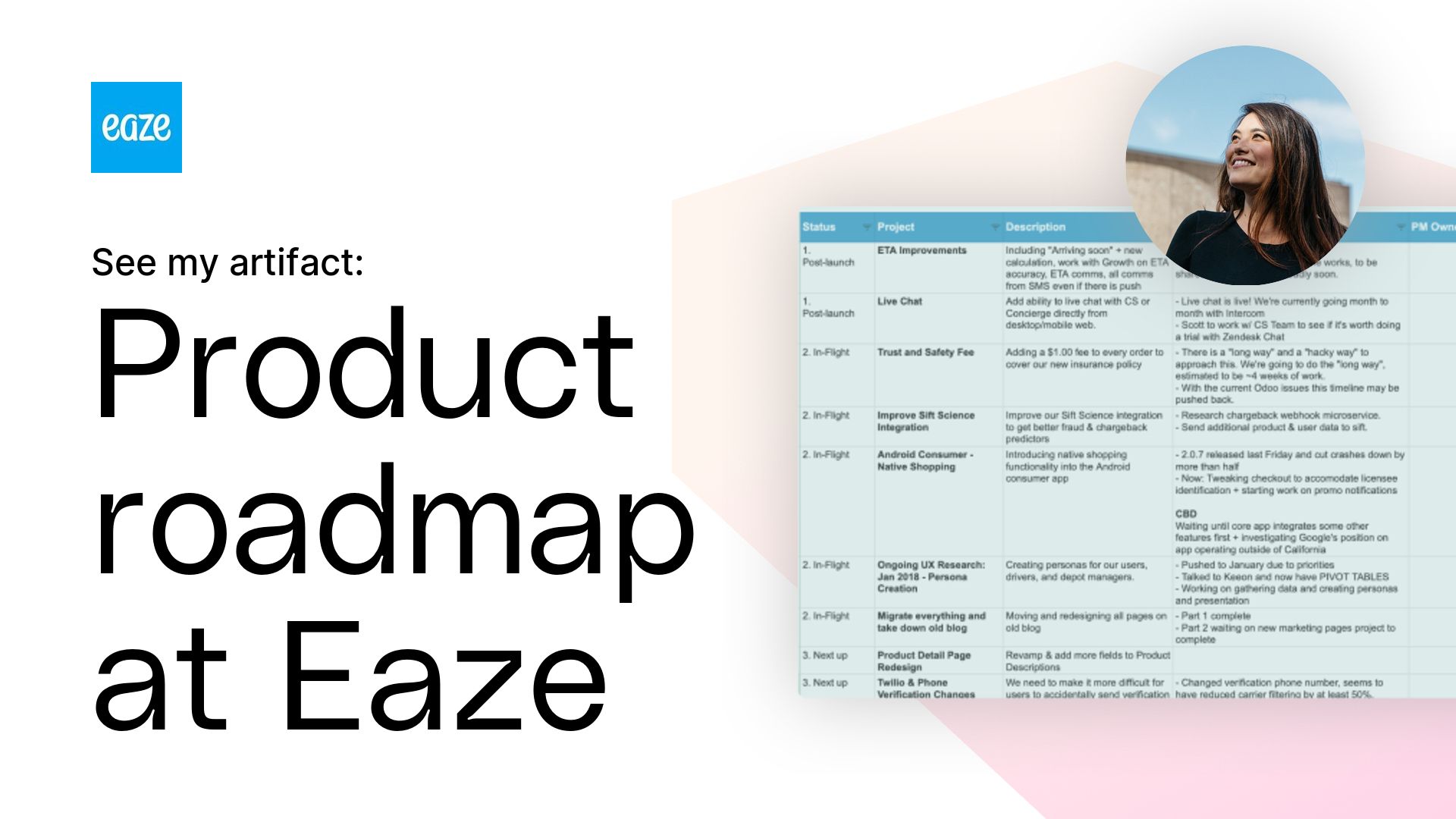
The prioritization process shifted over time to a more autonomous approach, with product managers and their teams taking ownership, while the use of thematic focus areas and a flexible spreadsheet system fostered adaptability to growth and changing priorities.
These examples illustrate the versatility of product roadmaps. Explore the full Artifacts to gain deeper insights into their creation and implementation within various organizations.
Explore artifacts of all kinds
Browse other popular categories to get ideas for your own work
Career Development
Data Analysis
Growth
Hiring
Leadership
Marketing
Strategy
Team Operations
User Research
Explore all artifacts
Product Roadmap: What Is It & How To Create One
A product roadmap has become an indispensable tool in many business sectors. Think of it as your strategic compass that aligns your team’s efforts with the overall product vision.
A well-crafted product roadmap outlines key milestones, features, and timelines—all to guide your product from concept to reality and beyond.
In this guide, we’ll explore what product roadmaps are and why they’re crucial for success. Stay tuned to learn how to take a step-by-step approach to creating a roadmap that will drive your product forward.
What Is a Product Roadmap?
A product roadmap is a strategic blueprint that visualizes the overarching direction, goals, and evolution of a product throughout its lifecycle. It’s much more than a project timeline. Rather, a well-designed roadmap connects your product’s vision and strategy with the practical steps and milestones needed to bring that vision to life.
While product roadmapping can vary depending on your organization and product, roadmaps often include these fundamental elements:
Vision: A clear statement of what the product aims to achieve and its value proposition.
Strategic Goals & Business Objectives: The core outcomes the product roadmap should support and align with overall company goals.
Themes or Initiatives: High-level focus areas that group together product development efforts.
Features & Functionality: Descriptions of new offerings, enhancements, or major updates.
Timeframe: A general timeline indicating quarters, months, or even broader ranges (short-term, mid-term, long-term).
Metrics: Key indicators to track progress toward goals and ensure the roadmap aligns with success criteria.
Dependencies: Interrelated features or tasks, highlighting potential bottlenecks or areas requiring cross-team coordination.
Be aware that roadmapping is not a simple box-ticking exercise. A thoughtfully crafted product roadmap offers multiple benefits. Let’s explore these now so you can see just how important product roadmaps can be.
Why Are Product Roadmaps Important?
Product roadmaps are far more than just schedules or feature lists. They play a crucial role in steering your product toward success by offering a strategic framework for decision-making and execution.
Let’s dive into the core reasons why roadmaps are essential for effective product management:
Alignment of Product Vision and Strategy
A roadmap translates your product’s aspirations into concrete goals and directions. This helps everyone on the team, from designers to engineers to marketers, understand the overarching purpose of their work and how they contribute to the larger picture.
Prioritization and Focus
With countless feature requests and ideas floating around, a product roadmap helps you cut through the noise. It forces you to consider what truly delivers value to customers, aligns with your strategic objectives, and is feasible within your constraints.
Clear Communication and Buy-In
Roadmaps become your central tool for communicating the product’s direction to stakeholders across the organization. Whether you’re presenting to executives, coordinating with the sales team, or collaborating with development teams, the roadmap offers a shared language and source of truth. Transparent communication leads to better buy-in and smoother execution.
Resource Allocation and Efficiency
A solid roadmap informs decisions about how to invest your most precious resources—time, talent, and budget. By seeing the big picture, you can proactively identify potential bottlenecks, allocate teams effectively, and prevent development efforts from getting bogged down by misaligned priorities.
Adaptable to Change
While a roadmap provides direction, it’s not set in stone. Market trends shift, customer feedback reveals new insights, and sometimes unexpected opportunities arise. A well-maintained roadmap enables you to revisit your plan, make adjustments, and communicate these shifts effectively to your teams and stakeholders.
Proactive Problem Solving
You can start addressing these issues early by thinking ahead about potential dependencies, bottlenecks, or resourcing challenges as you develop your roadmap. This results in a smoother product development process and fewer unexpected delays.
Your product roadmap is the foundation for making strategic decisions. With it, you justify resource allocation and communicate with all stakeholders who are invested in your product’s success.
How To Write a 12-Month Product Roadmap
Crafting a product roadmap is an essential step in aligning your team’s efforts with your product strategy.
Here’s a comprehensive guide to creating a 12-month roadmap, integrating key concepts throughout the process:
Step 1: Define Your Goals and Metrics
Your roadmap should be an extension of your product strategy. Begin by reviewing your overarching goals and ensure your roadmap aligns with broader business objectives. What specific outcomes do you want your product to achieve in the next 12 months?
Next, translate those goals into measurable targets. Define key metrics that will track your progress toward objectives. These metrics could encompass user adoption rates, revenue generated by new features, user engagement levels, customer satisfaction scores, or any other indicators most relevant to your product’s success.
Step 2: Map Out High-Level Themes
Dividing your 12-month timeline into manageable chunks, like quarters, is crucial for effective planning. Within each quarter, identify the major themes or initiatives that will drive your product’s development. These themes should connect strategically to your goals and metrics defined in step one.
Step 3: Prioritize Initiatives and Features Using 4D
In order to develop and rank roadmaps, teams commonly rely on conventional prioritization frameworks such as the following methods:
Prioritization based on voting
RICE (or scoring-based) prioritization
Despite their benefits, these tactics for product roadmap prioritization do not always yield the most effective outcomes. Each method carries inherent biases that introduce risks, including the possibility of lacking impactful initiatives, focusing efforts inefficiently, and struggling to gain support from leadership.
To tackle these issues, skilled Product Managers adopt a targeted, strategic approach to prioritizing product roadmaps. This unique strategy is termed 4D Product Roadmapping.
This innovative concept has been derived from our Mastering Product Management program. For those keen on honing their skills in developing a compelling product roadmap and much more, we encourage exploring it further!
What Is 4D?
Developing 4D product roadmaps entails a method that involves brainstorming roadmap initiatives through four distinct perspectives, each possessing individual merits, demerits, and constraints. The process then prioritizes these initiatives solely to those that enhance a specific set of metrics and goals.
The four lenses for product roadmapping are:
Strategy - initiatives that strongly align with your product strategy
Vision - activities that bring you closer to realizing your vision
Customer - features explicitly requested by users
Business - enhancements that affect critical input metrics
While each lens offers distinct advantages, overemphasizing any one can lead to drawbacks. It is crucial to strike a balance by integrating ideas from all four lenses to craft a comprehensive roadmap.
Using this framework, brainstorm potential epics (large features) and user stories (smaller, more granular features) that could address the specific objectives of each theme.
Consider valuable customer insights, market needs, and your product team’s capacity when weighing the potential value of each feature against the development effort required. Here, an agile prioritization approach comes into play.
Step 4: Create a Visual Timeline
Now, it’s time to translate your roadmap into a visual representation. Choose the tool that best suits your needs and audience. Popular options include specialized roadmap software, spreadsheets, slide presentations, Gantt charts, or even a whiteboard sketch.
The key elements of your timeline should be your themes, prioritized features (epics and user stories), and their general placement over a 12-month span. Consider using a color scheme to differentiate between quarters or indicate the certainty level of specific release dates.
Step 5: Get Feedback and Iterate
Collaboration is key to a successful roadmap. Share your draft roadmap with relevant team members across various departments—development, design, sales, marketing—and even executives. Gather their input, concerns, and fresh perspectives on your prioritization choices.
Incorporate valuable feedback and proactively address potential bottlenecks identified by different teams. This open communication and willingness to iterate are crucial for creating a roadmap that is both practical and adaptable.
Before we move on, you should consider the following when crafting your roadmap:
User Focus: Never lose sight of the customer. Feature ideas, new product launches, and sprint iterations should all connect back to how they ultimately deliver value and enhance the user experience.
Adaptability: Remember, your roadmap is a living document, not a rigid plan set in stone. Revisit it regularly (ideally at least quarterly) and be prepared to adjust it based on new insights, market changes, shifting customer needs, or resource constraints. However, always strive to maintain strategic alignment with your long-term product vision.
Communication Tool: Leverage your roadmap as a central communication tool between product teams, internal stakeholders across departments, and even external partners you might be collaborating with. Tailor your presentation style to focus on aspects most relevant to your audience.
This approach ensures your 12-month product roadmap is both strategic and adaptable, fostering clear communication and user-centric development throughout the product lifecycle.
Product Roadmap Templates Built and Used by Leading Companies
Gain insight from real-world examples of product roadmaps used by successful companies. These templates illustrate diverse approaches and highlight how roadmaps can be adapted for different businesses and goals.
Product Strategy and Roadmap 2023-24 at ResortPass
By Adam Fishman, Interim Chief Product & Technology Officer @ ResortPass
This presentation offers a high-level overview of ResortPass’s past product objectives, successes, and future priorities. Prior to presenting broadly, Adam built a strategy document and secured buy-in from key executives. The adaptable roadmap prioritizes impact and incorporates lessons learned.
Product/Feature Prioritization Roadmap at Change
By Karl Vään, Senior Product Manager @ Change
Karl developed this prioritization framework to guide Change’s roadmap as the company scales. The process begins with clear objectives, involves analyses of customer feedback, team inputs, and market data, and aligns ideas with KPIs using an ICE scoring system. The roadmap emphasizes strategic KPIs, team collaboration, and informed problem-solving.
Growth Roadmaps at Duolingo and Latitud
By Gina Gotthilf, Co-founder, and COO @ Latitud
See how Gina adapted her successful growth model from Duolingo for use at Latitud. The document focuses on prioritizing growth initiatives around cross-functional goals. It emphasizes aligning cross-functional OKRs with marketing OKRs and using a North Star metric to drive impact and minimize efforts that don’t advance core goals.
Product Strategy and Roadmap at Vivint Solar
By Sanjay Bhatia
This presentation outlines a customer-focused product vision for Vivint Solar’s iOS/Android apps. Sanjay’s strategy prioritizes solving customer pain points, driving adoption and retention, and finding monetization opportunities. The roadmap employs the Jobs To Be Done framework to deeply understand customer needs, creating a strategic path forward.
Product Roadmap at Eaze
By Natasha Pecor, VP of Product @ Eaze
Natasha led the evolution of Eaze’s product roadmap, making it more collaborative and transparent. The “What’s Product Team Doing?” tab promoted openness and progress tracking.
The prioritization process shifted over time to a more autonomous approach, with product managers and their teams taking ownership, while the use of thematic focus areas and a flexible spreadsheet system fostered adaptability to growth and changing priorities.
These examples illustrate the versatility of product roadmaps. Explore the full Artifacts to gain deeper insights into their creation and implementation within various organizations.
Explore artifacts of all kinds
Browse other popular categories to get ideas for your own work
Career Development
Data Analysis
Growth
Hiring
Leadership
Marketing
Strategy
Team Operations
User Research
Explore all artifacts