Reforge has joined Miro ↗
What Are OKRs? A Complete Guide With Examples
Despite having a great product, market, and team, companies often find themselves without a reliable compass to point them in the right direction. This compass needs to be more specific than general terms like “growth” or “success” — and that’s where objectives and key results (OKRs) come into play.
OKRs exist to help businesses set measurable goals in an adaptable way while remaining quantifiable and facilitating goal management across teams. This term varies from key performance indicators, with a focus on specific company goals rather than static metrics.
This article will cover everything you need to know about OKRs, with examples from real businesses that used these measurable outcomes to their advantage. Once you understand the power of OKRs and can harness their potential, you’ll see just how transformative they can be.
Understanding the OKR Framework
The OKR framework starts with clear, action-oriented goals that key stakeholders can easily grasp and put into the context of their daily tasks.
To get a basic view of the purpose of OKRs, look to Andy Grove or what John Doerr says in his legendary essay “Measure What Matters.” The best OKRs are powerful leadership tools that give teams a North Star for a specific duration of time, whether through goal setting, focusing on metrics, or utilizing OKR software to stay on track.
Another key framework of OKR thinking is to combat ambiguity or miscommunication that can often occur between teams and decision-makers. With strong, carefully selected OKRs to align teams, they now have a common vocabulary of success that will help them stay the course over weeks, months, and years.
Lastly, OKR frameworks should be structured exactly as the name suggests; it’s the key results that work as metrics, sizing progress the ultimate objective. This vision allows teams to look beyond the numbers and take aim at ambitious projects that will skyrocket a business to new levels of success.
What Is the Difference Between OKRs and KPIs?
OKRs and KPIs are often lumped into the same conversation, and for good reason. Both play a role in communicating ideas about a business’s performance and where things need to go, and there may certainly be some overlap in what each term does.
However, OKRs and KPIs do have distinctions that must be acknowledged to get the best of both worlds. OKRs, for example, are collaborative and buildable, allowing for a wider range of applications that may extend beyond a static set of KPIs. On the flip side, good KPIs provide stakeholders with a reliable set of metrics to trust as they move projects and investments forward.
If you’re already running a company or a team, you’re likely using some form of OKRs — you might just not know it yet. This is your chance to use OKRs the right way and bring them into the fold in a way that empowers team members and fits into the broader picture of what the company aims to achieve.
As we examine OKR examples and you begin to see how OKRs function practically in business settings, you’ll realize that OKRs and KPIs are best used together, creating a synergy that’s better than the sum of its parts.
7 OKR Company and Team Templates Crafted By Top Tech Minds
The benefits of OKRs may become clearer when viewed in the context of real-life business goals at the company level. Here, we outline the OKR methodology with practical examples that have been used to measure progress, identify milestones, and keep the OKR cycle moving along.
1. Now/Next/Later Visual OKR Roadmap at Vertical City
As the Director of Project Management at Vertical City, Andrew Williams had a workable roadmap for his team. However, he lacked clear metrics that could be easily communicated to everyone, so he layered OKRs onto the roadmap and ensured teams were working together toward agreed-upon company goals.
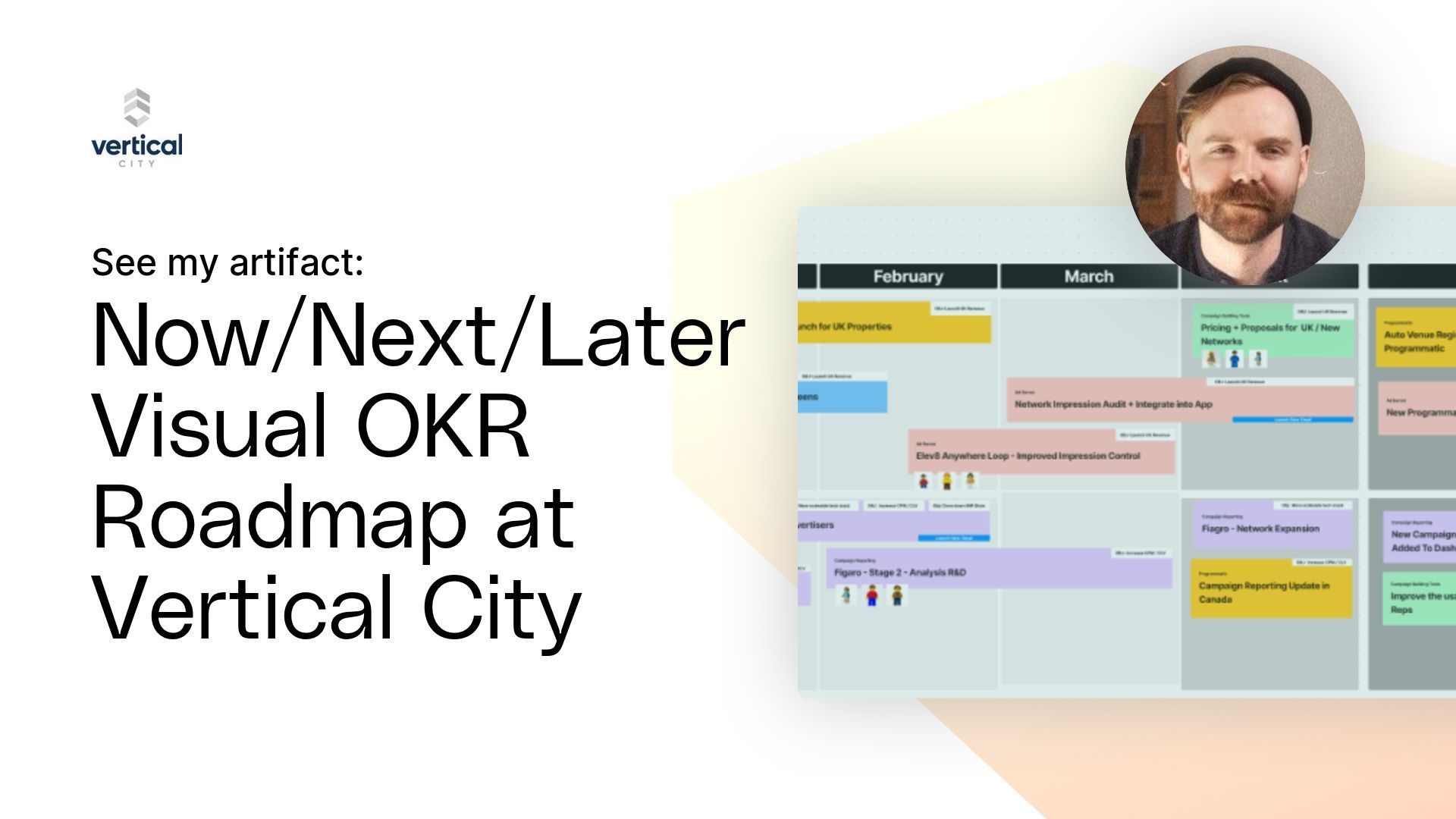
This roadmap used the now/next/later framework, adding a much-needed visual element that teams could collaborate on and use every day. With color coding and clear deadlines for deliverables, Vertical City kept teams aligned on key goals, even as different product teams worked on different objectives.
2. Narratives, Commitments, and Tasks at Outpace
When product managers are aligned with clear OKRs, magic happens. That’s what Outpace Co-Founder and CEO Ravi Mehta discovered by using the Narratives, Commitments, and Tasks OKR framework to set goals for the company during their mobile product launch.
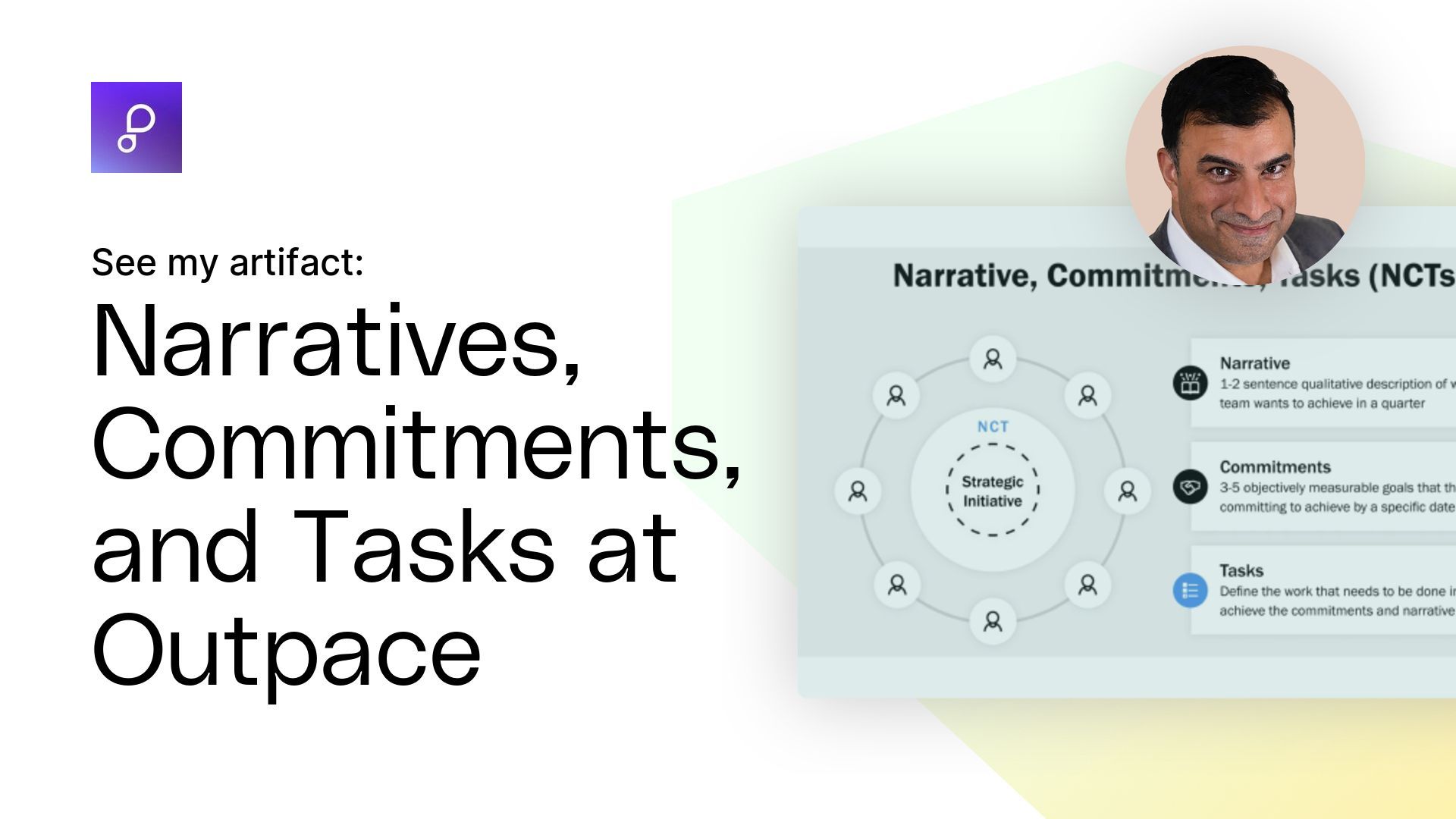
This success story showcases the power of OKRs at key junctures like product launches or rebrands, when companies may be vulnerable to mistakes or miscommunication. Mehta went so far as to document non-goals to the team to add another layer of assurance and keep everyone working towards the metrics that truly mattered at the time.
3. Quarterly Growth Team OKRs at Ladder.io
The visual component of OKR frameworks is especially powerful when key stakeholders can see how their projects align to meet broader business objectives. Adam Wesolowski of Ladder.io saw this happen in real-time when he used OKRs as a growth team leader, clarifying the meaning behind KPIs and how to drive these measurable key results forward.
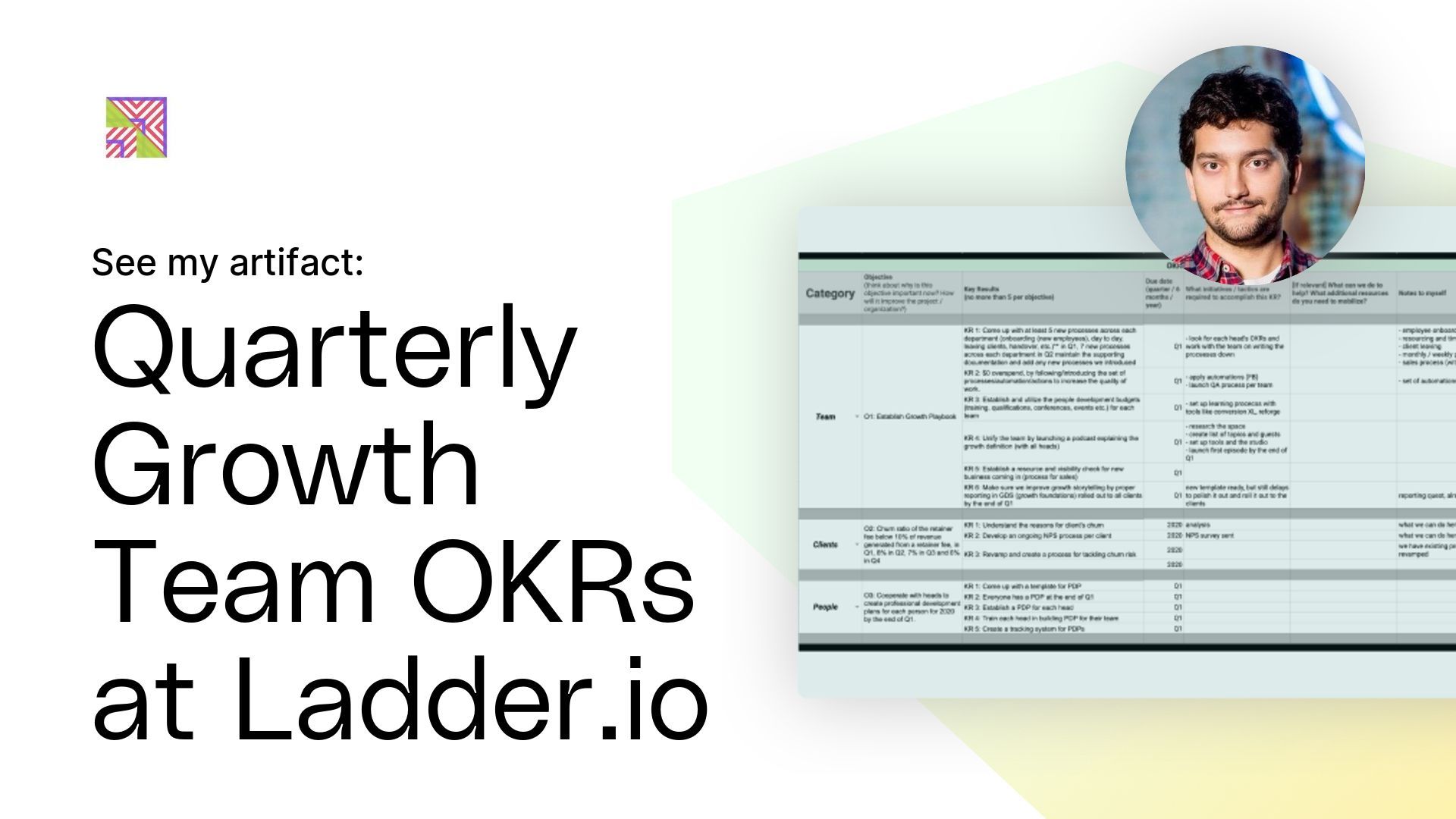
This case study is also a reminder of the evolving nature of great OKRs — they should be transparent and subject to change so as not to become stale or outdated. Wesolowski also found that a grading system helped measure progress and set realistic stretch goals that were still aspirational and pushed team members to perform their best.
4. OKR Introduction for Non-Technical Teams
OKRs are typically used to bring tech teams in alignment with broader company goals, but Growth Marketer Erica Terranova found that they’re just as effective for non-technical teams when applied correctly. She introduced OKRs and Agile rituals to improve the impact of her marketing team and align marketers with other departments throughout the entire organization.
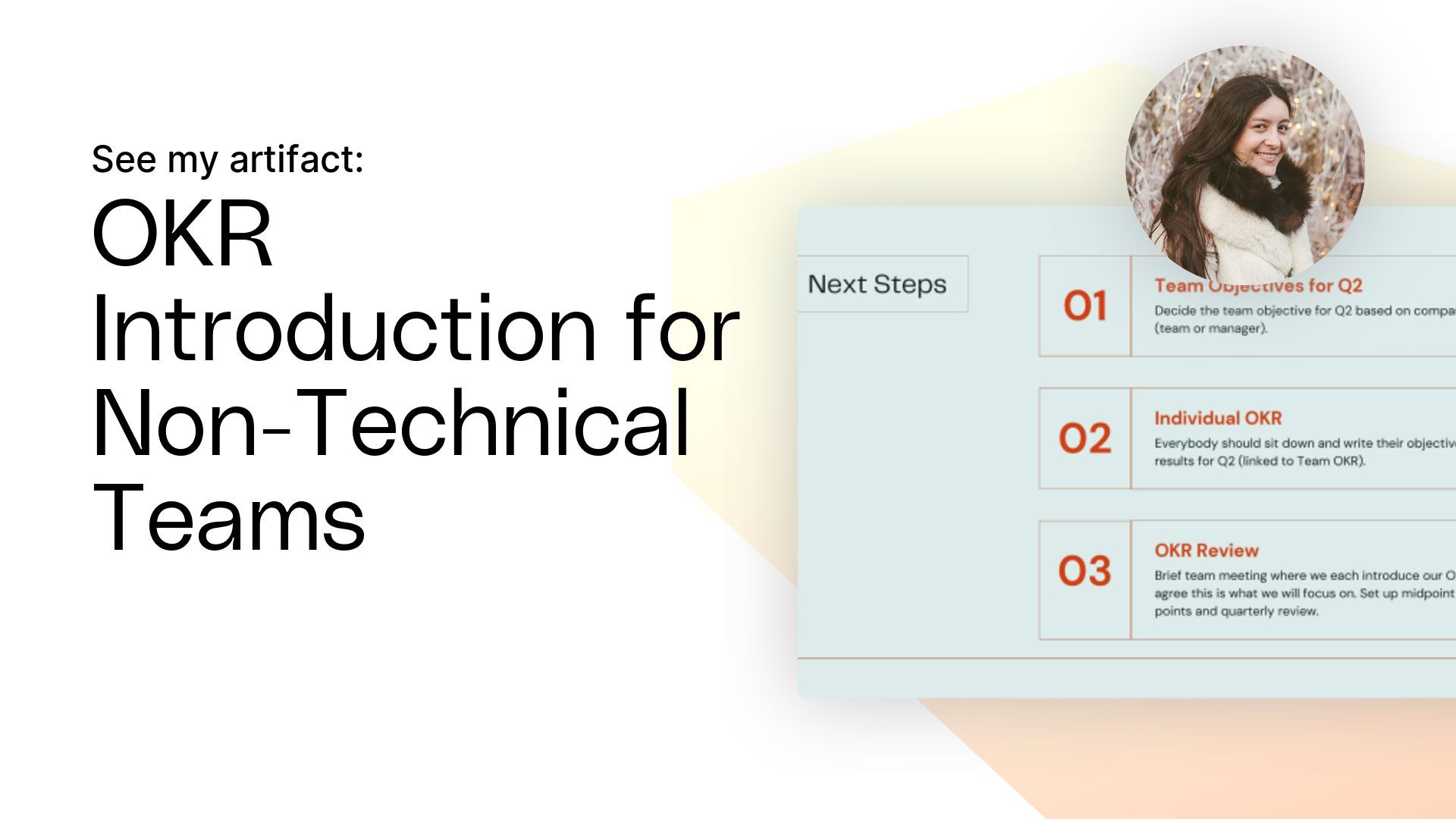
She also had team members write OKRs of their own, proving that this exercise is highly adaptable and valuable for everyone involved.
5. Support Team for Quarterly OKRs at Whimsical
With customer satisfaction being key to success for today’s tech firms, setting OKRs can make all the difference for support experience teams. Jade Shearstone found that her team thrived when using quarterly OKRs, tracking objectives, key results, and company-level initiatives.
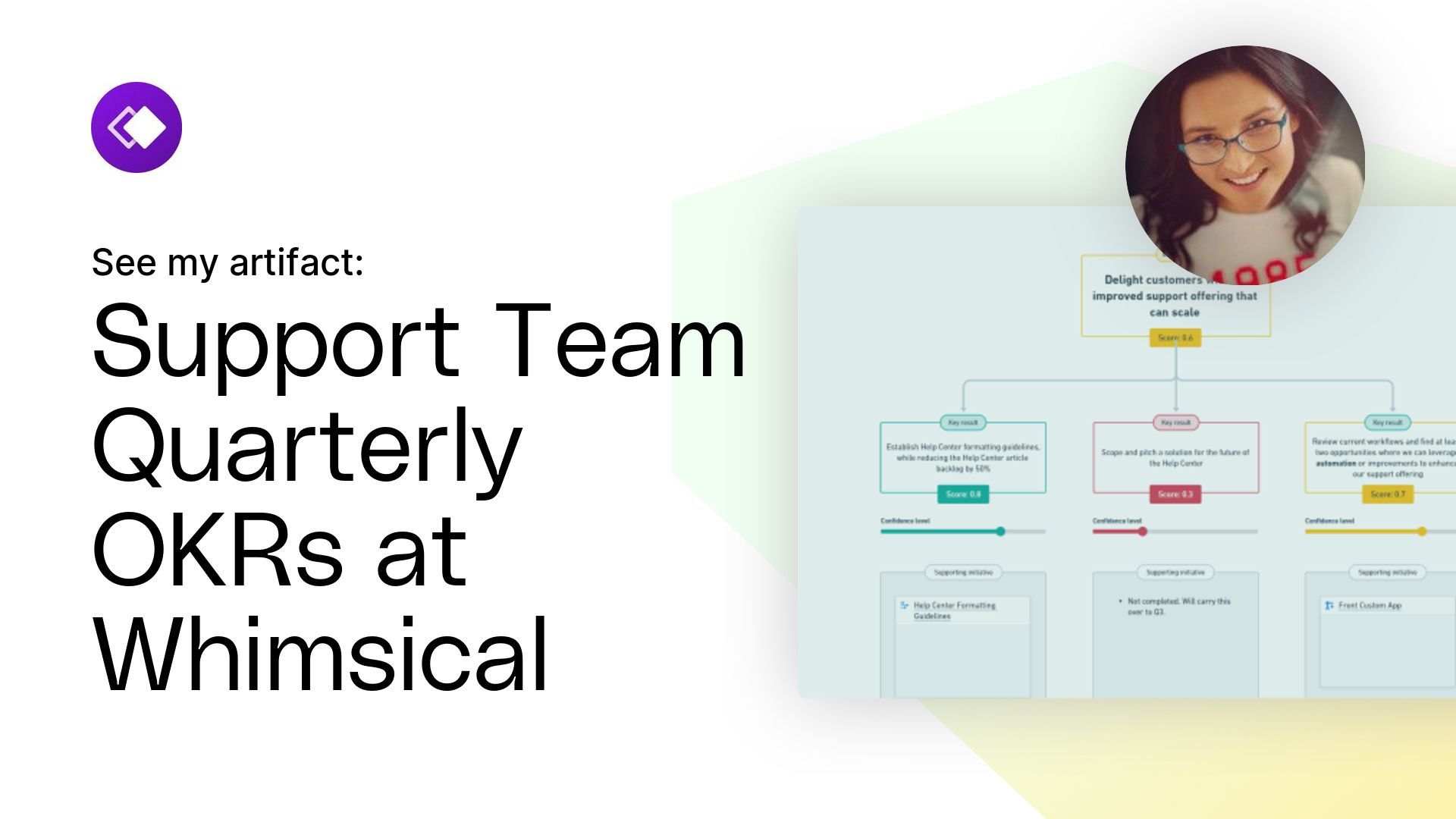
While the core team used the OKRs daily, they were visible to the entire company so that everyone could contribute, adding a level of transparency that aligned multiple departments at once. Using color-coded layouts, the team could communicate goals more clearly and prevent miscommunications at critical moments.
6. Async OKR Review at Tidio
With so many teams handling multiple projects, spring reviews were taking too much time and wasting energy at Tidio. Project lead Przemek Szustak used an OKR review framework so asynchronous meetings could take place to save time while keeping projects rolling along.
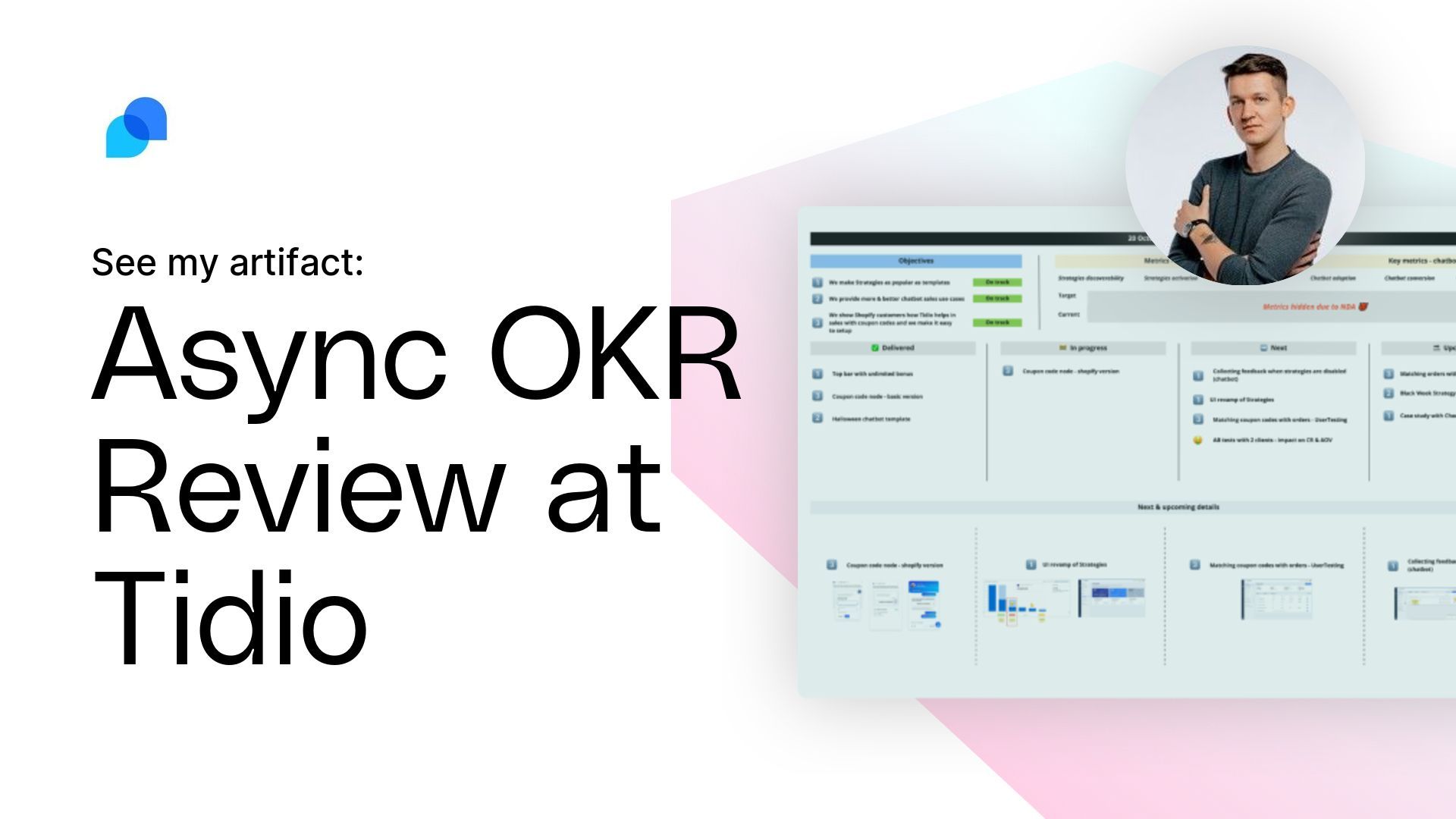
This template includes video and focuses on deliverables and goals, allowing multiple teams to ship their products on their own schedules while staying aligned with the big picture. This case study showed that good OKRs are highly effective both on a small team level and a company-wide scale and also bridged the gap between them with common goals and language.
7. Weekly Monitoring/Team Check-ins at Bonsai
At Bonsai, VP of Marketing Eva Thouvenot saw that team check-ins weren’t running as smoothly as they should. With weekly monitoring and check-ins in an OKR template format, she was able to structure meetings more efficiently and hold team members accountable in a more organized way.
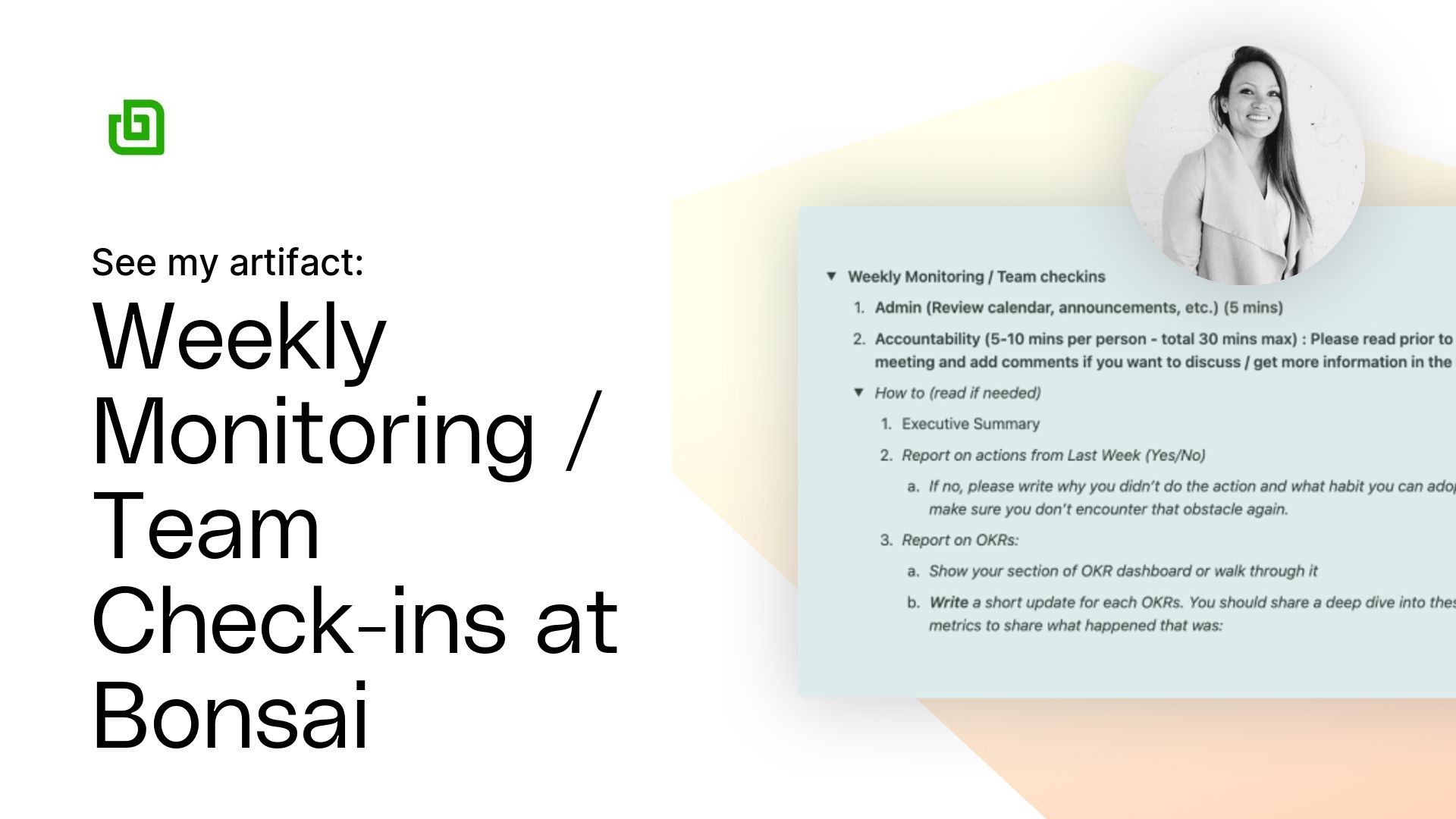
Because meetings are a part of everyday life at a startup like Bonsai, the introduction of this OKR framework was a game changer. Eva suggests that team leaders use the feedback section of the OKR to ensure that all team members get the support they need from higher-ups.
View All OKR Artifacts
Tips for Crafting Your Own OKRs
Crafting OKRs might seem like a daunting task, but Reforge artifacts are a great way to get the wheels of creativity turning while leaving plenty of room for personalization and adaptation.
Moreover, the best OKRs aren’t long-winded or complex. Instead, they should be brief, concise, and have a clear purpose that team members can immediately grasp and run with. In fact, winning OKRs are those that team members will want to use daily instead of feeling like a chore — this keeps teams aligned and working toward goals without OKRs without hindering progress.
In short, OKRs should be inspirational, empowering, and fuel teams to reach the next level of success without slowing them down. That’s why templates and artifacts from Reforge are so valuable, allowing your team to quickly adopt OKRs that make a difference rather than just add unneeded complexity.
Whether it’s in the C-suite or in an agile team pushing the limits, the right OKRs can be transformative, and Reforge is here to make them more accessible and enjoyable than ever.
Explore Artifacts of All Kinds
AI
Career Development
Data Analysis
Growth
Leadership
Marketing
Product Development
Strategy
Team Operations
User Research
Topics Related to OKRs
Business Review
Community Building
Community Guidelines
Customer Support Playbook
Event Planning Guide
Goal Tracker
Key Performance Indicator (KPI)
Project Brief
What Are OKRs? A Complete Guide With Examples
Despite having a great product, market, and team, companies often find themselves without a reliable compass to point them in the right direction. This compass needs to be more specific than general terms like “growth” or “success” — and that’s where objectives and key results (OKRs) come into play.
OKRs exist to help businesses set measurable goals in an adaptable way while remaining quantifiable and facilitating goal management across teams. This term varies from key performance indicators, with a focus on specific company goals rather than static metrics.
This article will cover everything you need to know about OKRs, with examples from real businesses that used these measurable outcomes to their advantage. Once you understand the power of OKRs and can harness their potential, you’ll see just how transformative they can be.
Understanding the OKR Framework
The OKR framework starts with clear, action-oriented goals that key stakeholders can easily grasp and put into the context of their daily tasks.
To get a basic view of the purpose of OKRs, look to Andy Grove or what John Doerr says in his legendary essay “Measure What Matters.” The best OKRs are powerful leadership tools that give teams a North Star for a specific duration of time, whether through goal setting, focusing on metrics, or utilizing OKR software to stay on track.
Another key framework of OKR thinking is to combat ambiguity or miscommunication that can often occur between teams and decision-makers. With strong, carefully selected OKRs to align teams, they now have a common vocabulary of success that will help them stay the course over weeks, months, and years.
Lastly, OKR frameworks should be structured exactly as the name suggests; it’s the key results that work as metrics, sizing progress the ultimate objective. This vision allows teams to look beyond the numbers and take aim at ambitious projects that will skyrocket a business to new levels of success.
What Is the Difference Between OKRs and KPIs?
OKRs and KPIs are often lumped into the same conversation, and for good reason. Both play a role in communicating ideas about a business’s performance and where things need to go, and there may certainly be some overlap in what each term does.
However, OKRs and KPIs do have distinctions that must be acknowledged to get the best of both worlds. OKRs, for example, are collaborative and buildable, allowing for a wider range of applications that may extend beyond a static set of KPIs. On the flip side, good KPIs provide stakeholders with a reliable set of metrics to trust as they move projects and investments forward.
If you’re already running a company or a team, you’re likely using some form of OKRs — you might just not know it yet. This is your chance to use OKRs the right way and bring them into the fold in a way that empowers team members and fits into the broader picture of what the company aims to achieve.
As we examine OKR examples and you begin to see how OKRs function practically in business settings, you’ll realize that OKRs and KPIs are best used together, creating a synergy that’s better than the sum of its parts.
7 OKR Company and Team Templates Crafted By Top Tech Minds
The benefits of OKRs may become clearer when viewed in the context of real-life business goals at the company level. Here, we outline the OKR methodology with practical examples that have been used to measure progress, identify milestones, and keep the OKR cycle moving along.
1. Now/Next/Later Visual OKR Roadmap at Vertical City
As the Director of Project Management at Vertical City, Andrew Williams had a workable roadmap for his team. However, he lacked clear metrics that could be easily communicated to everyone, so he layered OKRs onto the roadmap and ensured teams were working together toward agreed-upon company goals.
This roadmap used the now/next/later framework, adding a much-needed visual element that teams could collaborate on and use every day. With color coding and clear deadlines for deliverables, Vertical City kept teams aligned on key goals, even as different product teams worked on different objectives.
2. Narratives, Commitments, and Tasks at Outpace
When product managers are aligned with clear OKRs, magic happens. That’s what Outpace Co-Founder and CEO Ravi Mehta discovered by using the Narratives, Commitments, and Tasks OKR framework to set goals for the company during their mobile product launch.
This success story showcases the power of OKRs at key junctures like product launches or rebrands, when companies may be vulnerable to mistakes or miscommunication. Mehta went so far as to document non-goals to the team to add another layer of assurance and keep everyone working towards the metrics that truly mattered at the time.
3. Quarterly Growth Team OKRs at Ladder.io
The visual component of OKR frameworks is especially powerful when key stakeholders can see how their projects align to meet broader business objectives. Adam Wesolowski of Ladder.io saw this happen in real-time when he used OKRs as a growth team leader, clarifying the meaning behind KPIs and how to drive these measurable key results forward.
This case study is also a reminder of the evolving nature of great OKRs — they should be transparent and subject to change so as not to become stale or outdated. Wesolowski also found that a grading system helped measure progress and set realistic stretch goals that were still aspirational and pushed team members to perform their best.
4. OKR Introduction for Non-Technical Teams
OKRs are typically used to bring tech teams in alignment with broader company goals, but Growth Marketer Erica Terranova found that they’re just as effective for non-technical teams when applied correctly. She introduced OKRs and Agile rituals to improve the impact of her marketing team and align marketers with other departments throughout the entire organization.
She also had team members write OKRs of their own, proving that this exercise is highly adaptable and valuable for everyone involved.
5. Support Team for Quarterly OKRs at Whimsical
With customer satisfaction being key to success for today’s tech firms, setting OKRs can make all the difference for support experience teams. Jade Shearstone found that her team thrived when using quarterly OKRs, tracking objectives, key results, and company-level initiatives.
While the core team used the OKRs daily, they were visible to the entire company so that everyone could contribute, adding a level of transparency that aligned multiple departments at once. Using color-coded layouts, the team could communicate goals more clearly and prevent miscommunications at critical moments.
6. Async OKR Review at Tidio
With so many teams handling multiple projects, spring reviews were taking too much time and wasting energy at Tidio. Project lead Przemek Szustak used an OKR review framework so asynchronous meetings could take place to save time while keeping projects rolling along.
This template includes video and focuses on deliverables and goals, allowing multiple teams to ship their products on their own schedules while staying aligned with the big picture. This case study showed that good OKRs are highly effective both on a small team level and a company-wide scale and also bridged the gap between them with common goals and language.
7. Weekly Monitoring/Team Check-ins at Bonsai
At Bonsai, VP of Marketing Eva Thouvenot saw that team check-ins weren’t running as smoothly as they should. With weekly monitoring and check-ins in an OKR template format, she was able to structure meetings more efficiently and hold team members accountable in a more organized way.
Because meetings are a part of everyday life at a startup like Bonsai, the introduction of this OKR framework was a game changer. Eva suggests that team leaders use the feedback section of the OKR to ensure that all team members get the support they need from higher-ups.
View All OKR Artifacts
Tips for Crafting Your Own OKRs
Crafting OKRs might seem like a daunting task, but Reforge artifacts are a great way to get the wheels of creativity turning while leaving plenty of room for personalization and adaptation.
Moreover, the best OKRs aren’t long-winded or complex. Instead, they should be brief, concise, and have a clear purpose that team members can immediately grasp and run with. In fact, winning OKRs are those that team members will want to use daily instead of feeling like a chore — this keeps teams aligned and working toward goals without OKRs without hindering progress.
In short, OKRs should be inspirational, empowering, and fuel teams to reach the next level of success without slowing them down. That’s why templates and artifacts from Reforge are so valuable, allowing your team to quickly adopt OKRs that make a difference rather than just add unneeded complexity.
Whether it’s in the C-suite or in an agile team pushing the limits, the right OKRs can be transformative, and Reforge is here to make them more accessible and enjoyable than ever.
Explore Artifacts of All Kinds
AI
Career Development
Data Analysis
Growth
Leadership
Marketing
Product Development
Strategy
Team Operations
User Research
Topics Related to OKRs
Business Review
Community Building
Community Guidelines
Customer Support Playbook
Event Planning Guide
Goal Tracker
Key Performance Indicator (KPI)
Project Brief