Reforge has joined Miro ↗
Two of the most popular questions from our career panels this summer for Product Managers and Marketers were 'How do I stand out in my career?' and 'How do I make myself more valuable to my company'?
One of the most overlooked strategies for PMs and Marketers is to become a person who delivers what organizations really want, which is more revenue. That statement might seem obvious, but few individuals deeply understand how to actually create revenue systems for their companies and use monetization as a springboard for their careers. So a great way to put yourself in the driver's seat is to develop your company's Monetization strategy. Monetization is a high-visibility topic that will draw attention from executives to you and your recommendations almost immediately. And over the long term, those who drive revenue tend to lead companies.
"Nobody Wants to Work on Monetization and Pricing"
Product Managers often rush to solve problems that fall outside their area of expertise, but according to Patrick Campbell of ProfitWell, this is rarely the case when it comes to monetization and pricing. "Unfortunately it's one of those problems where everyone goes, 'I don't know, let's just punt on it.'"
It's confusing and complicated, and it's difficult to get low-risk experience working on monetization, so many professionals just don't want to touch it. Let's examine the perceived challenges and why you should tackle them head on.
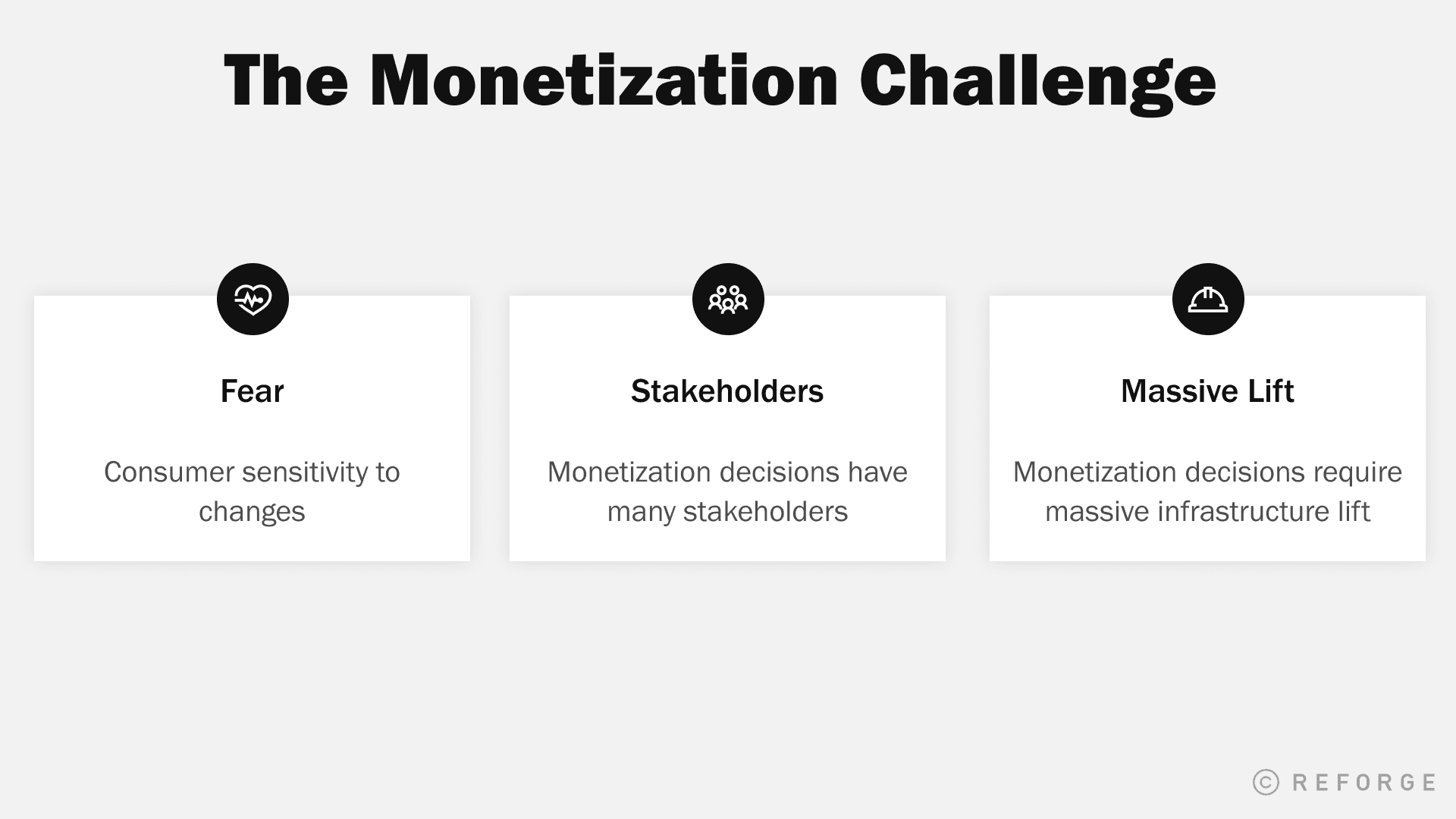
1. Fear of Customer Revolt:
Companies often fear that monetization changes will end in a customer revolt. When Dropbox changed their prices by $2 a month in exchange for double the storage, large parts of their customer community freaked out. People said they'd cancel and move to Google Drive.
But in reality, the fear of the customer revolt actually increases your chances of a customer revolt. Monetization decisions are typically made early in a product's life cycle, and usually by the founders.
But the longer you go without changing your monetization, the bigger the hole you dig yourself, and then the bigger the eventual change you need to make. If you instead consistently update pricing and packaging a little bit at a time, your customers will become accustomed to the evolution.
This obviously doesn't mean just increasing prices over and over; try to provide more value or at least more packing options. If you establish a frequency of change and communicate properly, customer revolts can be avoided.
2. Stakeholders:
The best way to slow down or kill an initiative is to get more people involved, and that's exactly what tends to happen with monetization efforts. Since changes can impact finance, sales, customer success, marketing and product teams, everybody wants to have their say, but typically, every function has their own chain of command and decision-making process. You not only end up with more people, but also, different processes to make decisions. If not done effectively, it ends up a tangled mess.
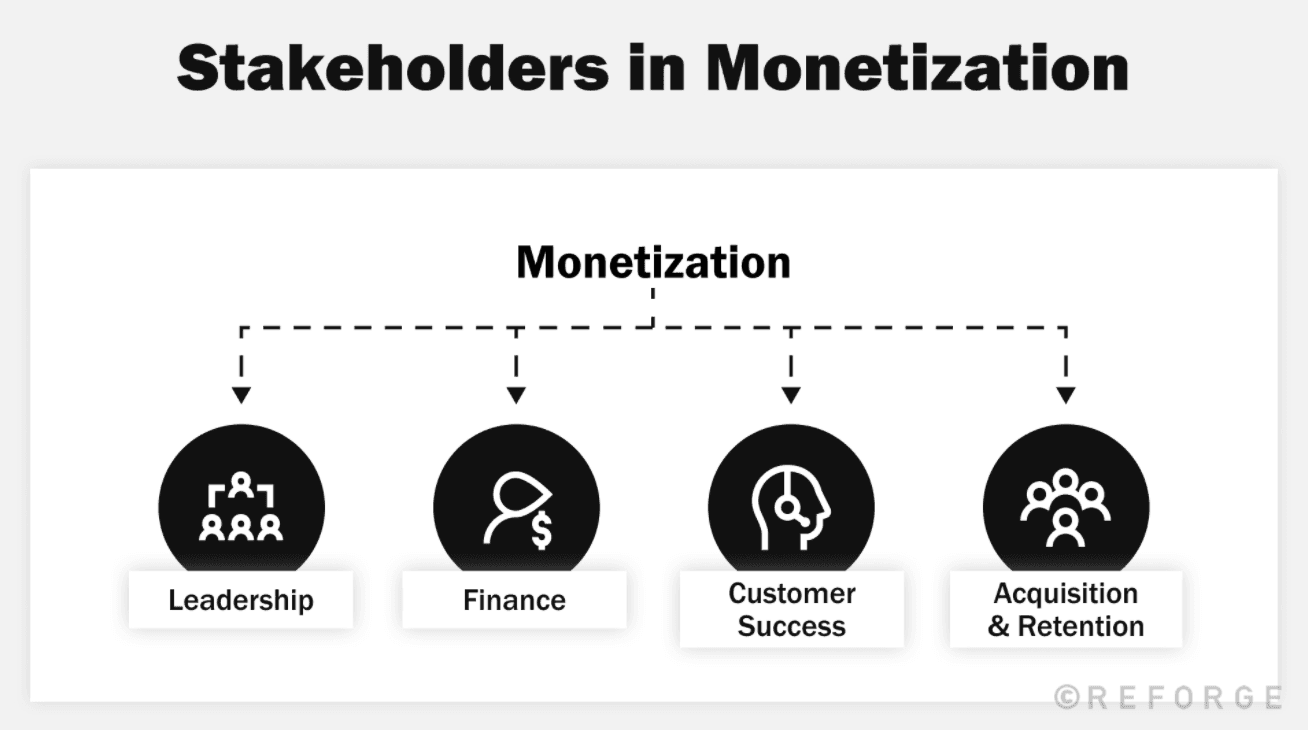
But this organizational dysfunction is why it's so critical to have a central person understanding the different points of view and orchestrating the monetization conversation.
If you can be that person, you will build relationships across every part of the organization. You figure out the actual way to get things done with your colleagues. Yes, this will test your communication abilities, but ultimately communication skills and the ability to drive cross-functional collaboration are ever more important as you "cross the career canyon" into leadership.
3. Massive Lift:
The final reason monetization changes can be so difficult is that we need the proper infrastructure to make changes.
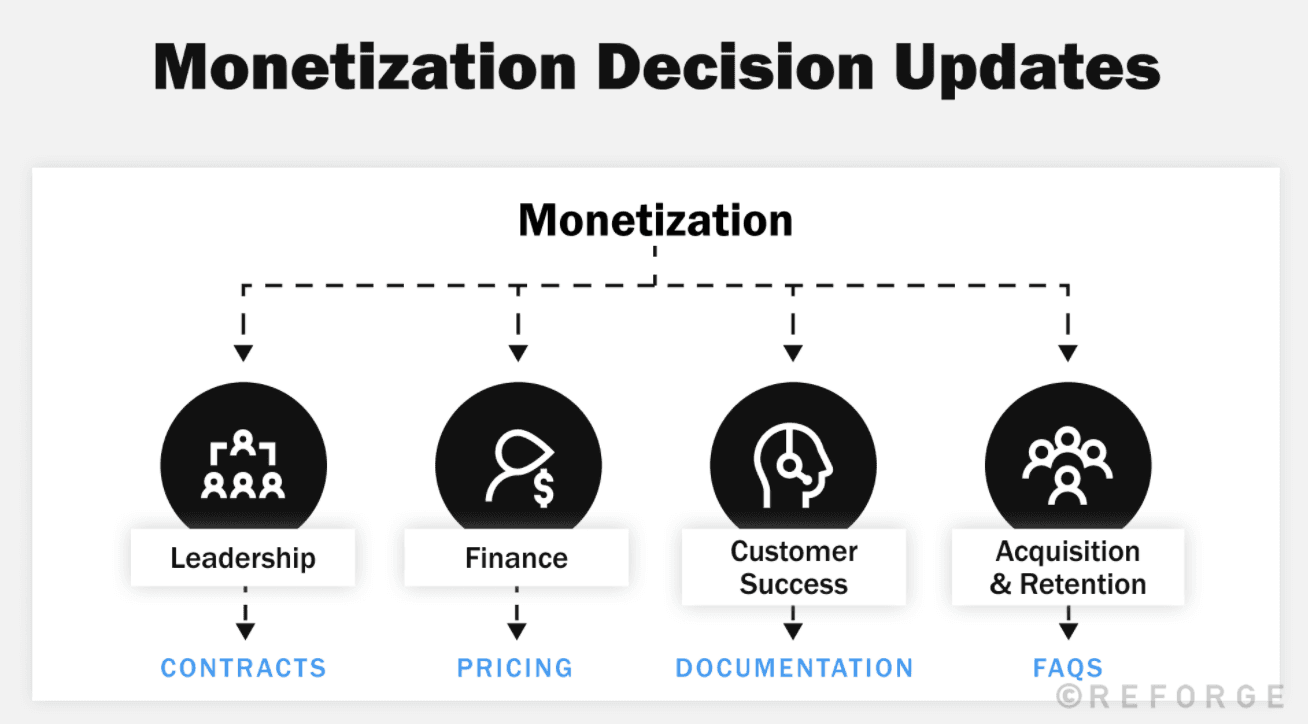
A change to one element of monetization can require updates to a lot of other parts of the system, from frequently asked questions to customer support documentation to pricing and contracts. As a result, monetization initiatives end up being a big undertaking requiring operational updates, legal review, and product effort. All that work can seem like too much to tackle.
But diving into this complexity teaches you something invaluable: how companies actually run. PMs know how to build product. Marketers run campaigns. But the job of leaders is to build a company.
By focusing on monetization you'll learn how all these subsystems connect. You'll understand how improving one part of the customer success process can improve retention rates. You become valuable not just in your domain, but across the entire organization. You'll be able to 'see around corners' and anticipate problems before they occur.
This type of x-ray vision or ability to see the future becomes a superpower of its own.
A Timely Opportunity for Your Career
So, monetization is a challenge. But you if you want to stand out, driving revenue is a great option. There's a reason top salespeople earn big money; they are directly tied to revenue. They can point to their sales and say 'I brought in this much money for the company.' PMs, Marketers, and Biz Ops professionals can differentiate themselves by playing a similar game.
Growth, in the form of acquisition and retention projects, has been the focus for Silicon Valley for the past 15 years as VC funding has enabled deficit spending to play winner-take-all games in massive markets. But over the last couple years the primary focus for many companies has shifted toward revenue sustainability.
As we've written before, the choice between Revenue and Growth is a false one because they are parts of an interlocking system. And since fewer professionals are focused on monetization, that presents you with an opportunity to accelerate past your peers.
To learn more about how to accelerate your career by increasing your Monetization skills, check out our Monetization + Pricing program for the upcoming season.


Two of the most popular questions from our career panels this summer for Product Managers and Marketers were 'How do I stand out in my career?' and 'How do I make myself more valuable to my company'?
One of the most overlooked strategies for PMs and Marketers is to become a person who delivers what organizations really want, which is more revenue. That statement might seem obvious, but few individuals deeply understand how to actually create revenue systems for their companies and use monetization as a springboard for their careers. So a great way to put yourself in the driver's seat is to develop your company's Monetization strategy. Monetization is a high-visibility topic that will draw attention from executives to you and your recommendations almost immediately. And over the long term, those who drive revenue tend to lead companies.
"Nobody Wants to Work on Monetization and Pricing"
Product Managers often rush to solve problems that fall outside their area of expertise, but according to Patrick Campbell of ProfitWell, this is rarely the case when it comes to monetization and pricing. "Unfortunately it's one of those problems where everyone goes, 'I don't know, let's just punt on it.'"
It's confusing and complicated, and it's difficult to get low-risk experience working on monetization, so many professionals just don't want to touch it. Let's examine the perceived challenges and why you should tackle them head on.
1. Fear of Customer Revolt:
Companies often fear that monetization changes will end in a customer revolt. When Dropbox changed their prices by $2 a month in exchange for double the storage, large parts of their customer community freaked out. People said they'd cancel and move to Google Drive.
But in reality, the fear of the customer revolt actually increases your chances of a customer revolt. Monetization decisions are typically made early in a product's life cycle, and usually by the founders.
But the longer you go without changing your monetization, the bigger the hole you dig yourself, and then the bigger the eventual change you need to make. If you instead consistently update pricing and packaging a little bit at a time, your customers will become accustomed to the evolution.
This obviously doesn't mean just increasing prices over and over; try to provide more value or at least more packing options. If you establish a frequency of change and communicate properly, customer revolts can be avoided.
2. Stakeholders:
The best way to slow down or kill an initiative is to get more people involved, and that's exactly what tends to happen with monetization efforts. Since changes can impact finance, sales, customer success, marketing and product teams, everybody wants to have their say, but typically, every function has their own chain of command and decision-making process. You not only end up with more people, but also, different processes to make decisions. If not done effectively, it ends up a tangled mess.
But this organizational dysfunction is why it's so critical to have a central person understanding the different points of view and orchestrating the monetization conversation.
If you can be that person, you will build relationships across every part of the organization. You figure out the actual way to get things done with your colleagues. Yes, this will test your communication abilities, but ultimately communication skills and the ability to drive cross-functional collaboration are ever more important as you "cross the career canyon" into leadership.
3. Massive Lift:
The final reason monetization changes can be so difficult is that we need the proper infrastructure to make changes.
A change to one element of monetization can require updates to a lot of other parts of the system, from frequently asked questions to customer support documentation to pricing and contracts. As a result, monetization initiatives end up being a big undertaking requiring operational updates, legal review, and product effort. All that work can seem like too much to tackle.
But diving into this complexity teaches you something invaluable: how companies actually run. PMs know how to build product. Marketers run campaigns. But the job of leaders is to build a company.
By focusing on monetization you'll learn how all these subsystems connect. You'll understand how improving one part of the customer success process can improve retention rates. You become valuable not just in your domain, but across the entire organization. You'll be able to 'see around corners' and anticipate problems before they occur.
This type of x-ray vision or ability to see the future becomes a superpower of its own.
A Timely Opportunity for Your Career
So, monetization is a challenge. But you if you want to stand out, driving revenue is a great option. There's a reason top salespeople earn big money; they are directly tied to revenue. They can point to their sales and say 'I brought in this much money for the company.' PMs, Marketers, and Biz Ops professionals can differentiate themselves by playing a similar game.
Growth, in the form of acquisition and retention projects, has been the focus for Silicon Valley for the past 15 years as VC funding has enabled deficit spending to play winner-take-all games in massive markets. But over the last couple years the primary focus for many companies has shifted toward revenue sustainability.
As we've written before, the choice between Revenue and Growth is a false one because they are parts of an interlocking system. And since fewer professionals are focused on monetization, that presents you with an opportunity to accelerate past your peers.
To learn more about how to accelerate your career by increasing your Monetization skills, check out our Monetization + Pricing program for the upcoming season.