Reforge has joined Miro ↗
What Is a Growth Strategy? Key Steps and Examples
Business growth doesn’t happen by accident — it takes a deliberate set of actions to take a company from one step to the next. Whether that means increasing market penetration, doubling down on product development, or reframing existing products with new marketing efforts, a growth strategy must be locked in and executed with precision.
For today’s management and marketing professionals, the idea of growth is a common thread that runs throughout various departments, but turning a strategy into tangible results takes effort and time. Market development won’t happen overnight, and only with a strong game plan can these aspirations be made real.
This article will cover what’s involved in a business growth strategy, along with key steps to execute and examples of growth strategies that have proven effective for real businesses.
Types of Business Growth Strategies
Before we dive into practical steps and examples of business growth strategies, what does this term mean, and why does it matter? In truth, several types of business growth strategies could make sense for different companies based on their unique goals and their place in the business life cycle.
For example, a company in the early stages should focus on product development to create competitive advantages and set itself apart from industry rivals. This might involve funneling resources into R&D, setting the stage for more powerful marketing and growth efforts later down the line.
On the other hand, a business with a strong product portfolio may emphasize acquisition, partnerships, or collaborations that fuel organic growth and brand awareness — key elements of marketing that will allow a brand to step into uncharted market territory.
These efforts align with growth strategies like market penetration and market development, which have minor but key differences. While market penetration aims to increase market share within existing markets, market development aims to enter new markets through geographical expansion or new industry verticals. These efforts typically drive business growth with a precise marketing strategy to target new customers and advance key metrics.
No matter where you’re at in your business, there’s a growth plan that fits the bill — your goal is to pinpoint the right one and execute accordingly with a proven strategy from the jump.
7 Steps for Developing Your Business Growth Strategy
A business growth strategy is not a cut-and-paste proposition. Key stakeholders must collaborate and take steps to develop the strategy from square one, including several steps that involve self-reflection, insight, and awareness of where the business currently stands.
Here are seven steps that decision-makers should take to create an effective growth strategy that will pan out and deliver real results.
1. Identify the Current Stage of Your Business
Start by taking a baseline measurement of your business health, including factors like market share, customer base, finances, and strength of products and services. Skipping this step is like jumping to conclusions on your business growth strategy — you’ll lack the fundamental knowledge necessary to make the best moves and end up flying blind.
Understand the business life cycle and make an honest assessment of where your organization stands. Only with this level of awareness can you approach business growth from a place of strength and avoid key missteps.
2. Take a Fresh Look at Market Research
Every business goes through the motions on market research at some point in its development but growing requires a refreshed look at the market to determine the right direction and allocate appropriate resources to the effort.
This is a chance to look at your current market from a new perspective, including demographics, new markets, customer segments, avenues for revenue growth, and more. Identifying new potential customers will also inform product expansion for these target markets, and this sets the stage for a fully aligned, effective business growth plan.
3. Set Objectives and Key Results (OKRs)
What are the objectives and key results that actually matter in the framework of your business growth strategy? Rather than chasing the latest, flashy metrics in your industry, it’s time to go back to basics and determine what will move the dial in business growth, especially if you plan to build strategic partnerships.
It often helps to set these benchmarks upfront, whether that’s custom acquisition or product diversification, to stay on track and ensure all stakeholders are on the same page. When everyone is speaking the same language for growth, a business can start operating like the well-oiled machine it should be.
4. Use Professionally Crafted Templates
Once OKRs are established and the foundations of a business growth strategy begin to form, it’s worth implementing templates that will keep teams on track with these goals and serve as a point of reference for success.
Templates from Reforge have helped businesses map out growth initiatives across the board, ranging from market expansion and market penetration strategy to new business models and profit centers. The right template will reaffirm goals, keep teams aligned, and ensure a business growth strategy is working as it should from the start.
5. Continually Monitor and Optimize Performance
As a business growth strategy gets underway, the work has really only just begun. The execution of the strategy is everything, and this requires multiple touchpoints with key contacts to keep things moving full-steam ahead.
Keep an eye on OKRs, use templates to your advantage, and remember that growth is just a matter of time if everyone does their part.
6 Growth Strategy Templates Built and Used by Leading Companies
Ready to see how real companies use growth strategy templates to their advantage in everyday scenarios? Here are six growth strategy templates built and used by leading companies and how they’ve made a powerful difference.
1. Growth Team Strategy & Vision at Patreon
Patreon created a growth team strategy in the midst of a price restructuring initiative in 2019, setting the stage for new investments and going public. The team used a template to lay the groundwork for growth as big changes took place in the company — it was a critical moment in the history of Patreon, and a strong vision was needed to move forward.
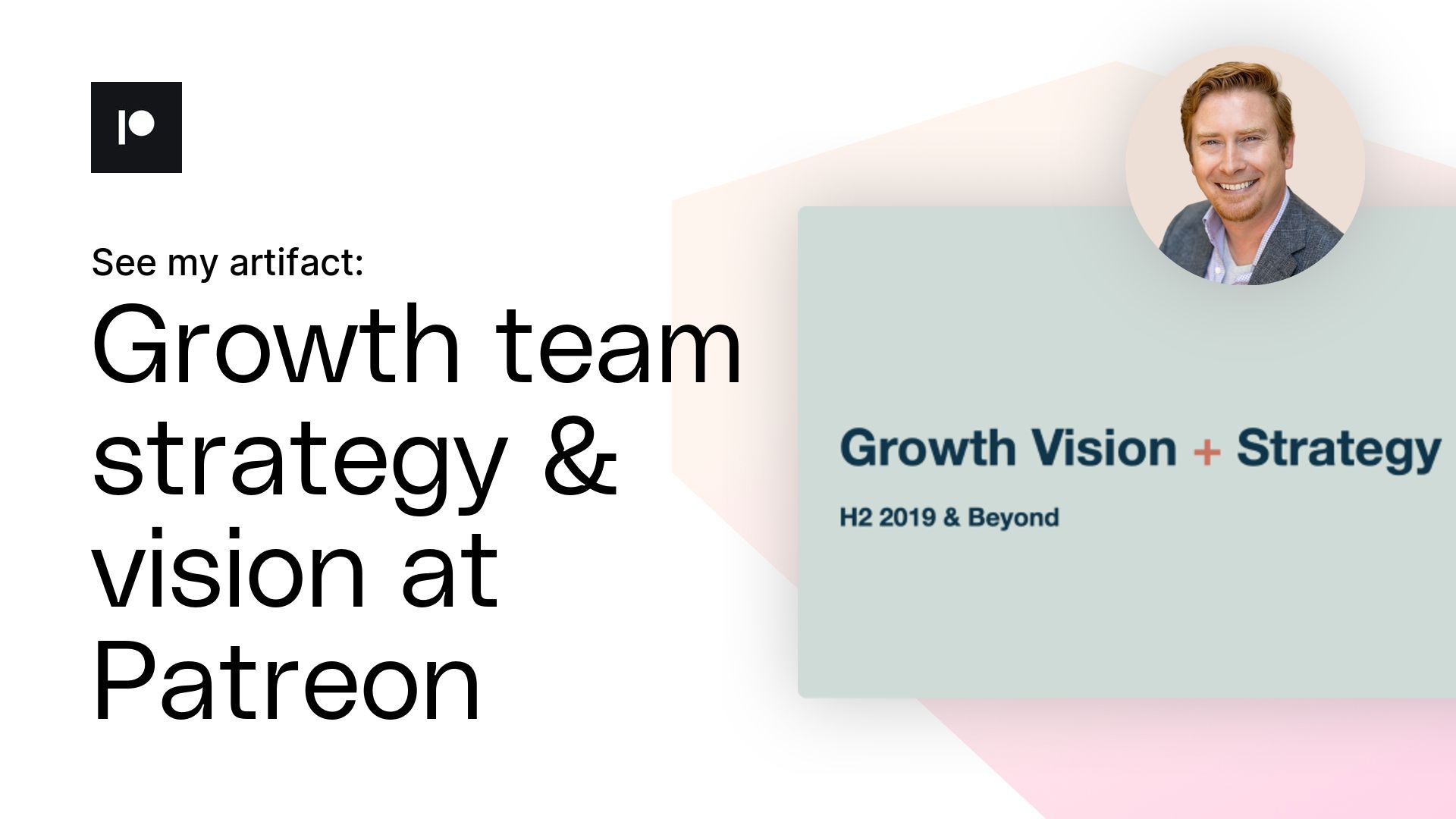
In a presentation led by VP of Product and Growth Adam Fishman, he used a template to create a mission statement, creator journey, impact preview, and incorporate customer quotes. Fishman’s presentation paved the way for new areas of ownership and lead generation that catapulted Patreon to new heights in the years to follow.
2. Growth Process Map — Snyk
Ben Williams, VP of Products at Snyk, built a custom Growth Process Map to plot PLG efforts at Snyk. His template defined growth metrics, OKRs, and feedback loops to navigate this experimentation-based growth process.
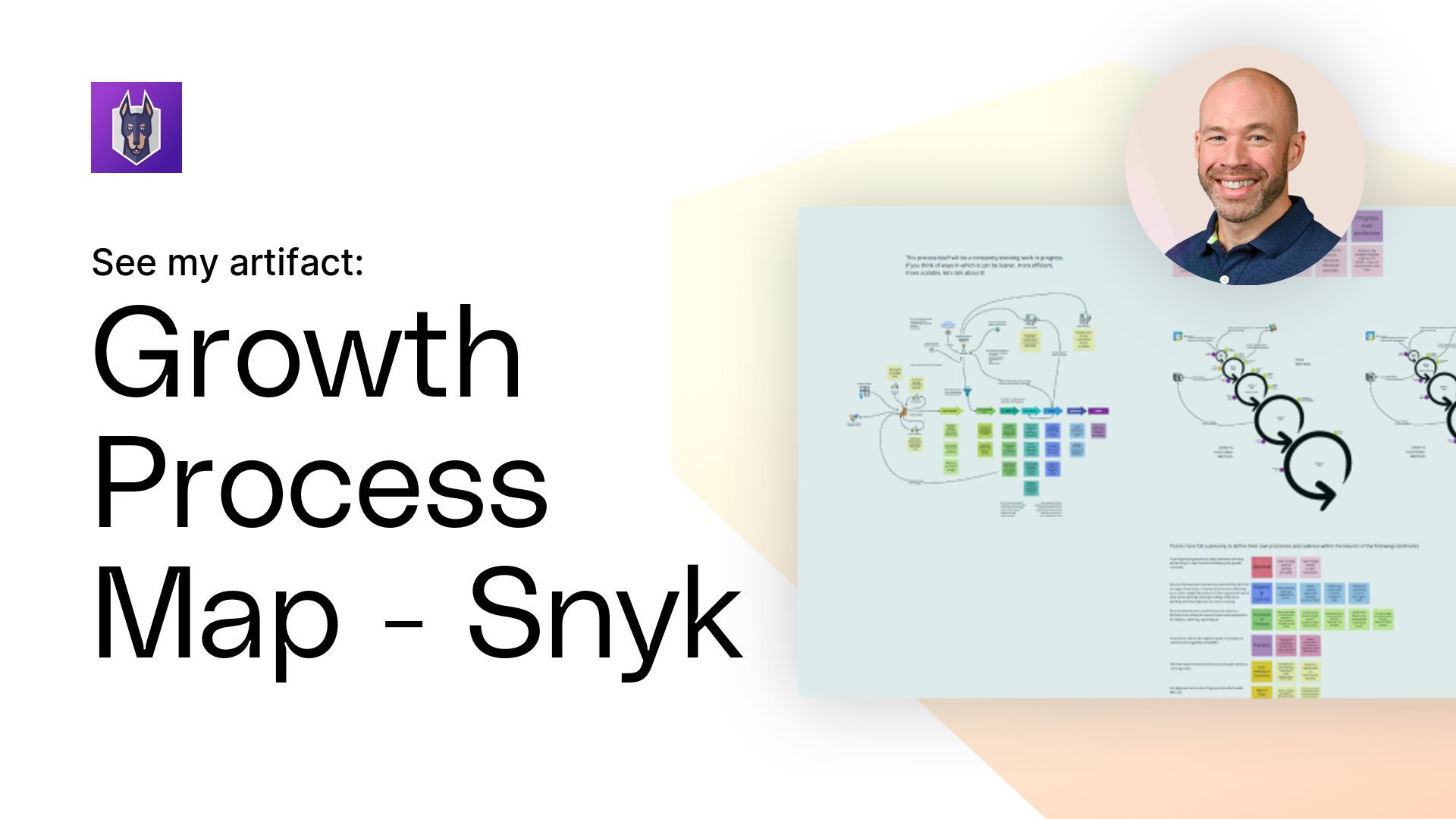
This template set a strong foundation for the company’s PLG plan and charted new territory as the company developed products to drive revenue and achieve a higher standard of operational efficiency.
3. Growth Roadmaps at Duolingo and Latitud
As Co-Founder and COO at Latitud, Gina Gotthli used a model developed at Duolingo to identify growth opportunities and build a team around cross-functional goals.
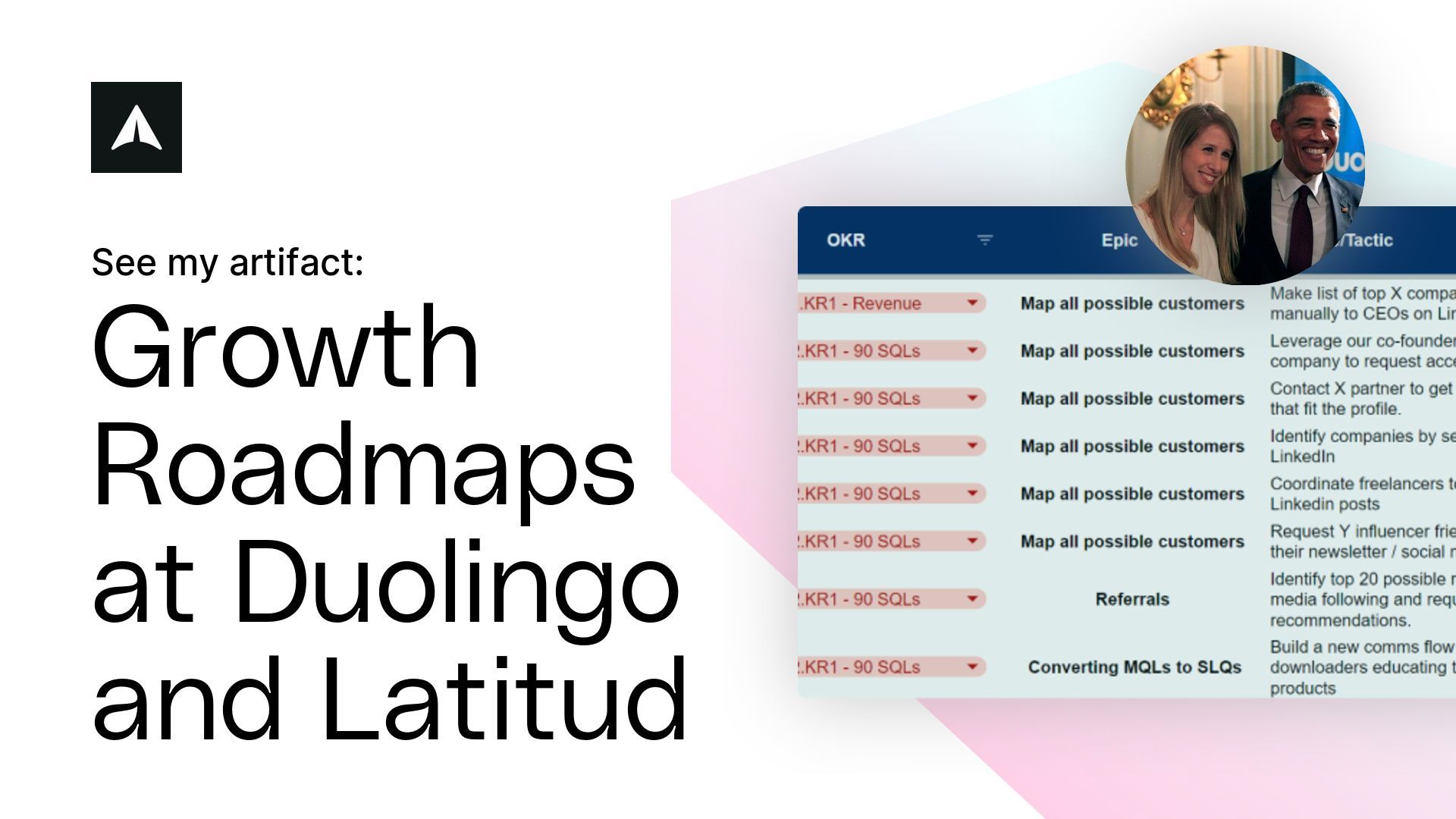
The document that took Duolingo to new heights would prove powerful for Latitud as well, ensuring OKRs were aligned among teams with a North Star metric and other key details. This proved that a great template can make a difference in different businesses and situations, having undergone the right revisions and a flexible approach.
4. Growth Opportunity Analysis for Amazon Explore at Amazon
A newly launched Amazon Product had the right intentions but lacked the structure necessary to prove profitable and fit in with the broader goals of this enormous company.
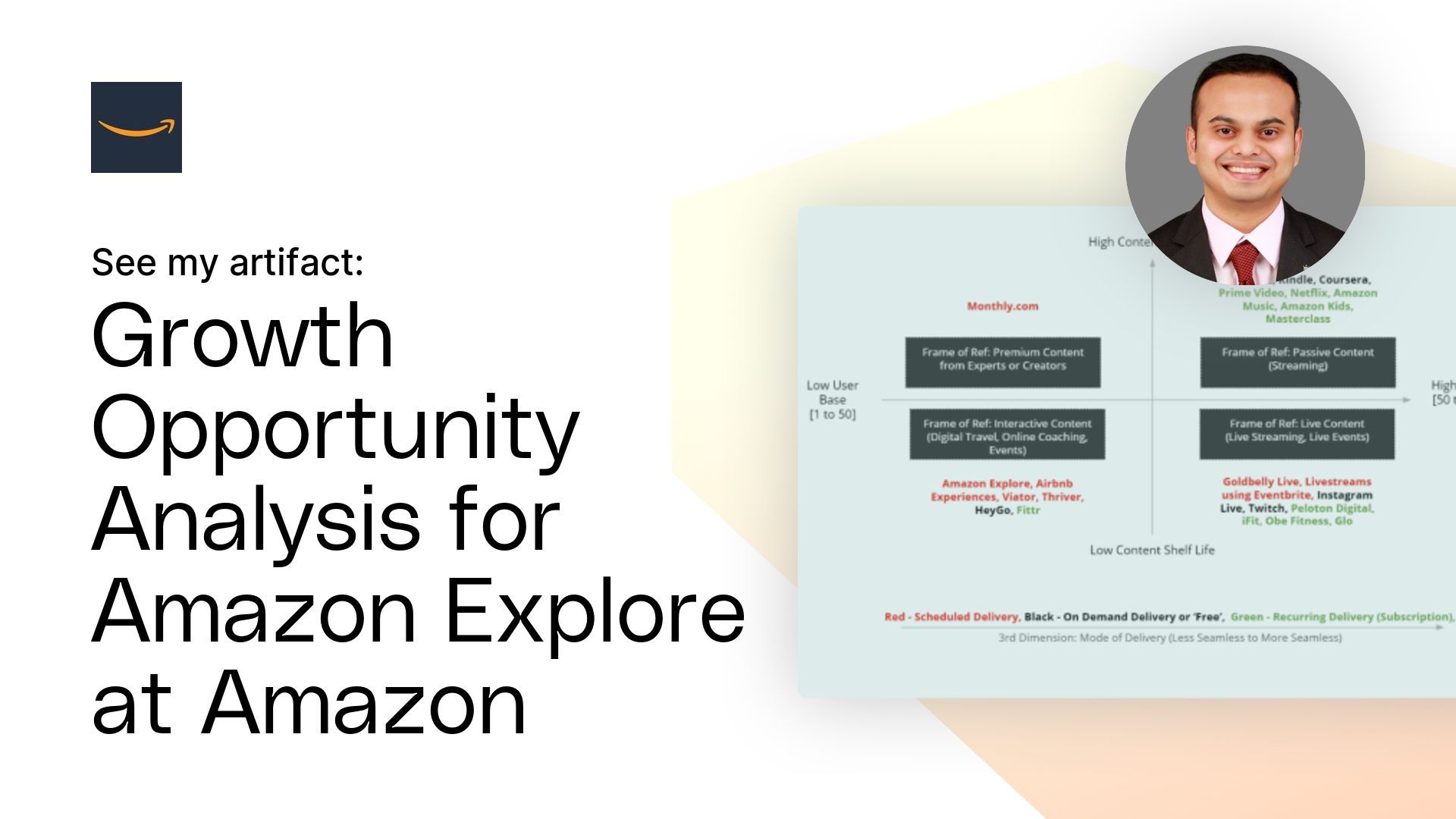
Sr. Product Manager Saurabh Nayak created this template to benchmark growth and identify new opportunities for Amazon Explore, using robust market research to set realistic goals and timelines for the project.
5. Q2 2022 Growth Strategy & Roadmap at Reforge
At Reforge, Product Lead Ginny Mineo summarized the company’s Growth Team strategy in Q2 2022, with a focus on acquisition and monetization. This allowed teams to divide their work in a strategic way, with check-ins to keep track of goals and progress.
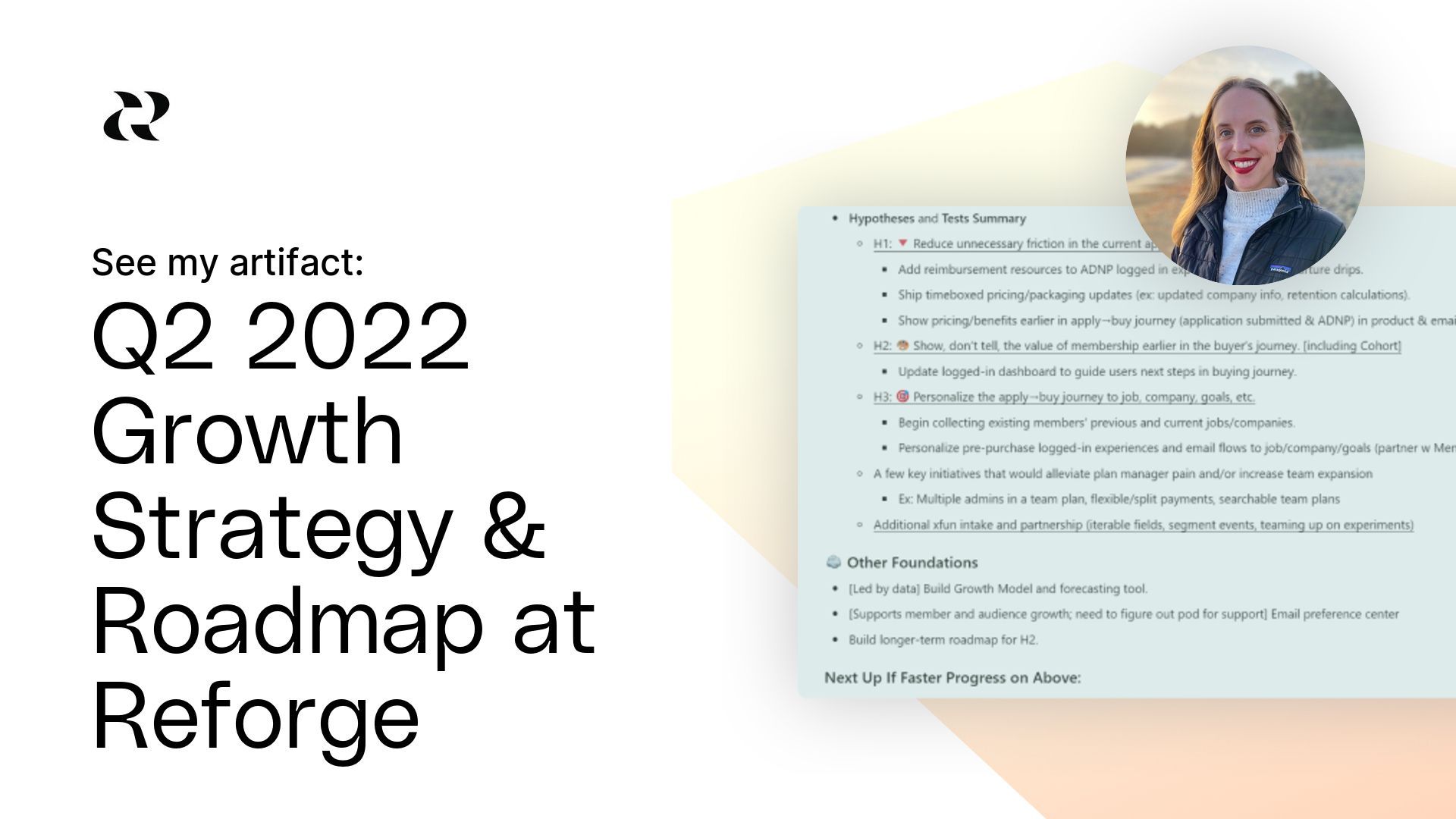
With their template, the team was able to continue growing in light of changing market dynamics and thrive at a critical juncture in the company’s life cycle.
6. Internal Growth Dashboard at Pinterest
Head of Growth Engineering John Egan created this Internal Growth Dashboard around the user lifecycle funnel, allowing him and his team to better understand user behavior.
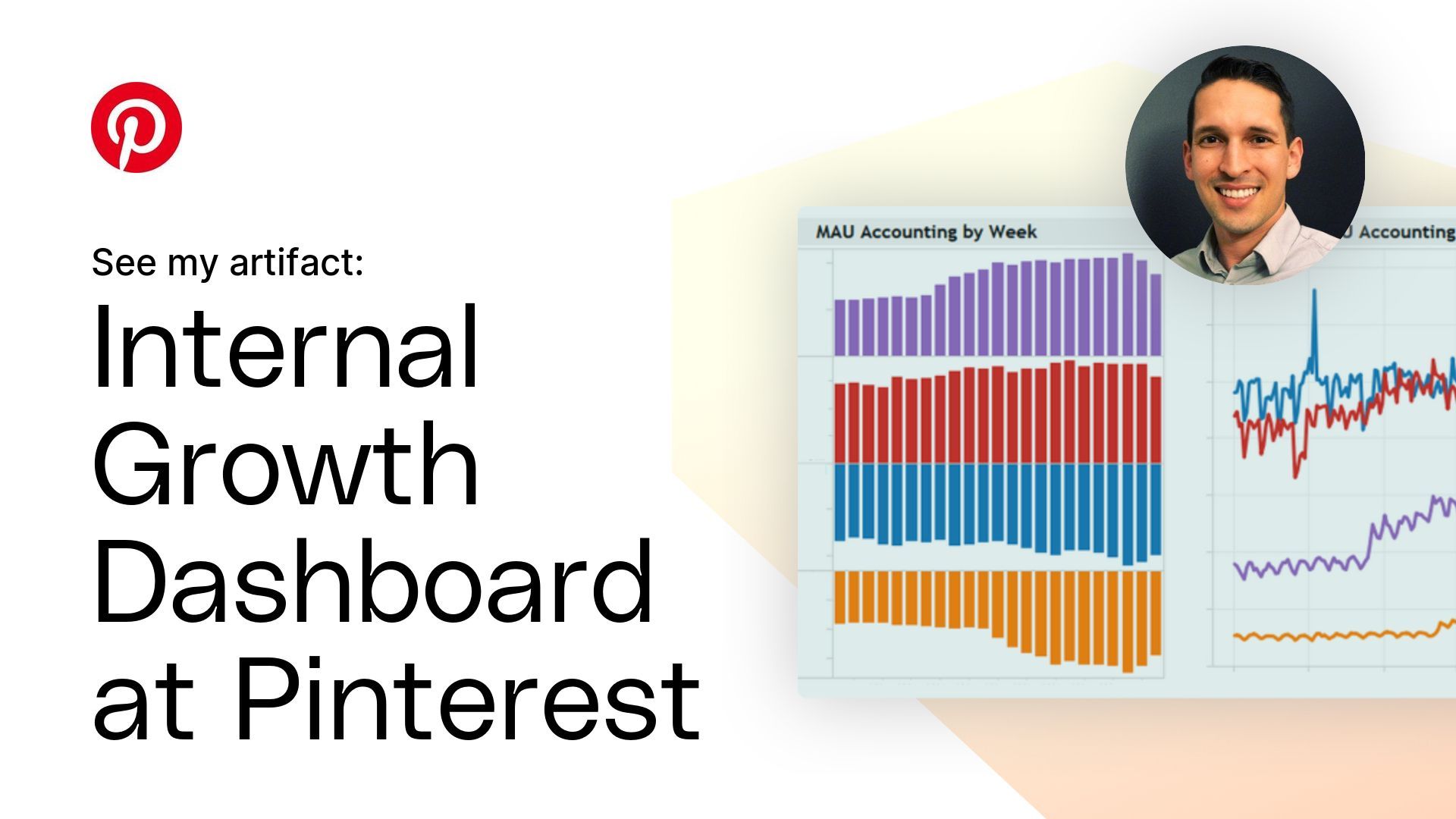
This artifact would turn out to be a lesson in choosing metrics, allowing Pinterest to hone in on key priorities that would drive user engagement and keep the company top-of-mind for users.
How To Pick the Best Growth Strategy Framework for You
The right framework can make all the difference in supercharging a company’s growth efforts and setting the tone for continuous improvement and evolution. This requires a deep analysis of your company’s current position and objectives, as even minor differences can mean big alterations in how a framework should be set up and executed.
Be sure to consider market conditions, organizational strengths and weaknesses, and big-picture industry dynamics before committing to a template — wherever you land, Reforge has the right artifacts that will set your initiatives on the right track from the beginning.
Explore Artifacts of All Kinds
AI
Career Development
Data Analysis
Growth
Leadership
Marketing
Product Development
Strategy
Team Operations
User Research
Topics Related to Growth Strategies
A/B Testing
Activation Strategy
Experiment Design
Experiment Results
Experimentation
Growth Model
Product-Led Growth (PLG)
Retention Strategy
What Is a Growth Strategy? Key Steps and Examples
Business growth doesn’t happen by accident — it takes a deliberate set of actions to take a company from one step to the next. Whether that means increasing market penetration, doubling down on product development, or reframing existing products with new marketing efforts, a growth strategy must be locked in and executed with precision.
For today’s management and marketing professionals, the idea of growth is a common thread that runs throughout various departments, but turning a strategy into tangible results takes effort and time. Market development won’t happen overnight, and only with a strong game plan can these aspirations be made real.
This article will cover what’s involved in a business growth strategy, along with key steps to execute and examples of growth strategies that have proven effective for real businesses.
Types of Business Growth Strategies
Before we dive into practical steps and examples of business growth strategies, what does this term mean, and why does it matter? In truth, several types of business growth strategies could make sense for different companies based on their unique goals and their place in the business life cycle.
For example, a company in the early stages should focus on product development to create competitive advantages and set itself apart from industry rivals. This might involve funneling resources into R&D, setting the stage for more powerful marketing and growth efforts later down the line.
On the other hand, a business with a strong product portfolio may emphasize acquisition, partnerships, or collaborations that fuel organic growth and brand awareness — key elements of marketing that will allow a brand to step into uncharted market territory.
These efforts align with growth strategies like market penetration and market development, which have minor but key differences. While market penetration aims to increase market share within existing markets, market development aims to enter new markets through geographical expansion or new industry verticals. These efforts typically drive business growth with a precise marketing strategy to target new customers and advance key metrics.
No matter where you’re at in your business, there’s a growth plan that fits the bill — your goal is to pinpoint the right one and execute accordingly with a proven strategy from the jump.
7 Steps for Developing Your Business Growth Strategy
A business growth strategy is not a cut-and-paste proposition. Key stakeholders must collaborate and take steps to develop the strategy from square one, including several steps that involve self-reflection, insight, and awareness of where the business currently stands.
Here are seven steps that decision-makers should take to create an effective growth strategy that will pan out and deliver real results.
1. Identify the Current Stage of Your Business
Start by taking a baseline measurement of your business health, including factors like market share, customer base, finances, and strength of products and services. Skipping this step is like jumping to conclusions on your business growth strategy — you’ll lack the fundamental knowledge necessary to make the best moves and end up flying blind.
Understand the business life cycle and make an honest assessment of where your organization stands. Only with this level of awareness can you approach business growth from a place of strength and avoid key missteps.
2. Take a Fresh Look at Market Research
Every business goes through the motions on market research at some point in its development but growing requires a refreshed look at the market to determine the right direction and allocate appropriate resources to the effort.
This is a chance to look at your current market from a new perspective, including demographics, new markets, customer segments, avenues for revenue growth, and more. Identifying new potential customers will also inform product expansion for these target markets, and this sets the stage for a fully aligned, effective business growth plan.
3. Set Objectives and Key Results (OKRs)
What are the objectives and key results that actually matter in the framework of your business growth strategy? Rather than chasing the latest, flashy metrics in your industry, it’s time to go back to basics and determine what will move the dial in business growth, especially if you plan to build strategic partnerships.
It often helps to set these benchmarks upfront, whether that’s custom acquisition or product diversification, to stay on track and ensure all stakeholders are on the same page. When everyone is speaking the same language for growth, a business can start operating like the well-oiled machine it should be.
4. Use Professionally Crafted Templates
Once OKRs are established and the foundations of a business growth strategy begin to form, it’s worth implementing templates that will keep teams on track with these goals and serve as a point of reference for success.
Templates from Reforge have helped businesses map out growth initiatives across the board, ranging from market expansion and market penetration strategy to new business models and profit centers. The right template will reaffirm goals, keep teams aligned, and ensure a business growth strategy is working as it should from the start.
5. Continually Monitor and Optimize Performance
As a business growth strategy gets underway, the work has really only just begun. The execution of the strategy is everything, and this requires multiple touchpoints with key contacts to keep things moving full-steam ahead.
Keep an eye on OKRs, use templates to your advantage, and remember that growth is just a matter of time if everyone does their part.
6 Growth Strategy Templates Built and Used by Leading Companies
Ready to see how real companies use growth strategy templates to their advantage in everyday scenarios? Here are six growth strategy templates built and used by leading companies and how they’ve made a powerful difference.
1. Growth Team Strategy & Vision at Patreon
Patreon created a growth team strategy in the midst of a price restructuring initiative in 2019, setting the stage for new investments and going public. The team used a template to lay the groundwork for growth as big changes took place in the company — it was a critical moment in the history of Patreon, and a strong vision was needed to move forward.
In a presentation led by VP of Product and Growth Adam Fishman, he used a template to create a mission statement, creator journey, impact preview, and incorporate customer quotes. Fishman’s presentation paved the way for new areas of ownership and lead generation that catapulted Patreon to new heights in the years to follow.
2. Growth Process Map — Snyk
Ben Williams, VP of Products at Snyk, built a custom Growth Process Map to plot PLG efforts at Snyk. His template defined growth metrics, OKRs, and feedback loops to navigate this experimentation-based growth process.
This template set a strong foundation for the company’s PLG plan and charted new territory as the company developed products to drive revenue and achieve a higher standard of operational efficiency.
3. Growth Roadmaps at Duolingo and Latitud
As Co-Founder and COO at Latitud, Gina Gotthli used a model developed at Duolingo to identify growth opportunities and build a team around cross-functional goals.
The document that took Duolingo to new heights would prove powerful for Latitud as well, ensuring OKRs were aligned among teams with a North Star metric and other key details. This proved that a great template can make a difference in different businesses and situations, having undergone the right revisions and a flexible approach.
4. Growth Opportunity Analysis for Amazon Explore at Amazon
A newly launched Amazon Product had the right intentions but lacked the structure necessary to prove profitable and fit in with the broader goals of this enormous company.
Sr. Product Manager Saurabh Nayak created this template to benchmark growth and identify new opportunities for Amazon Explore, using robust market research to set realistic goals and timelines for the project.
5. Q2 2022 Growth Strategy & Roadmap at Reforge
At Reforge, Product Lead Ginny Mineo summarized the company’s Growth Team strategy in Q2 2022, with a focus on acquisition and monetization. This allowed teams to divide their work in a strategic way, with check-ins to keep track of goals and progress.
With their template, the team was able to continue growing in light of changing market dynamics and thrive at a critical juncture in the company’s life cycle.
6. Internal Growth Dashboard at Pinterest
Head of Growth Engineering John Egan created this Internal Growth Dashboard around the user lifecycle funnel, allowing him and his team to better understand user behavior.
This artifact would turn out to be a lesson in choosing metrics, allowing Pinterest to hone in on key priorities that would drive user engagement and keep the company top-of-mind for users.
How To Pick the Best Growth Strategy Framework for You
The right framework can make all the difference in supercharging a company’s growth efforts and setting the tone for continuous improvement and evolution. This requires a deep analysis of your company’s current position and objectives, as even minor differences can mean big alterations in how a framework should be set up and executed.
Be sure to consider market conditions, organizational strengths and weaknesses, and big-picture industry dynamics before committing to a template — wherever you land, Reforge has the right artifacts that will set your initiatives on the right track from the beginning.
Explore Artifacts of All Kinds
AI
Career Development
Data Analysis
Growth
Leadership
Marketing
Product Development
Strategy
Team Operations
User Research
Topics Related to Growth Strategies
A/B Testing
Activation Strategy
Experiment Design
Experiment Results
Experimentation
Growth Model
Product-Led Growth (PLG)
Retention Strategy